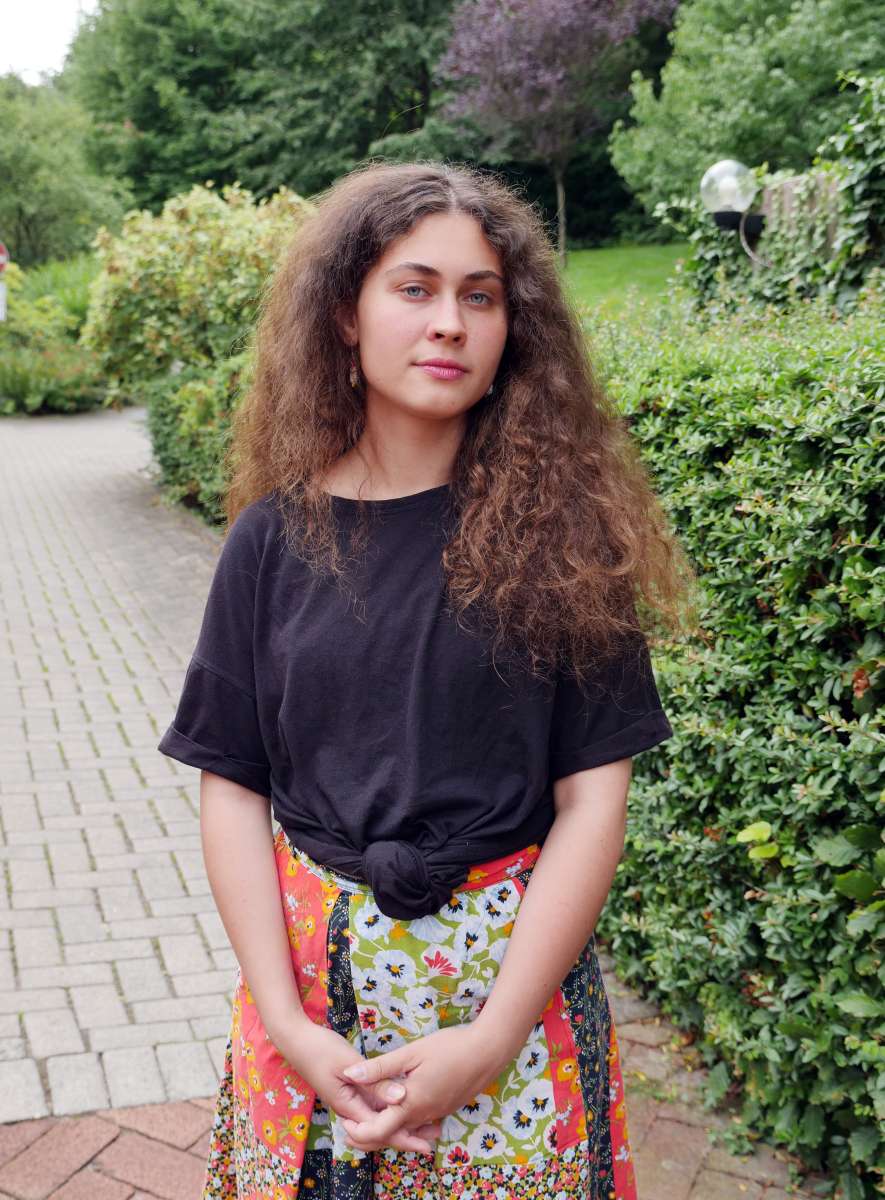
20, English philology student, photographer
LutskVilnius (Lithuania)
Lithuanians love fresh-baked pastries, and kybyn is so popular among pies that can be considered Lithuanian fast food. However, kybyn is a traditional dish of the Turkic indigenous people of Crimea and Ukraine — Karaites (also known as Karaims). So how did kybyn pies reach Baltic shelves? And how are these goodies associated with identity?
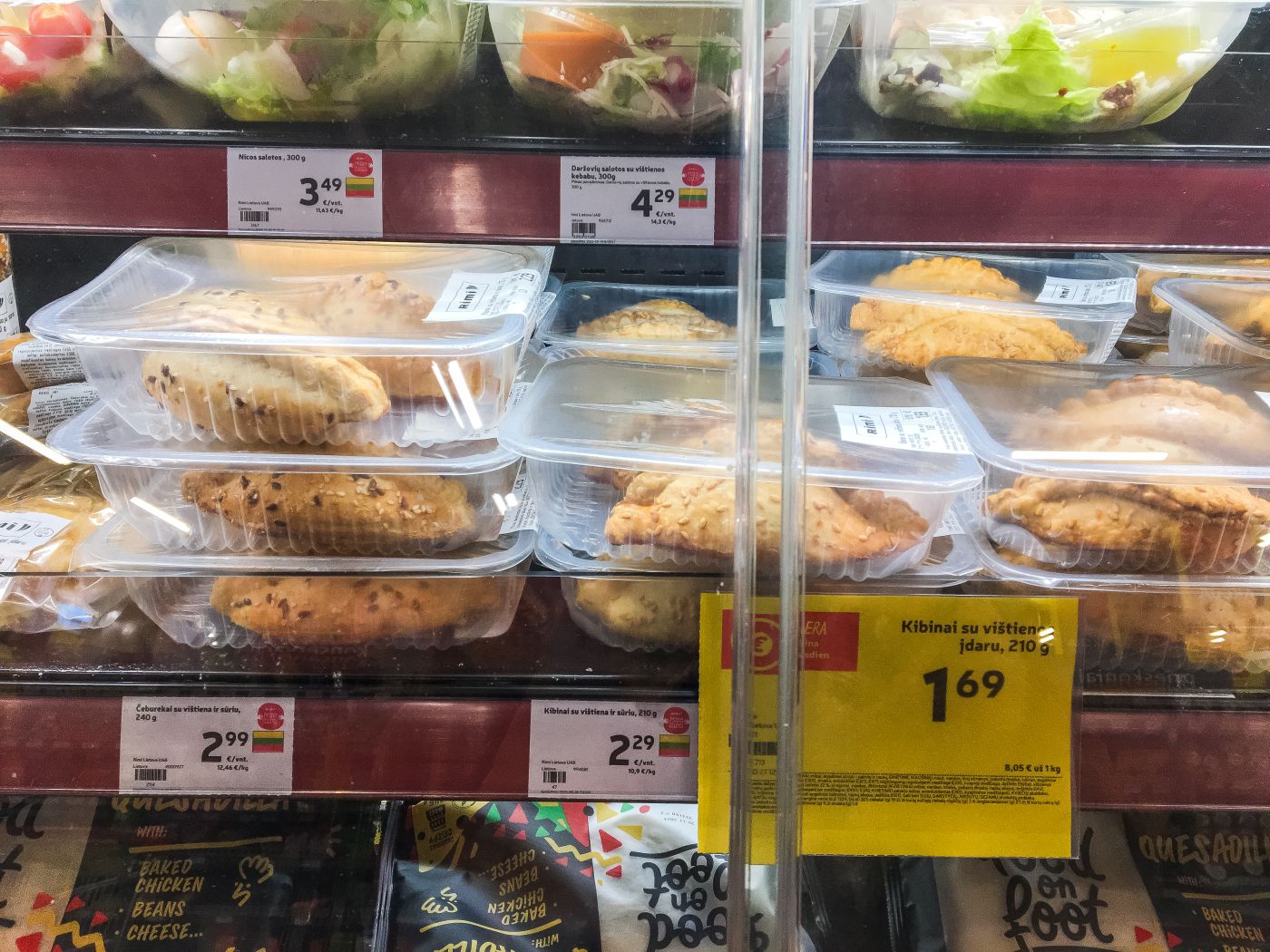
“Kibinas su vištienos” (Eng. Kybyn pies with chicken), Rimi supermarket in Vilnius, 2023
Crimea — Lithuania
According to one theory, a new religion was established among nomad Turkic peoples of Khazar Khaganate in the 7th-10th centuries called Karaism, which was based on the ancient texts of the Old Testament rejecting any interpretation of the texts. After the 11th century, adherents of Karaism migrated to Crimea, which belonged to the Khazar Khaganate, particularly to Kyrk-Or (now – Chufut-Kale, Crimean Tatar name for Jewish Fortress), Kezlev (Eupatoria), Kafa (Feodosia), and Akmesdzhyt (Simferopol).
In the late 14th century, the Grand Duke Vytautas of Lithuania led the war in the Pryazovia region and Crimea, which belonged to the Golden Horde at that time. As the legend goes, Vytautas noticed that the Karaites were skillful warriors and invited them to Lithuania. In 1397–1398, around 380 Karaite families arrived in Trakai town near Vilnius. The Karaites settled down in the north of the Trakai peninsula at the center of the town surrounded by lakes. Later, the Karaite communities formed in Panevėžys, Vilnius, Biržai, Upytė, Salos, and Pasvalys. They supported cultural and religious ties with Karaites from Crimea, Halych, and Lutsk. But Lithuania became a motherland to them.
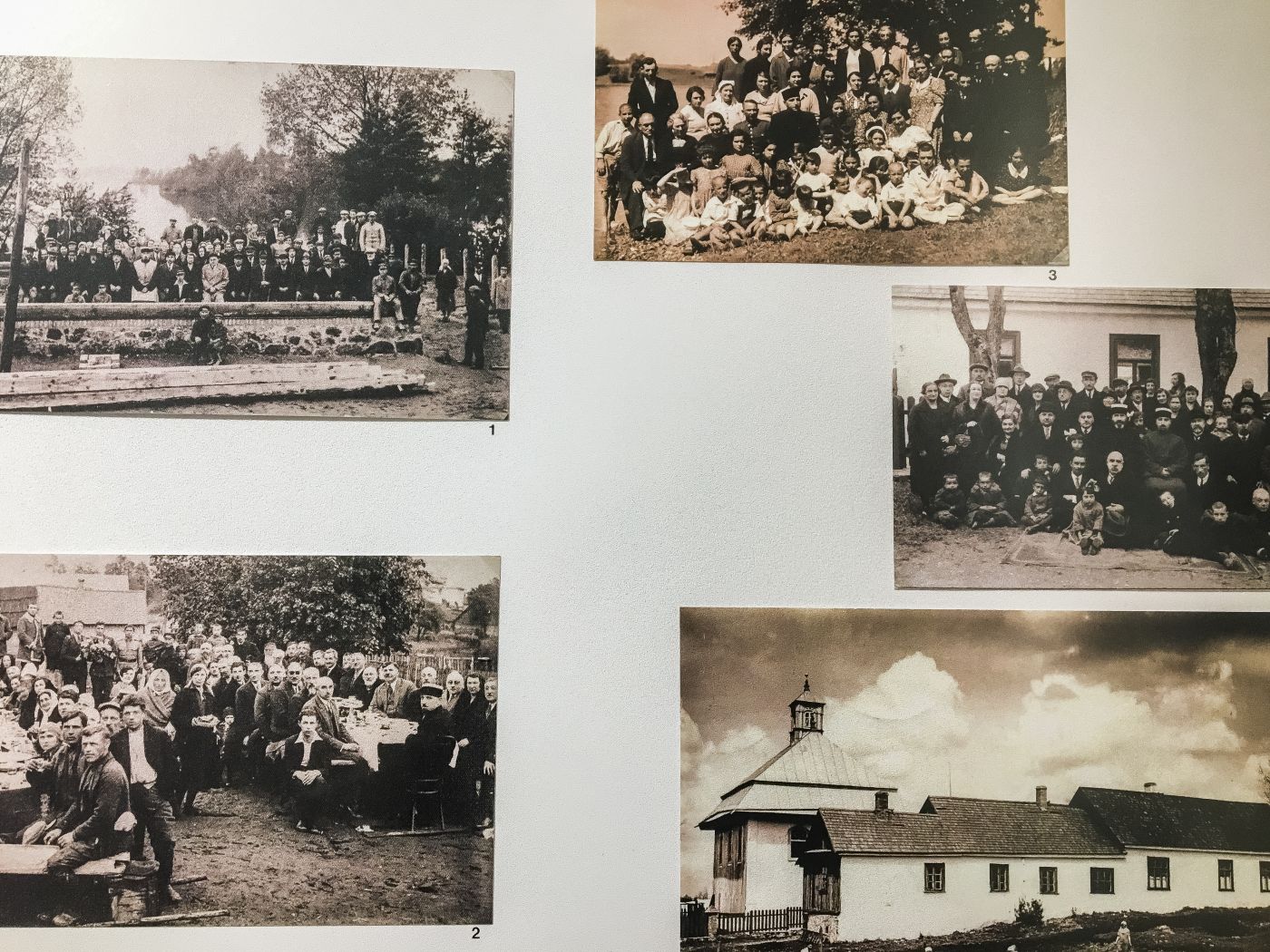
Photos of the Karaite community in S. Shapshal Museum of the Karaim Nation in Trakai town, 2023
Contrasting regimes
The Karaite community of Trakai existed like a separate town inside the town and had its own Magdeburg rights, which Karaites received from Vytautas in 1441. According to these rights, the Karaites could choose a representative of their interests in the Grand Duchy of Lithuania.
In the 18th century, when the Russian Empire established its power there, everything changed: the Karaites had to stand up for their identity and search for compromises with the new government. Afterward, they received a special status within the Empire. They were recognized as a religious community having its own administrative and religious representatives.
“When PolandThe Polish–Lithuanian Commonwealth came, it dictated new rules. Then, the Soviet times began – absolutely different storyIt was forbidden to practice any religion in Soviet times. Karaite heritage was substantially eliminated.. Only when Lithuania regained its independence in 1991, did the Karaites’ life get normal and the community return its rights, which were declared at the constitutional level,” the head of the Lithuanian Association of Karaite Culture Karina Firkavichute says.
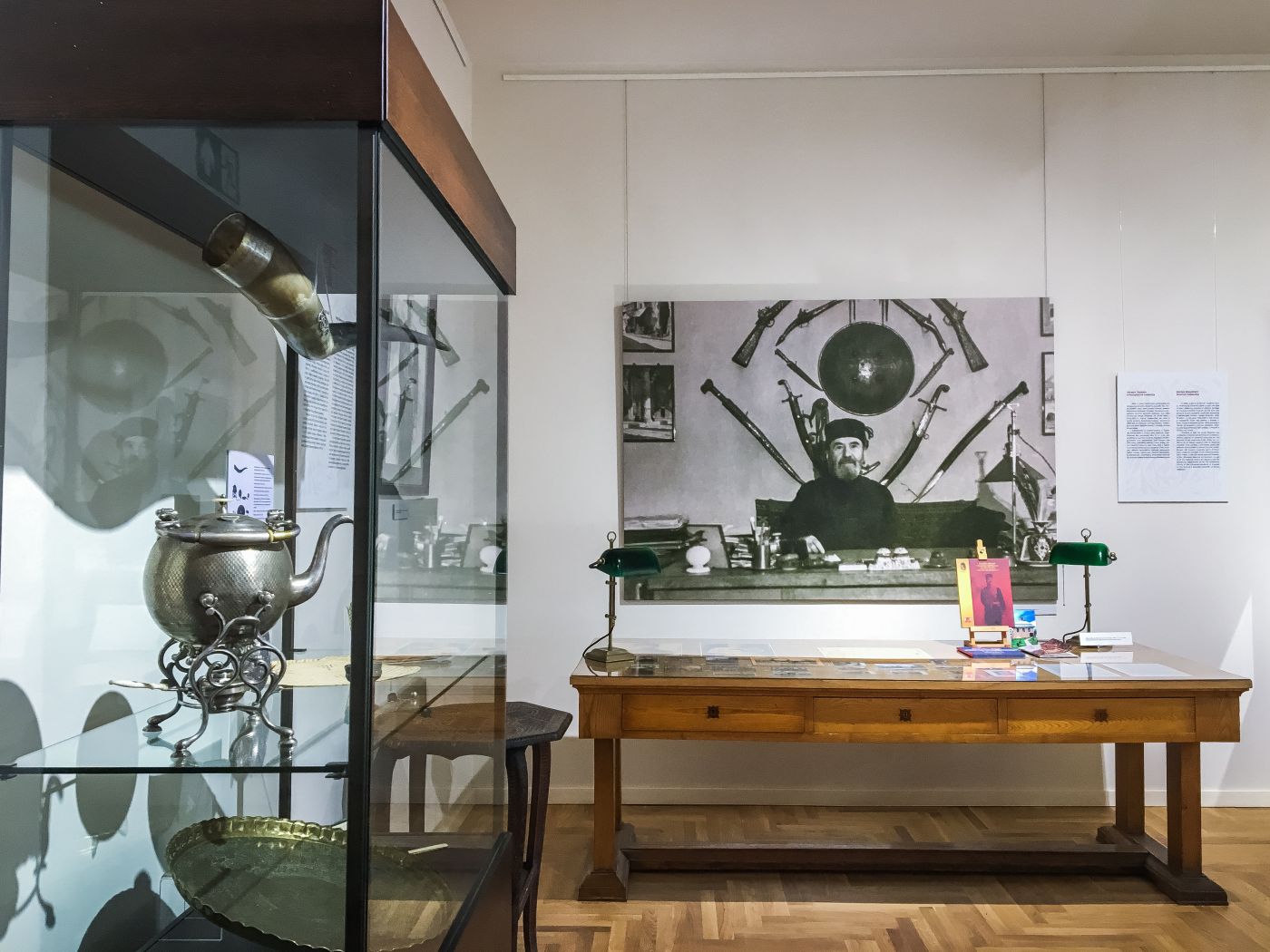
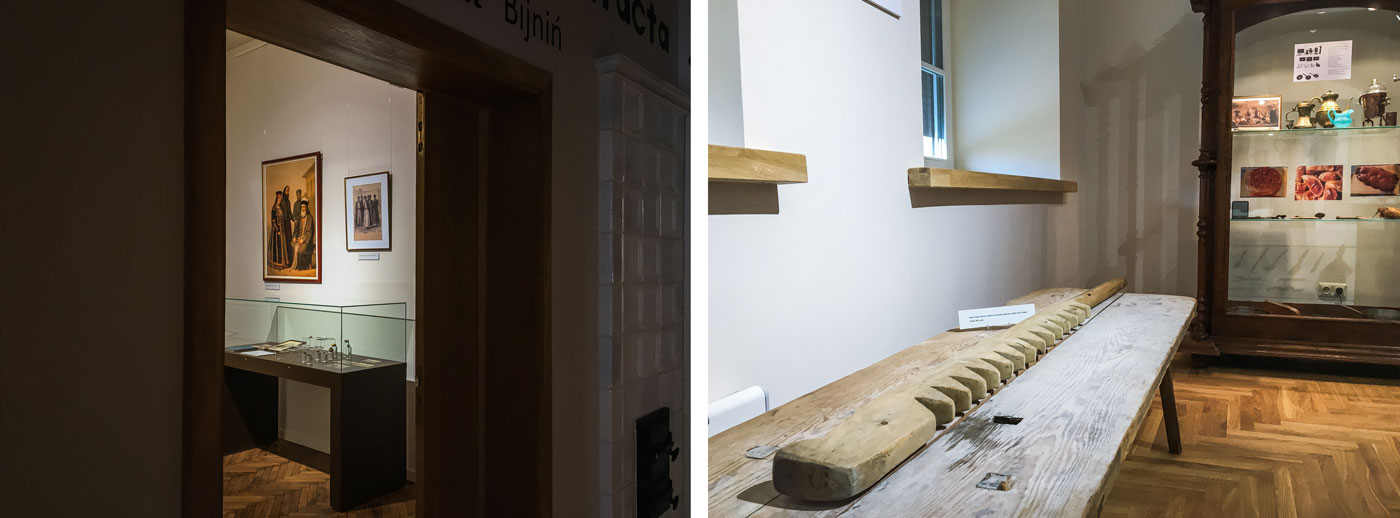
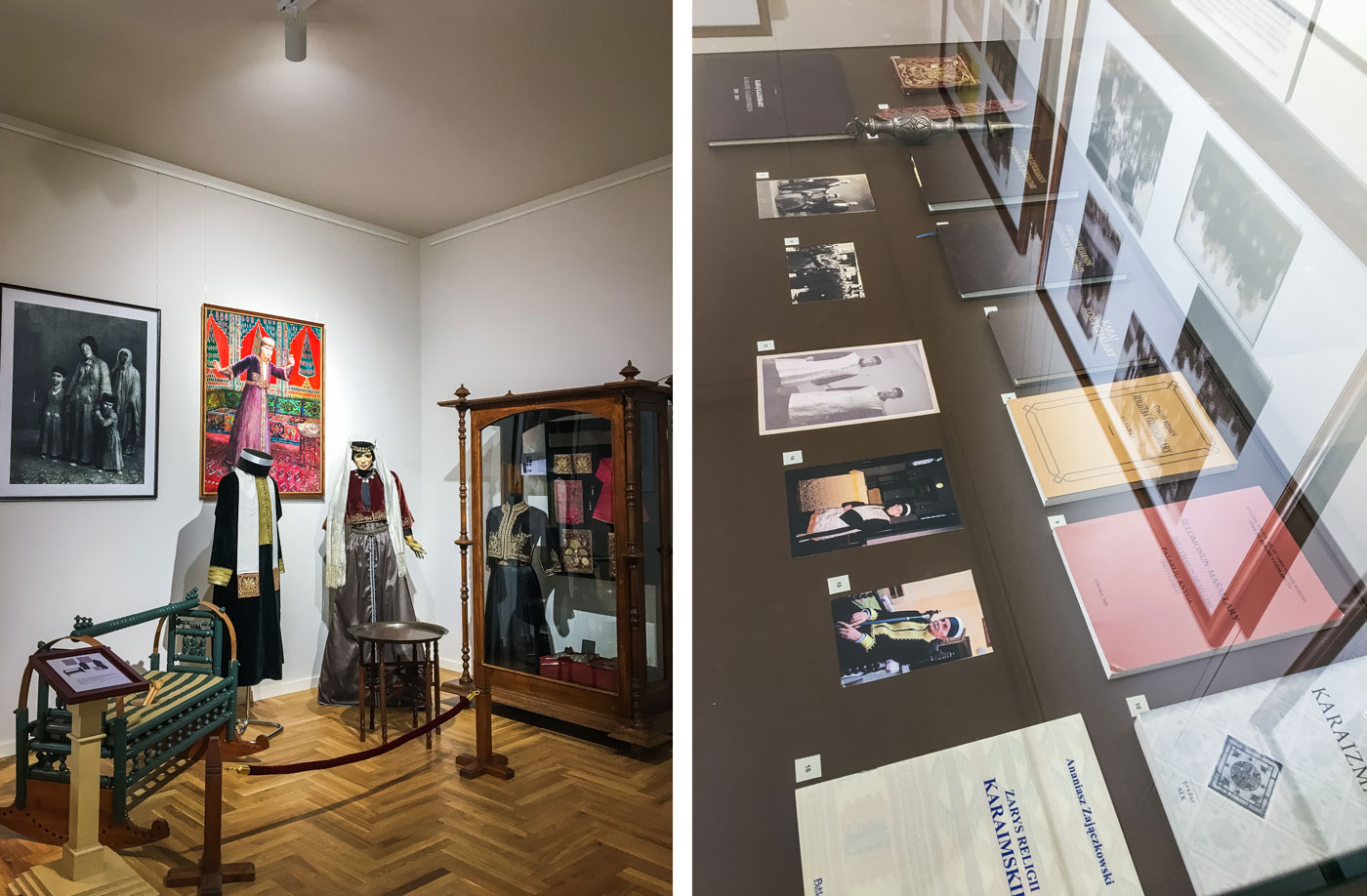
S. Shapshal Museum of the Karaim Nation in Trakai town, 2023
The guardian of the community
We met Karina in the Museum of the Karaim Nation in Trakai. It is named after the orientalist Seraya Shapshal, famous among the Karaites. Shapshal initiated the creation of this museum in 1938 and agreed with the local government to allocate land for construction. At that time, the Trakai Karaite community numbered around 500-600 people. The museum establishment was finished after the Second World War. It was opened to the public only in 1967. Nowadays, less than 200 Karaites live in Lithuania.
“At least I stand here with you. It means the community is alive,” Karina says.
Lithuanian Karaites speak mostly Lithuanian. Only about 30 people in the entire Lithuania remember the Karaite language but don’t use it daily. The Karaite youth barely speak their mother tongue, even though the Trakai community regularly arranges a language summer school for all Karaites. Karina’s family speaks only the Karaite language at home.
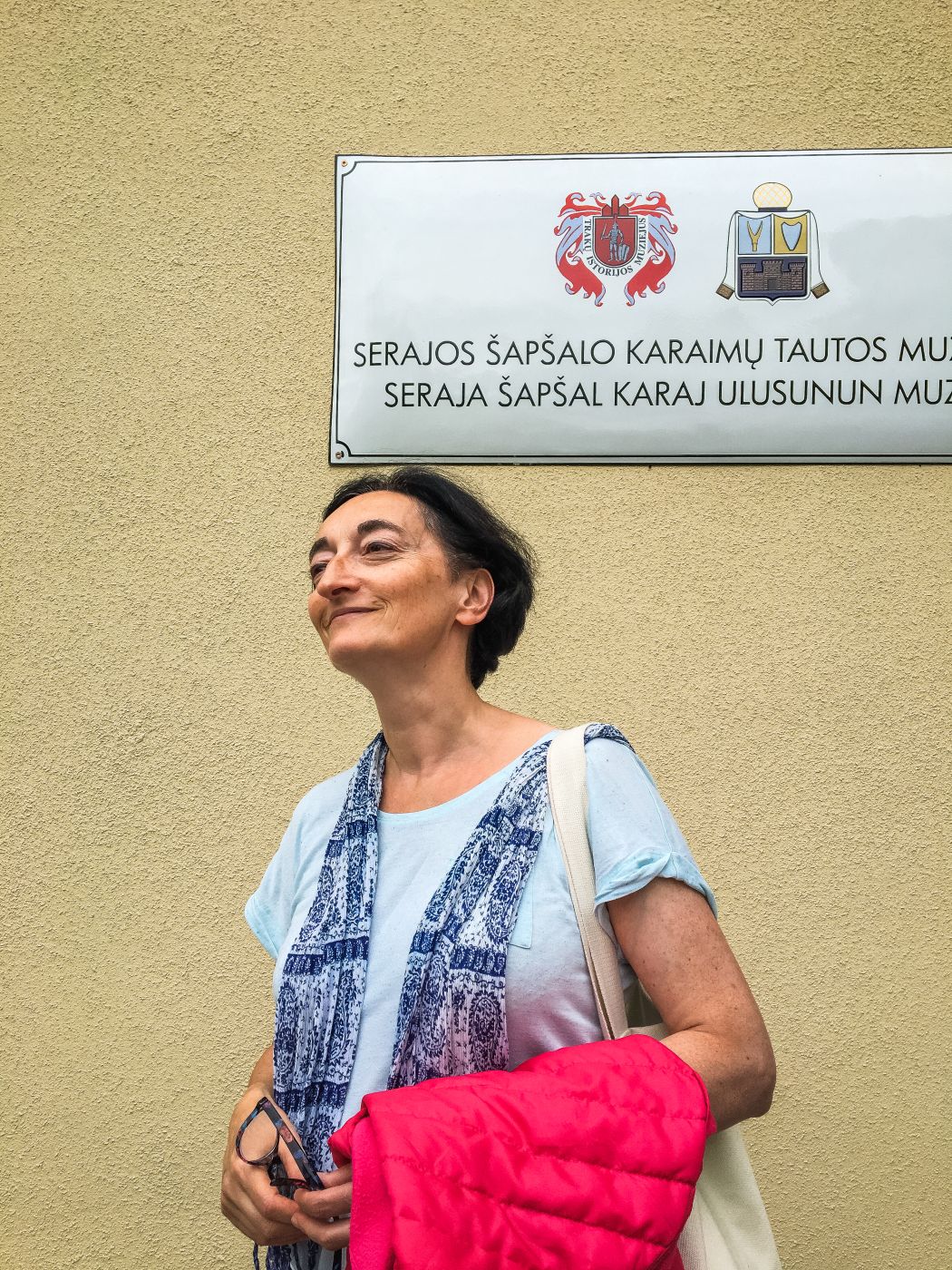
The head of the Lithuanian Association of Karaite Culture Karina Firkavichute, 2023
“Before I turned three, I had spoken no other language than Karaite. When I entered kindergarten, I learned Lithuanian. This is my privilege. There are only two or three people of my generation who can speak Karaite,” Karina says.
Her father was hazzan — a head of the Karaite religious community. Karina grew up in a family which adhered to all Karaite traditions. Kybyn pies were always prepared with meat at home, except for the pork. Vegetable filling or soya meat is a new invention that is far away from the traditions, as Karina mentions. In her opinion, the strict adherence to traditions and the large number of community members helped save the Karaite community in Lithuania.
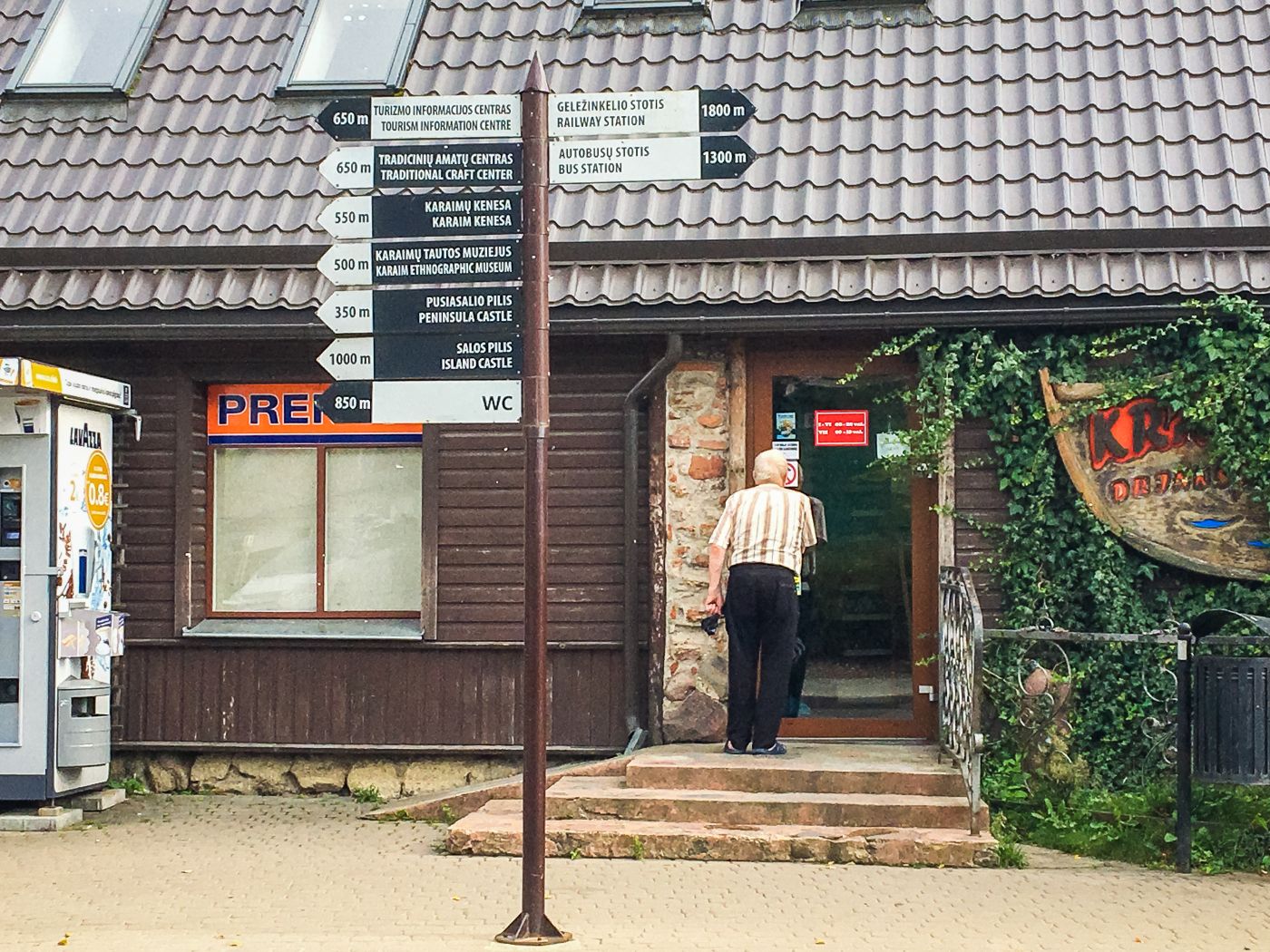
A road sign in Trakai town with Karaite place names, 2023
Roots rediscovered
Daria Michri from Ukraine started getting to know Karaite culture with the Karaite recipe book which her father brought home. Together with her mother, they prepared a Karaite festive dish called selkeme — roasted beef with vegetables.
Despite the unusual surname for the Ukrainian tradition (from Karaite, michri means a native of Egypt), the girl didn’t feel that her family differs from others. She has a typical Slavic name, as well as her father. Daria was born in Dnipro city, and her father in the Donetsk region. Neither were they religious, nor followed any folk traditions, nor spoke Karaite. Daria knew her surname was Karaite, but only at 16 did she find out what it meant. Her father was over 40 back then, and it was a surprise for him too.
“It is terrible. It is like living without roots all the time,” Daria says.
Only after the occupation of Crimea, Daria started actively discovering her origin and looking for details about her ancestors. It was challenging. Since the oldest Karaite kenesa in Ukraine, which kept a lot of information, was in the occupied Yevpatoria, it was impossible to get there.
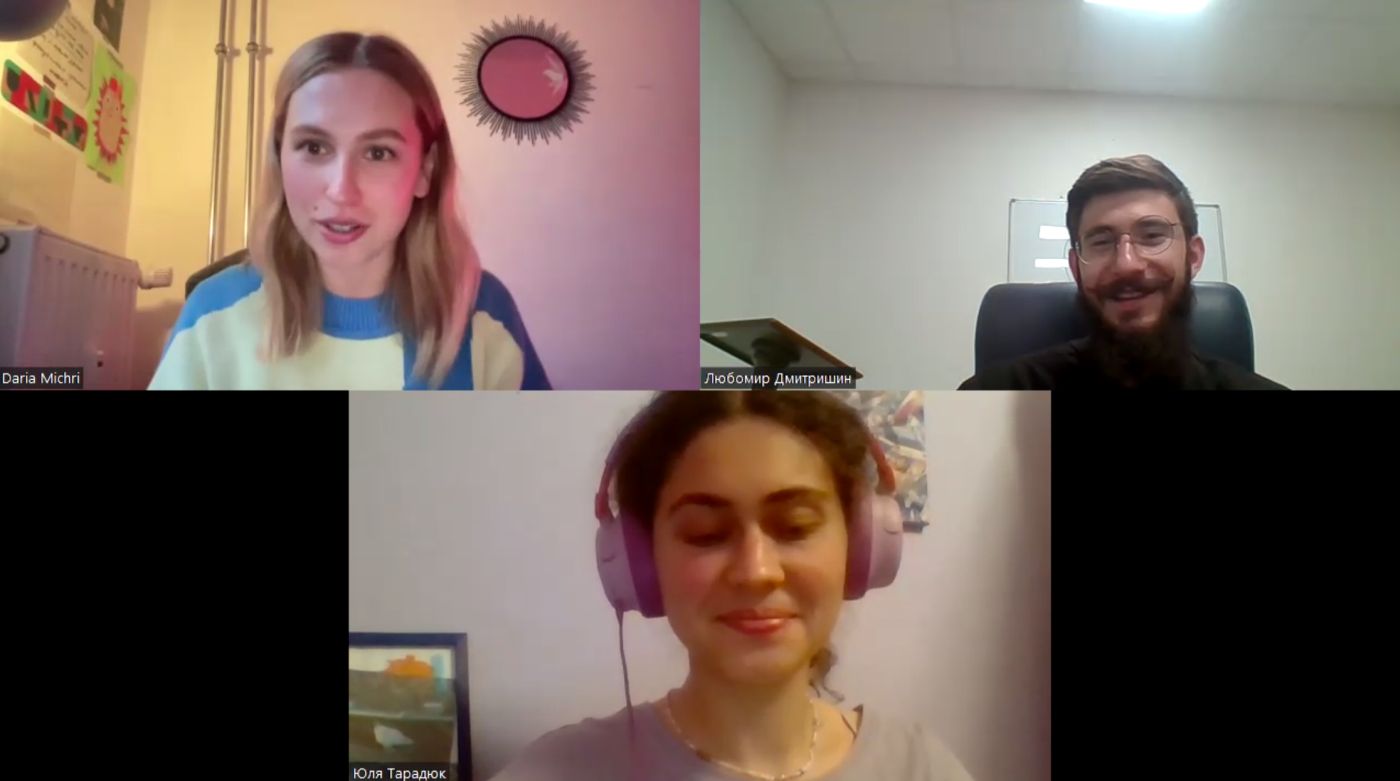
A screenshot from the meeting with Daria on Zoom, 2023
Daria didn’t manage to talk to older relatives: “I get older and more interested in my origin, but there are fewer and fewer Karaites.” Before 1917, 15 thousand Karaites had lived in Crimea. According to the 2001 population census, 1196 people in Ukraine identified themselves as Karaites. Among them, 671 lived on the peninsula. Now, it is unknown how many of them are left.
Choice
Often, it is challenging to find information about family or any contacts of relatives because in Soviet times, people with a “suspicious” origin, in the Communist party’s opinion, changed their names and surnames. This is how Daria’s great-grandfather Ieshua Barukhovych Michri became Yakov Borysovych Michri.
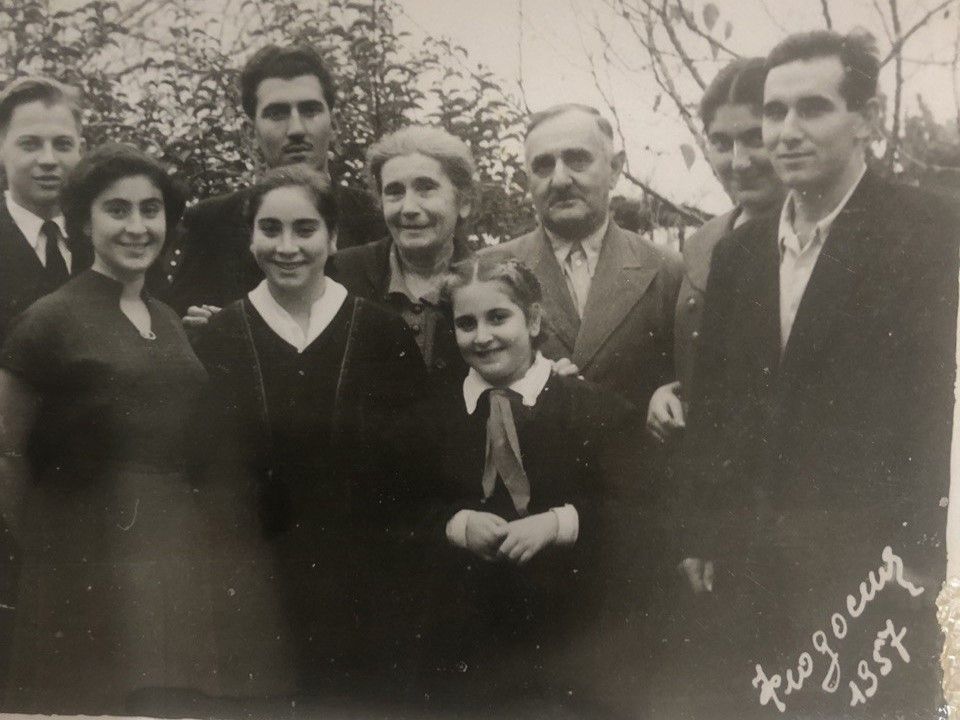
Michri family’s photo, 1957. On the right — Daria’s grandfather
“It was impossible to work having such a name. They could close their eyes to the surname. But not to the suspicious name of the Semitic origin. Many people faced this issue. Therefore, ties were severed and lost,” Daria says.
The deportation from Crimea to Kazakhstan during World War II also impacted the Karaite community and Daria’s relatives in particular. The question of personal identity became very acute for Daria when the full-scale invasion of Russia into Ukraine started.
“I composed such a saying that I am a Ukrainian of Karaite origin. Regardless I have no Ukrainians in my family tree. I am a Ukrainian by my choice, by the birthplace, but underneath there is a foundation — my surname, my origin. I would like to talk about it with pride. Because Crimea is Ukraine, and my origin comes from Crimea. I want to prove to everyone that peoples of Crimea have a right of choice, and my choice is clear.”
When Daria cannot find information about Karaite customs or holidays, she “takes a peep” at Jews. She believes that despite the religious differences, Jews and Karaites have many common domestic traditions. Daria intends to learn Hebrew. As she says, this is a door to Karaite history. Many Karaites insist on their Turkic origin rather than Semitic one, but Daria thinks that Karaites need to stop arguing on this matter.
“If we fight for the purity of origin and blood, then none of the Karaites will be left. Then we would have to say that there is no Karaite on the planet Earth because there is no pure Karaite. However, if you want to preserve (culture), and you have this chance, then maybe it is worth being more open and collaborating with Crimean Tatars and Jews. The Jewish community will be glad to support us,” Daria says.
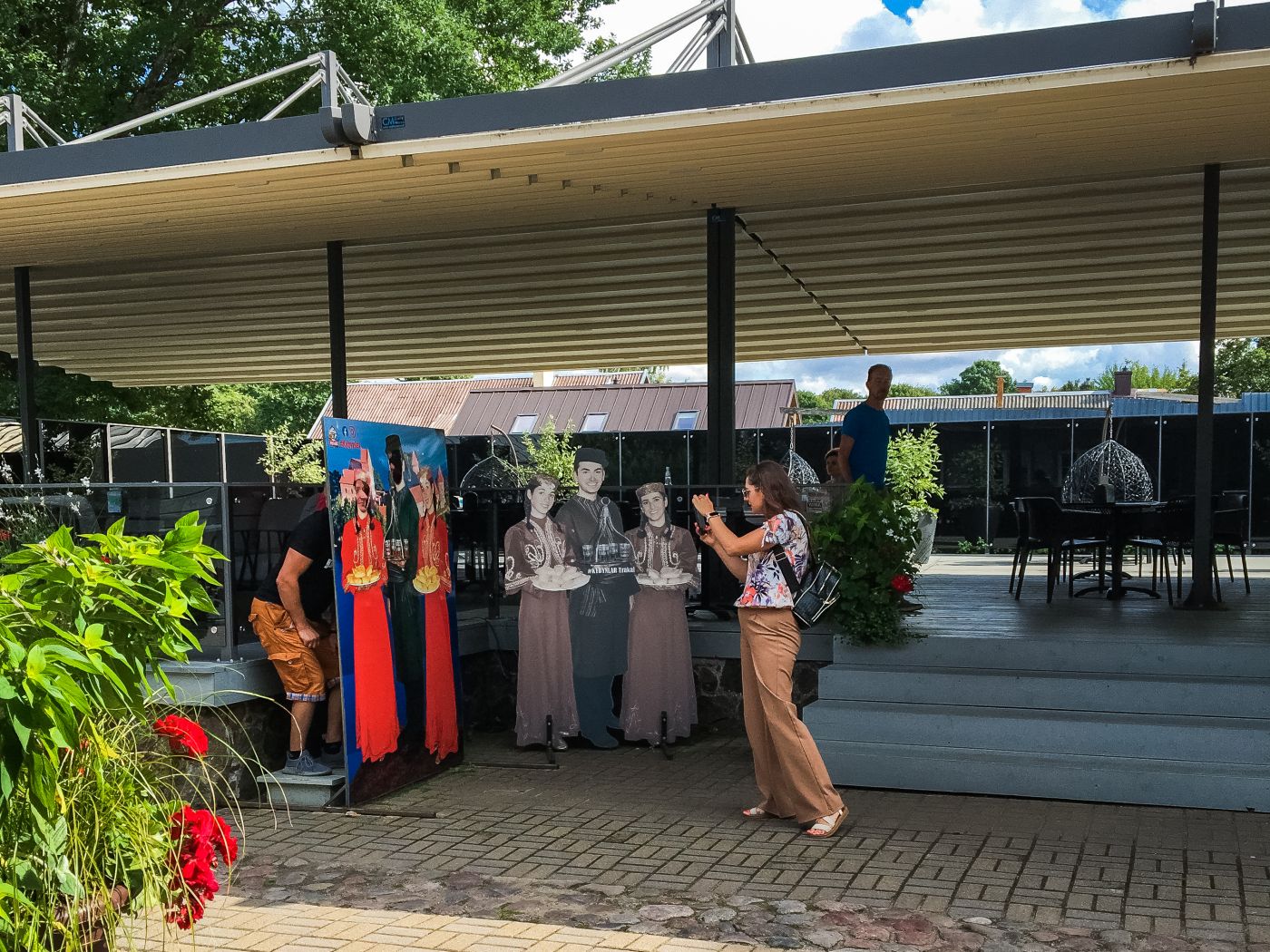
Restaurant of Karaite cuisine in Trakai town, the visitors take pictures near photo stand-ins, 2023
And pies again
The Karaite cuisine is rich in simple dishes and complex ones with religious proceedings. Among daily meals, there is Tutmach — thick meat soup with noodles. Lamb, beef, or veal steak is one of the most popular meat dishes.
On Pesach (“Jewish Easter”, a holiday that celebrates the Israelites' escape from Egypt), Karaites bake festive bread (Tymbyl), and on Pentecost, they prepare katlama — a seven-layer cake that symbolizes seven weeks after Pesach. The Karaite traditional beverage is krupnik, an alcoholic drink with honey and spices that goes well with meat dishes.
Wedding bread with rose-shaped decorations prepared from yeast dough with various spices and raisins takes a special place among traditional desserts. It can be either round or of prolonged shape. The first (kiyovliuk) is prepared by a groom and the latter (kelinlik) — by a bride. The true art of making wedding bread is to ensure that it is well baked and risen, and soft inside.
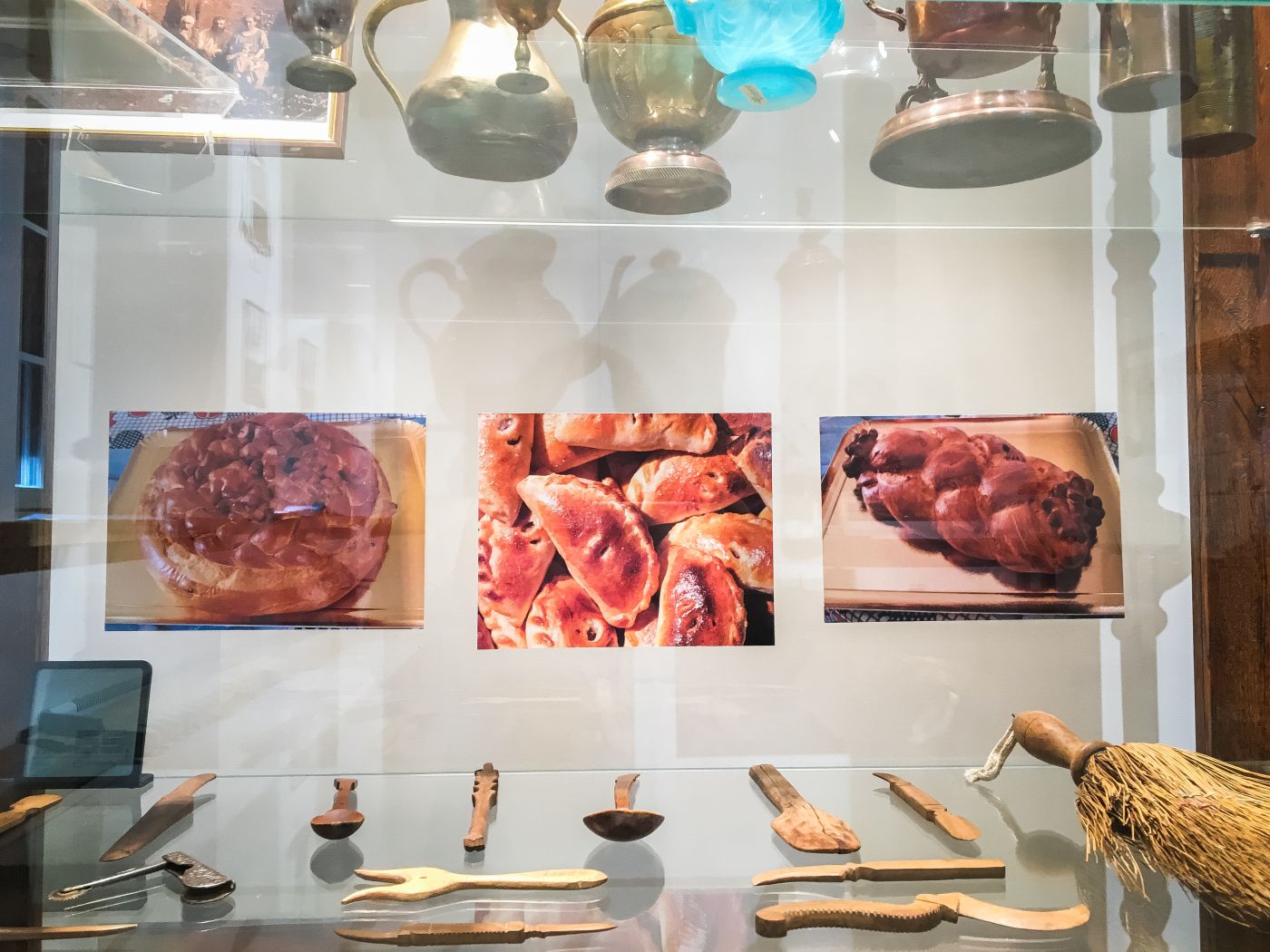
Tools for baking Karaite pastry in the S. Shapshal Museum of the Karaim Nation in Trakai town, 2023
In the town of Trakai Karaims live.
In royal castles
They drink krupnik.
They are good friends
With fatty dishes,
They are famous also
For their hot kybyns.
Mothers prepared,
Taught us,
Let's eat, our dears,
Those tasty kybyns!
The sadness of one's heart
Fades to nothing,
When a kybyn
Is taken by a Karaim.
Like half a moon
Is its 'face',
Even when full,
You would eat five of them.
An excerpt from a Kybyn poem by Simon Firkovich, 1928. Translated by Karina Firkavičiute from Lithuanian
Text and photos: Yuliia Taradiuk
Interview assistance: Liubomyr Dmytryshyn
Literary editing: Anastasiia Pravda
Translation: Dariia Titarova