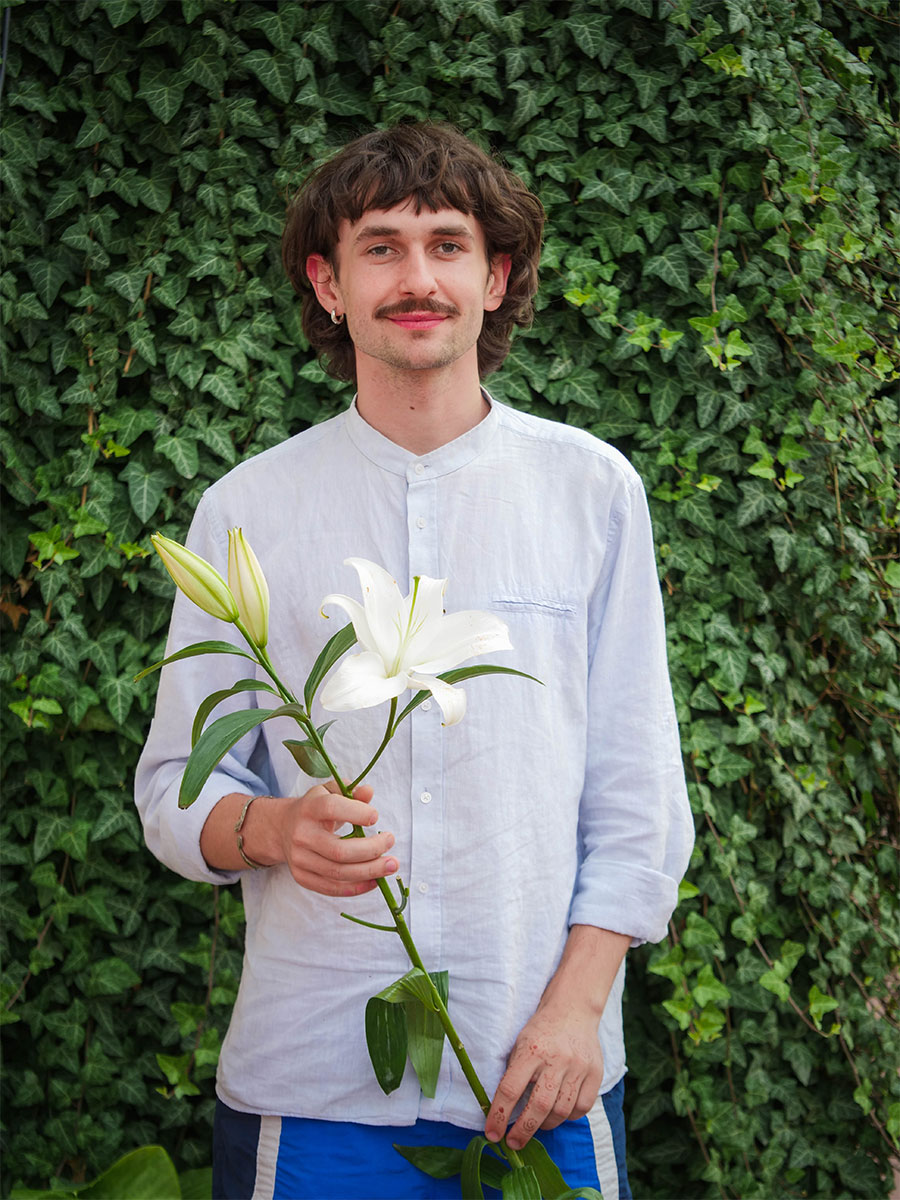
24, journalist, creator of "kintseva" channel about mosaics
Mykhlia village (Khmelnytskyi region)Lviv
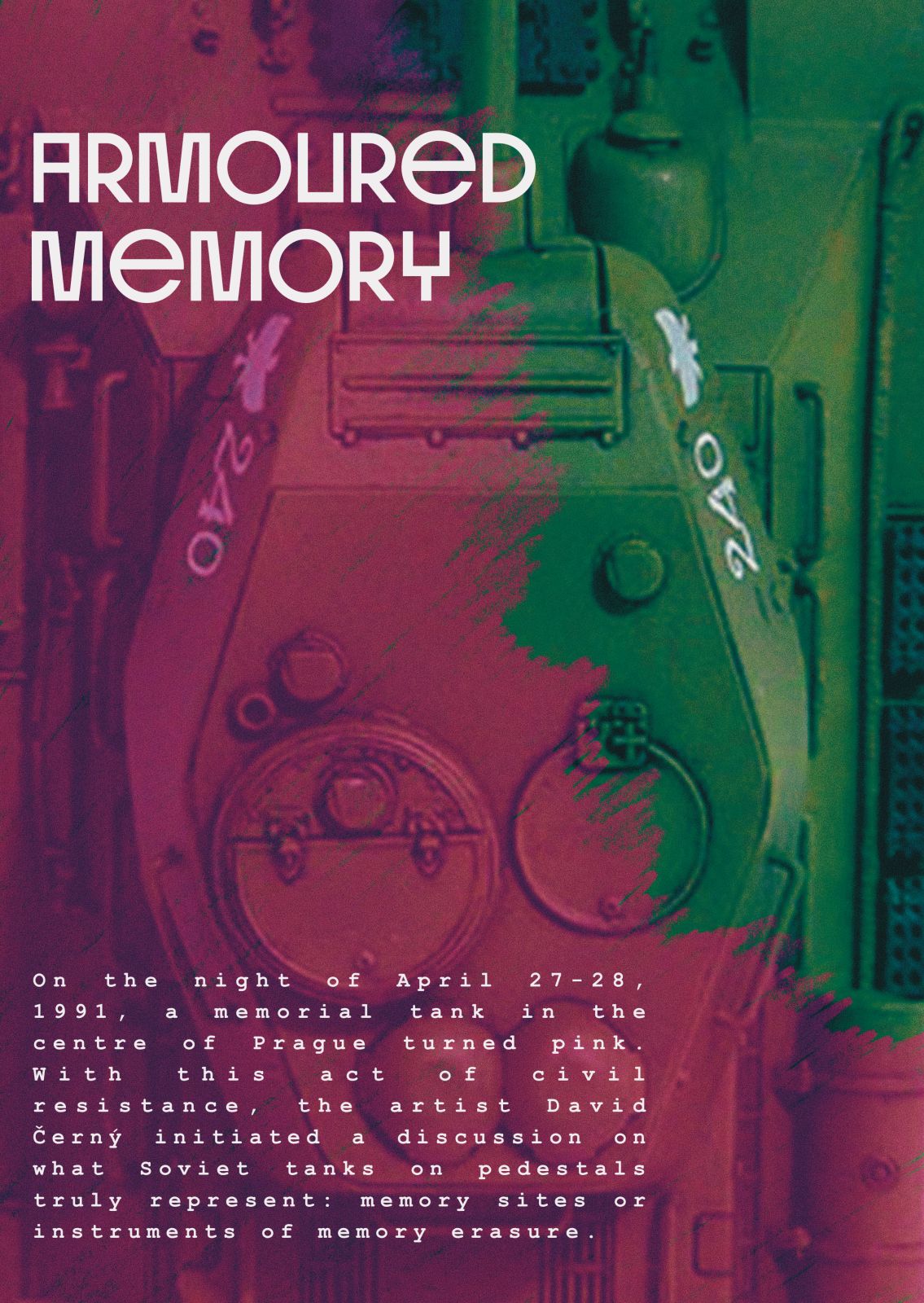
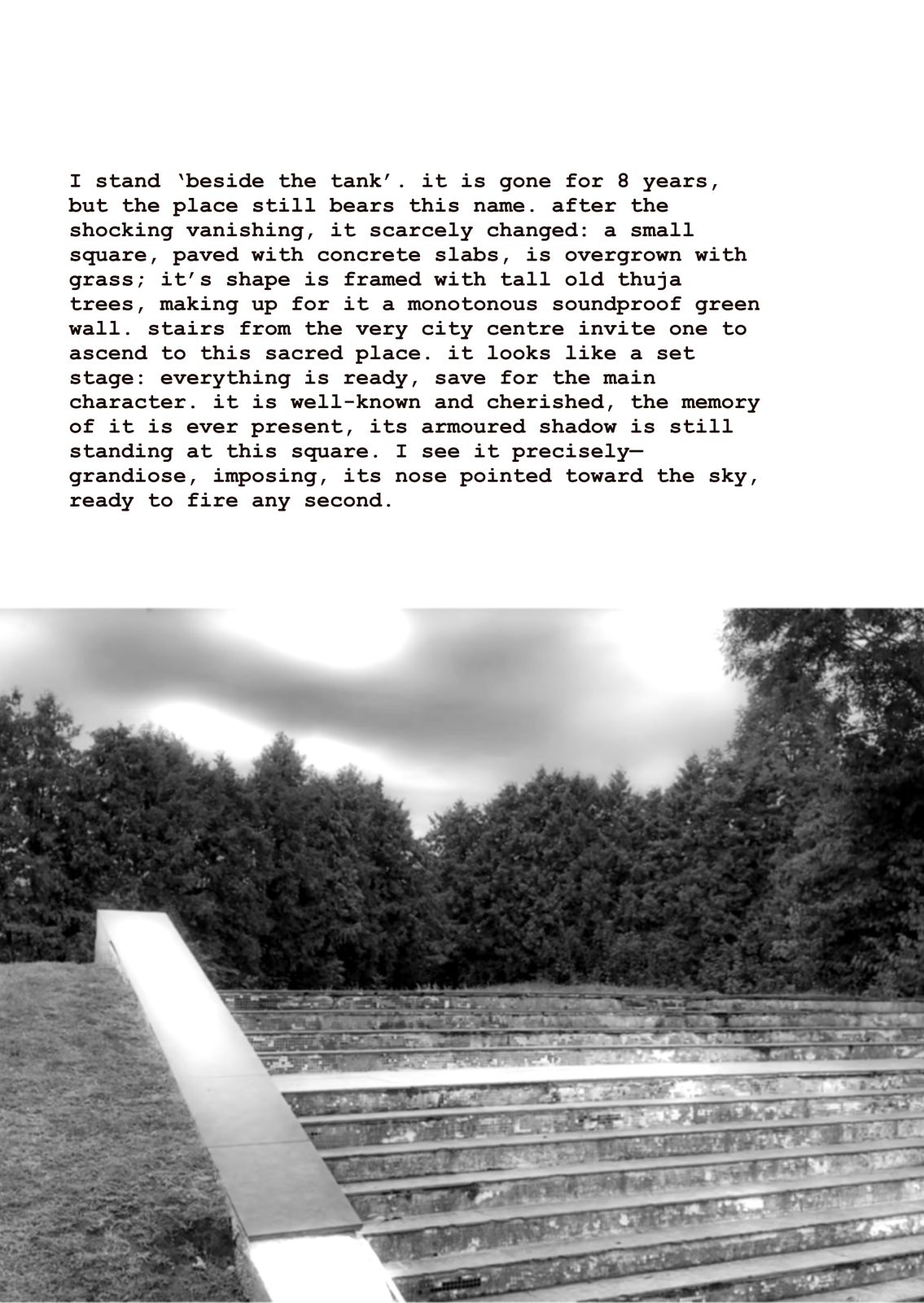
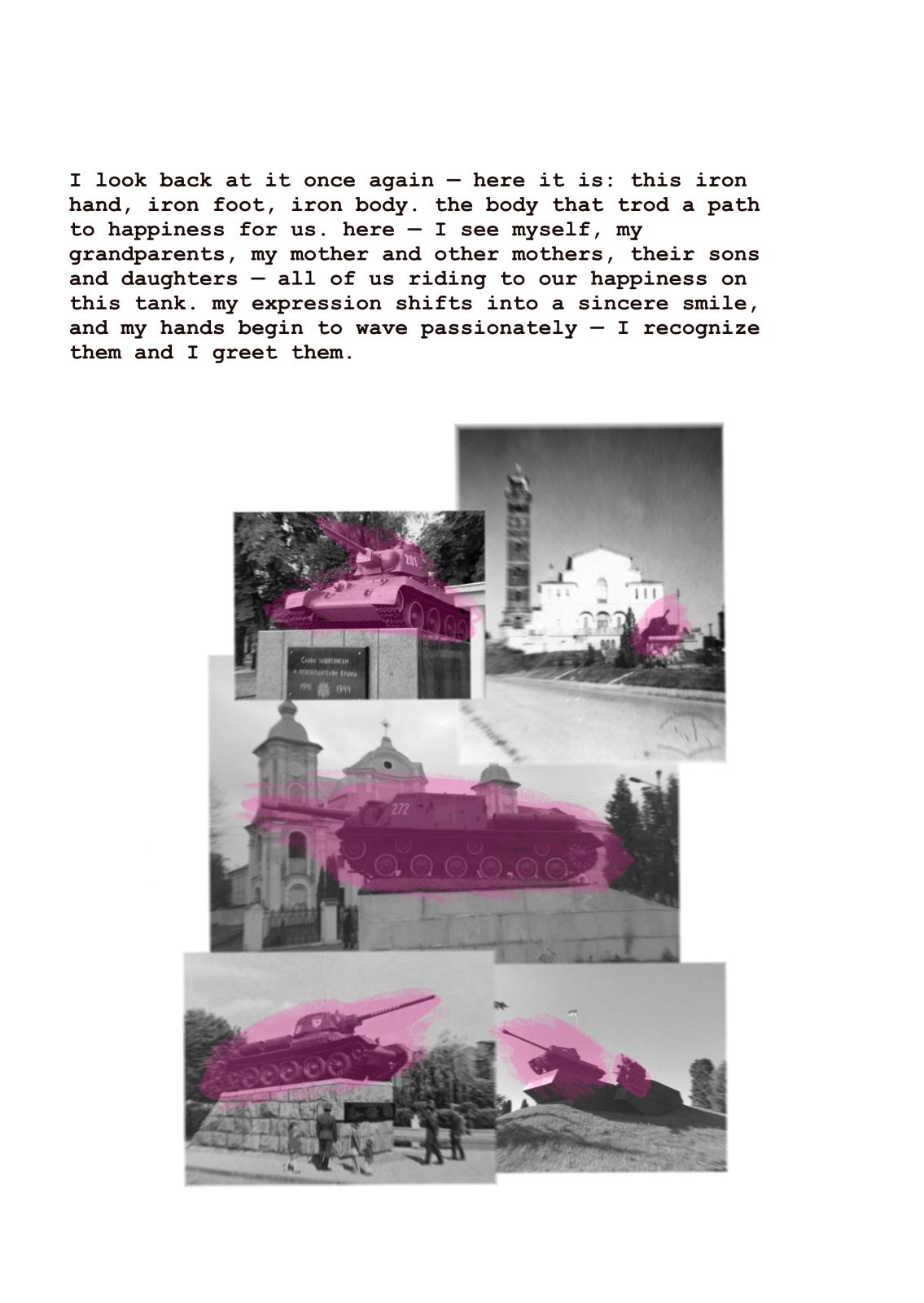
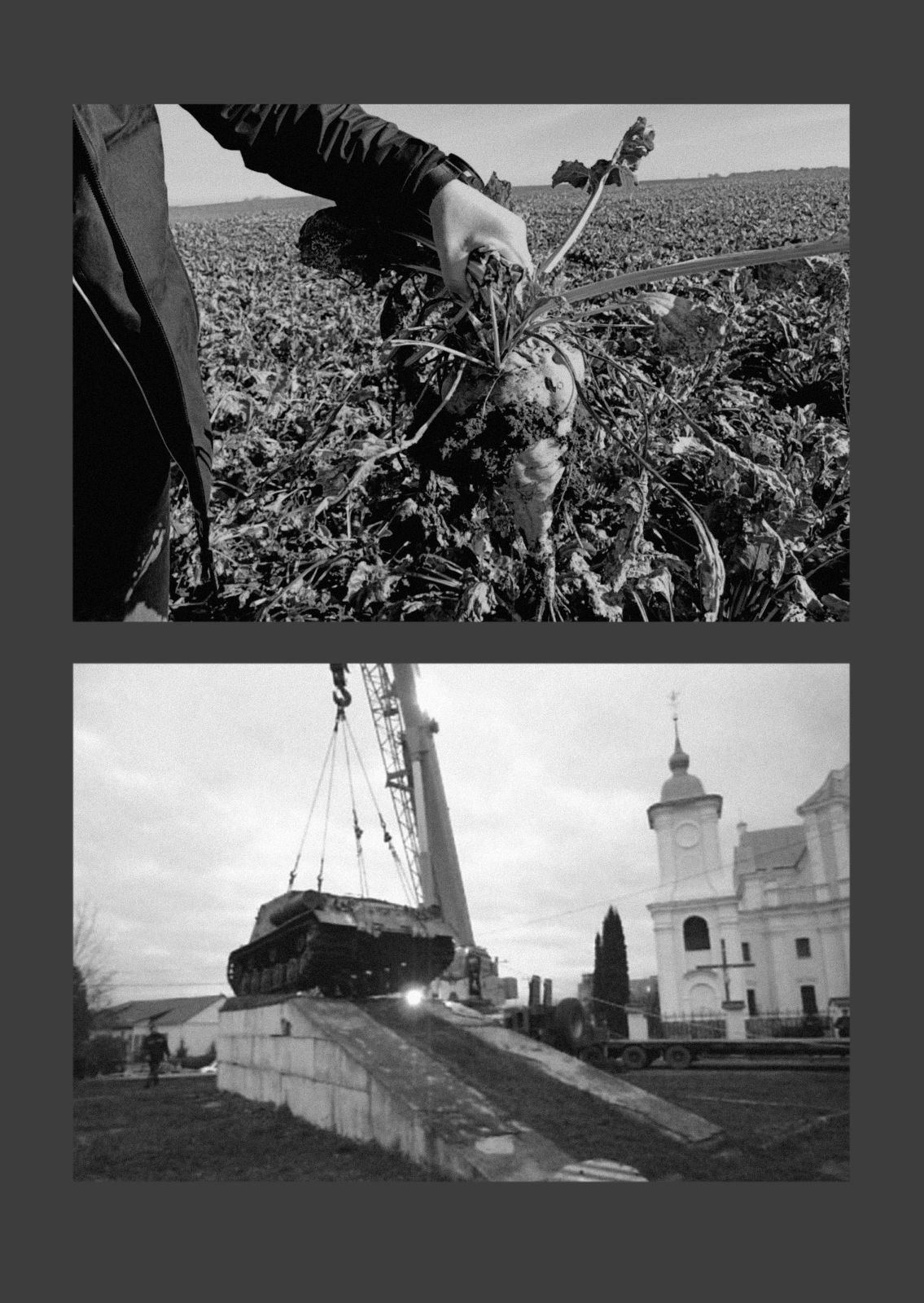
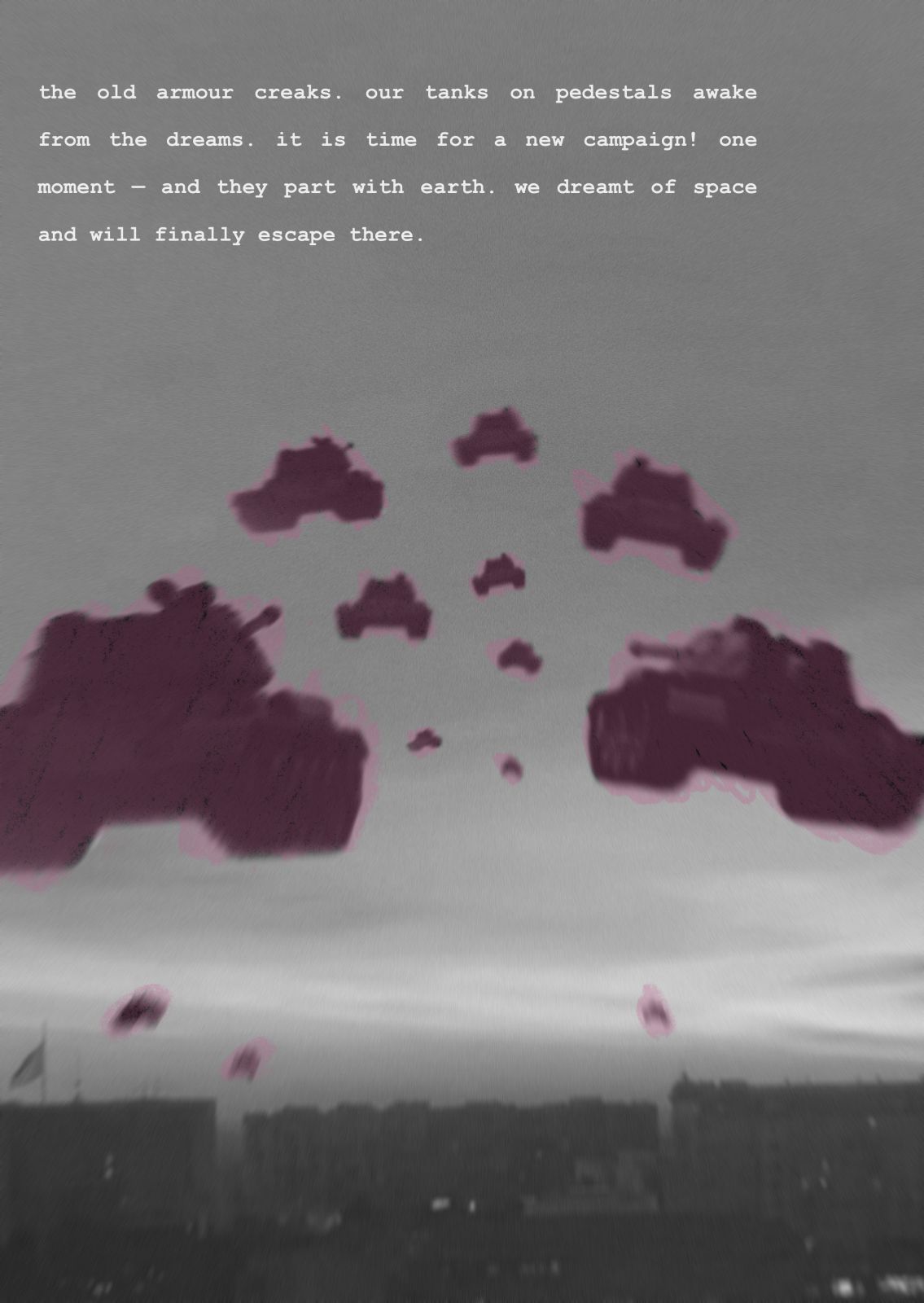
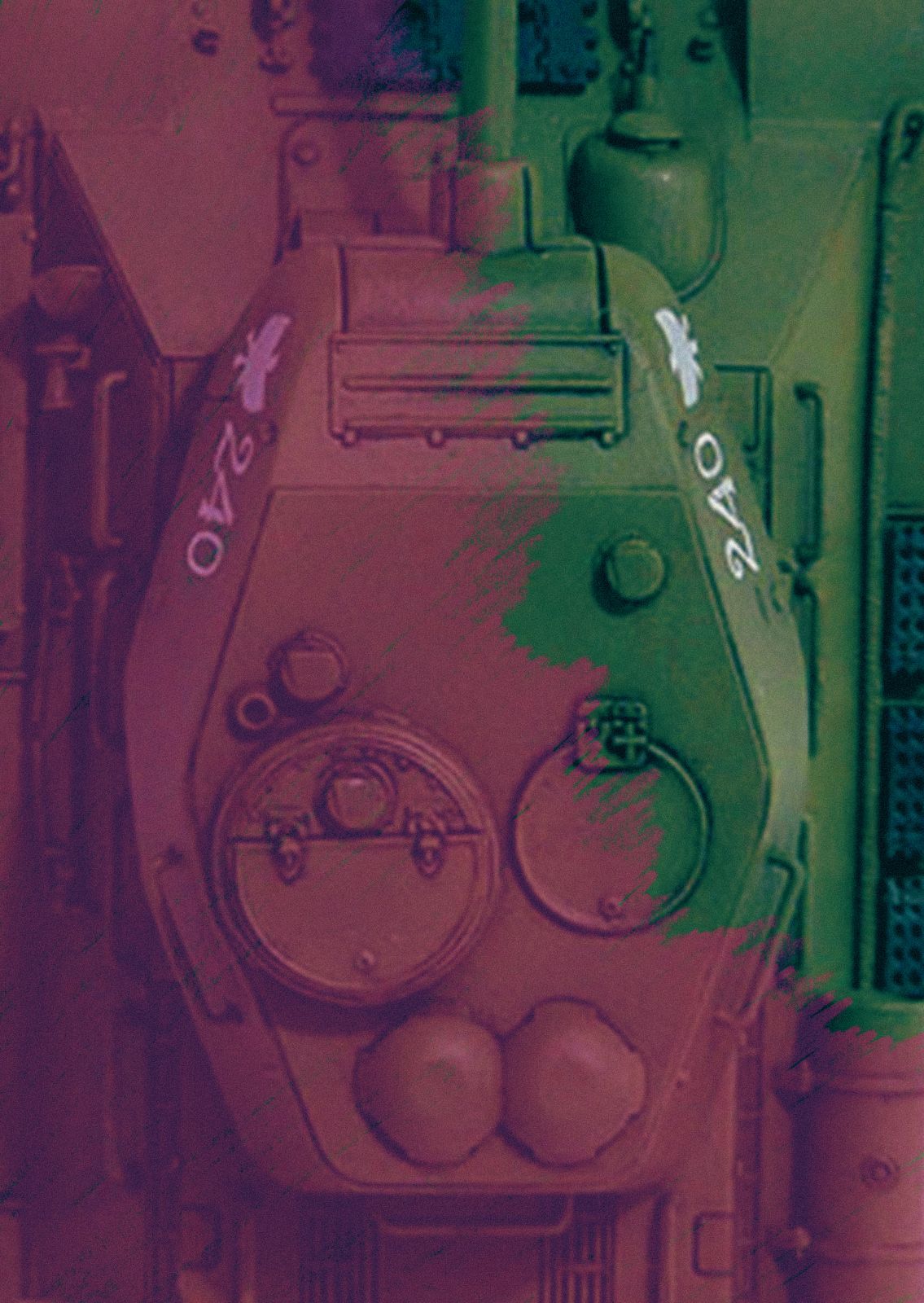
I still remember that childhood feeling of despair when I first discovered that the tank was gone. A killing machine has no place standing next to a church—that was the explanation for its demolition. Indeed, it is only after it was gone that we noticed there was a church, and that it was not a mere backdrop for the tank, and that the tank is indeed a killing machine, and not a memorial or a piece of amusement. But the space it had occupied hasn’t changed since, as if waiting for its return. This tank, whose tracks have left their marks on our soil, our harvest, and on our very selves, stands for me as a symbol for contemplating the present reality of my homeland — a fractured fragment of South-Eastern Volhynia, known today as the north of Khmelnytskyi Oblast. What bothers me is the ubiquitous ephemerality, ruination, and cheap post-socialist plastic gloss, as if everything had been reset again, as if nothing had existed before thirty years ago. And there is also the indifference of people living there, who seem to have abruptly stopped believing in any ideals. And yet, I know: those ideals did exist. My grand-uncle entered Prague with the tanks in 1968, and his sister — my grandmother — used to ridicule those giving up the Ukrainian language, switching into Russian for social benefits. I have grown up with this legacy, I am a product of this community, and I know that almost all of us bear this awkward hybrid identity—one that continues to re-traumatizes us today, has become inappropriate and even shunned in the cultural space, and therefore demands reflection. We need to contemplate on it to move forward. This text was written as an attempt to do just that: to acknowledge this legacy, to understand how it shapes us today—and to take responsibility for it.
In the text, these two dimensions remain distinct, but in real life they are intertwined within us, and we live amid the remnants of this inner battlefield. It is time to gather the fragments.
Text, design, layout: Oleh Levii
Translation: Roman Hardashuk