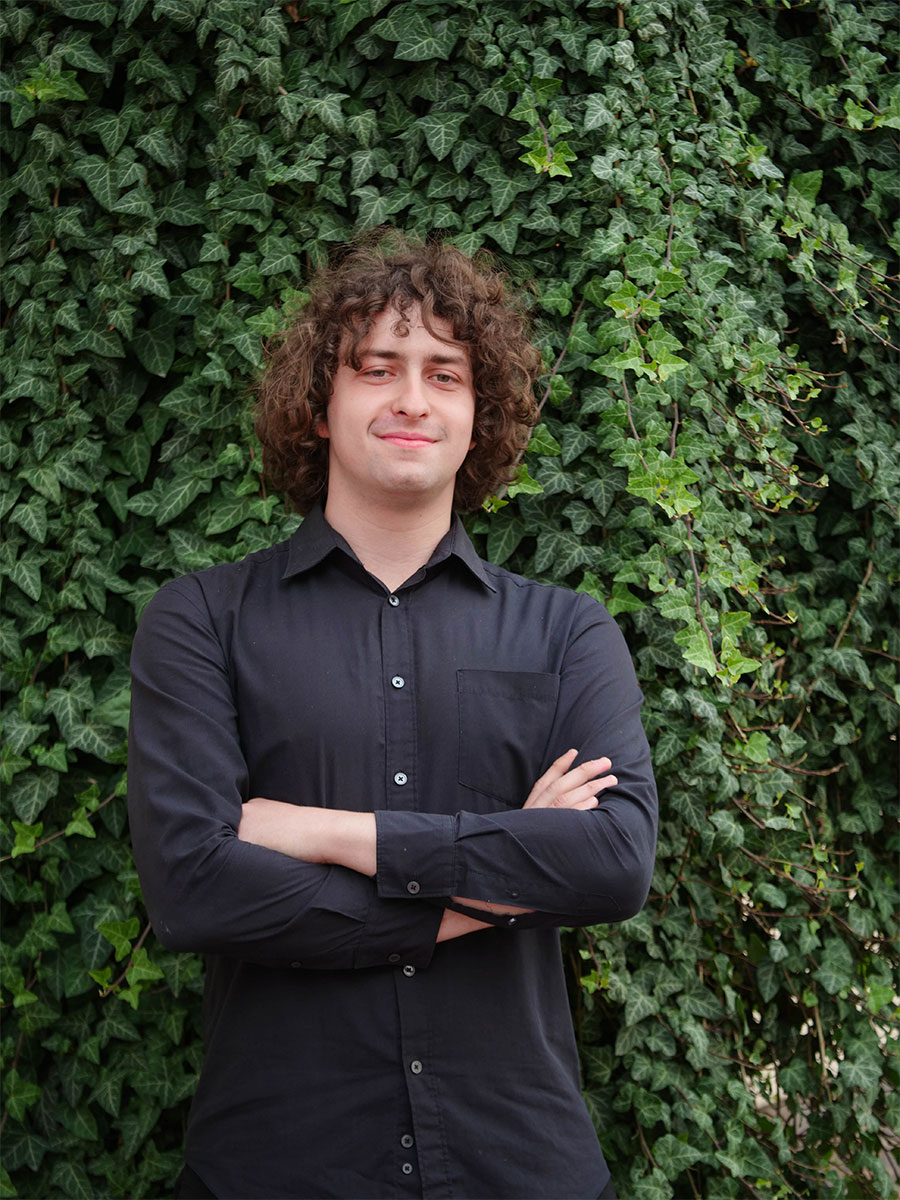
23, historian, journalist
KhmelnytskyiLviv
The life story of several generations of my family in the USSR
I. The Prologue.
Before the Russian-Ukrainian war began in 2014, conversations in my circle about 20th-century Ukrainian history were mostly limited to World War II and the German occupation of Ukraine from 1941 to 1944. At that time, people rarely discussed the Soviet period, and when they did, it was often tinged with nostalgia. But what was the Soviet period really like for Ukraine?
On the one hand, three weeks after Ukraine regained its independence, on 12 September 1991, the Verkhovna Rada of Ukraine (the Parliament) adopted the Law "On the Succession of Ukraine," which recognized Ukraine as the successor to the Ukrainian Soviet Socialist Republic (UkrSSR).
On the other hand, a year later, on 22 August 1992, Mykola Plaviuk, president of the Ukrainian People's Republic (UPR) in exile, transferred power to Leonid Kravchuk, president of Ukraine. Despite the symbolic nature of the event, Ukraine's succession from the UPR was emphasized.
Seventy-four years earlier, on 22 January 1918, the Ukrainian Central Council proclaimed the independence of the Ukrainian People's Republic in its Fourth Universal (Declaration). However, after three years of armed struggle, in November 1920, Ukraine came under the occupation of Soviet Russia, which had previously established a puppet Ukrainian Socialist Soviet Republic with its capital in Kharkiv. In December 1922, the Ukrainian SSR formally became one of the founding countries of the USSR (Union of Soviet Socialist Republics).
These events can be interpreted as the Bolshevik and, from 1922 onwards, Soviet occupation of Ukraine, which lasted 71 years with a break in 1941–1944, when it was replaced by German occupation. Ukrainians' and my family's perception of the occupying power changed under the influence of various forms of propaganda and repression used by the Soviet Union's leaders.
II. The Soviet Occupation. Collectivization
When traveling along the highway from Poltava to Kyiv, you would pass the town of Reshetylivka, 30 km away. Over 100 years ago, it was just a village. On 8 October 1905, the first child of Havrylo and Horpyna, my great-grandfather Pylyp Kis, was born here. Their family had eight children in total. My great-grandfather's teenage years coincided with the Ukrainian Revolution of 1917–1921. It is now difficult to say how he viewed these events or what he thought of them at the time. In 1919, Reshetylivka was occupied by the Red Army.
After completing two years of parish school, my great-grandfather continued his education with local craftsmen, mastering the skills of a tanner and a shoemaker — processing leather and repairing shoes. As the eldest son, he became his father's primary assistant in the household. By 1925, the family had eight desiatynas of arable land and two desiatynas of hayfields (one desiatyna equals 1.0925 hectares). They also had horses, oxen, cows, a reaper, a sheaf binder, a mill, a horse engine, a thresher, a winnower, plows, harrows, and other equipment.
The mid-1920s are associated with the New Economic Policy (NEP), i.e., the restoration of market relations and, crucially, the replacement of food requisitioning (de facto confiscation of harvests) with a fixed food tax. At the end of the 1920s, the Soviet government gradually curtailed the NEP.
The local authorities rarely bothered my great-great-grandfather, Havrylo, about handing over his farmland to the collective farm, though they threatened to prosecute him or send him to the Solovki prison camp for failing to comply with the state decree. In 1927, he died of pneumonia, and all matters related to the farm fell to my great-grandfather, Pylyp, and his mother.
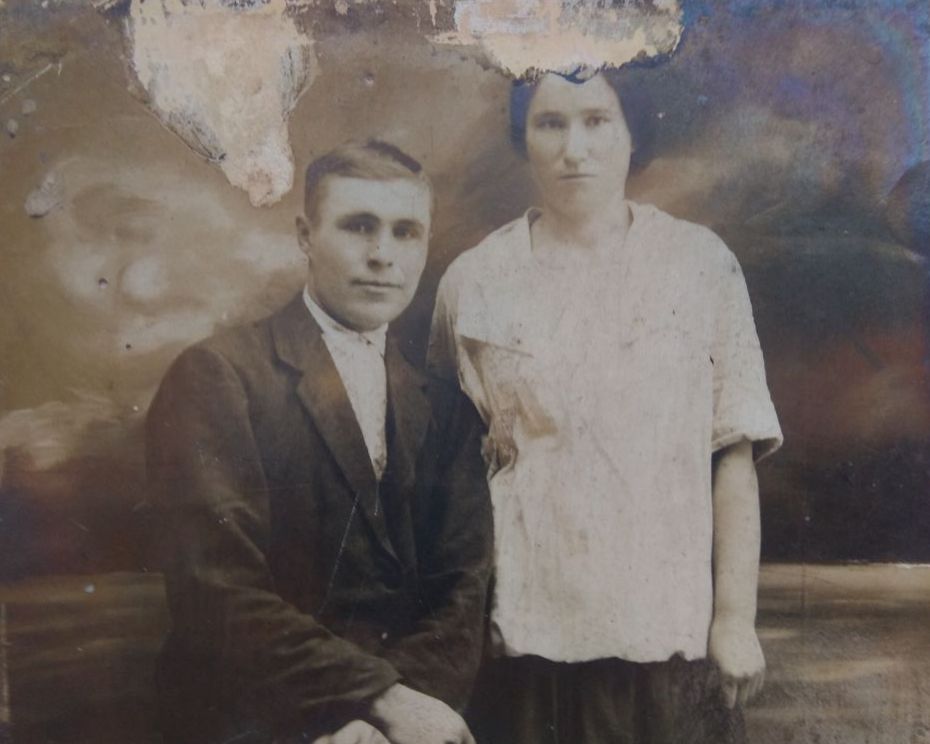
Pylyp Kis and Motrona Kis (Hrebinyk)
In 1928, my great-grandfather married my great-grandmother, Motrona Hrebinyk. She had three years of education at the parish school. Her parents owned a similar farm, but had one desiatyna more arable land. Three children were born during Pylyp and Motrona's marriage.
The following year, collectivization gained momentum. In the spring, my great-grandfather refused to voluntarily hand over his land and entire farm to the collective farm. He was arrested, and the following day, a group of authorized persons took all the crops and food supplies from his yard. My great-grandfather spent almost a year in a pretrial detention cell. From early morning, under guard, he performed various tasks in the collective farm fields along with other prisoners. In the evening, the investigator summoned him and asked whether he had decided to give up his farm and work for the collective farm.
In the fall, my great-grandfather escaped with other prisoners. While harvesting sunflowers, they noticed that their lunch had not been delivered and the guards had disappeared. My great-grandfather visited his wife and mother, then hid in the forest. The police were searching for the fugitives, so after consulting with his wife, Pylyp decided to go to Donbas. His wife's older brother worked as an accountant at one of the mines in Horlivka. It was also easier to find work there. My great-grandfather Pylyp became a miner who installed and maintained supports in a working drift at one of the mines. Meanwhile, on 15 November 1930, his son and my grandfather, Vasyl Kis, was born in Reshetylivka.
In the absence of the great-grandfather, the local authorities continued pressuring his wife to join the collective farm. Because she refused, Motrona and her young child were evicted from their home, and she went to Horlivka to live with her older brother and husband. In Donbas, the family survived the HolodomorThe Holodomor of 1932-1933 was a massive man-made famine in Soviet Ukraine. of 1932-1933 and a malaria epidemic.
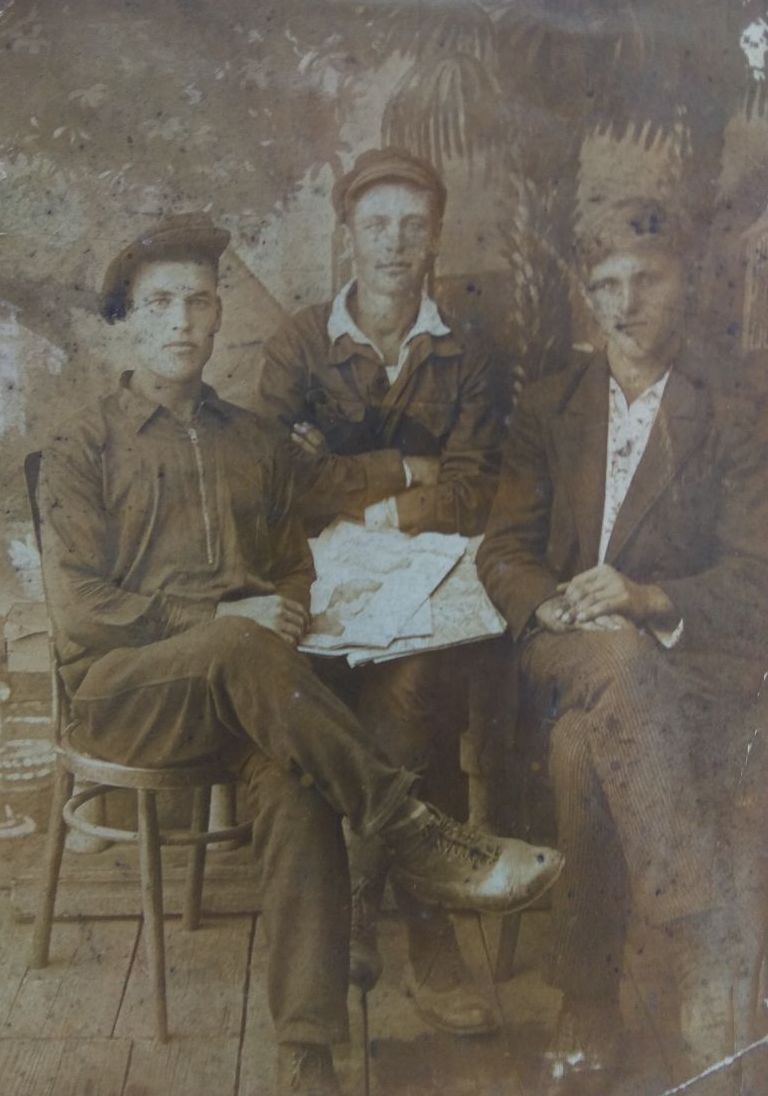
Pylyp Kis (in the center).
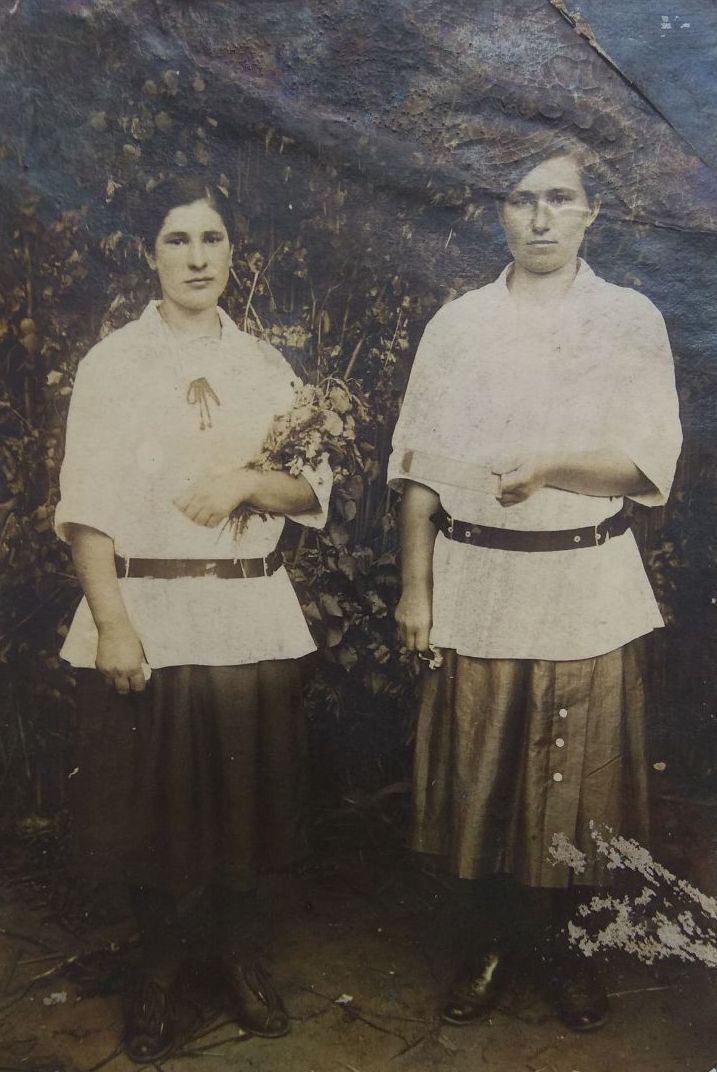
Motrona Kis (Hrebinyk) (on the right).
In 1934, my great-grandfather Pylyp was injured in an accident at the mine where he worked. My grandfather Vasyl writes about this in his memoirs, but does not go into detail. At that time, the police in Donbas were searching for fugitives like my great-grandfather, arresting them and returning them to their place of permanent residence. Due to the risk of arrest and the inability to continue working because of his health, Pylyp decided to return home. In Reshetylivka, my great-grandfather joined and became the foreman of the vegetable garden (field) brigade at the "Peremoha" (Eng. — victory) state farm. His old acquaintance, police officer Danylo Shkurupii, informed him that he and his family could return to their home if he joined the collective farm. My great-grandfather agreed to join the "Industria" collective farm and returned to his family home with his wife and son. My grandfather wrote about his fatherʼs work on the collective farm in his manuscripts:
"He works as an ordinary stableman on a collective farm. It is difficult to work when you constantly see your horses, oxen, and harnesses, which you made with your own hands, and realize that they are no longer yours. Only at first glance does it seem that animals do not understand anything. Looking at a person with their wise, tearful eyes, they understand everything and even remember. This is very noticeable when you work near them, clean the stables, put hay in the manger, or give them water. The animal tries to snuggle up to you or lick your hand or face with its tongue. The animals cried, and Pylyp cried with them, which he quietly told his wife about at home."
It was also difficult to work because everyone blamed my great-grandfather for all the negligence. Some people often reminded him that he was a "kurkul"Kurkul is a derogatory term for a wealthy peasant and/or opponent of the collectivization of agriculture in the Soviet Union. and could be arrested again. In addition, my great-grandmother had not yet joined the collective farm. Therefore, my great-grandfather Pylyp changed jobs and went to work on a cattle farm.
Over time, the collective farm's management changed. The new collective farm chairman knew my great-grandfather as a skilled agricultural practitioner. So he was appointed foreman of the vegetable garden brigade, and then foreman of the сrop production brigade.
In September 1937, my grandfather Vasyl entered first grade at the Reshetylivka elementary school. In January 1940, his mother joined the collective farm, and in the spring she began working occasionally in the vegetable garden brigade.
III. World War II. Life in the occupation and the Red Army
The invasion of the Polish Republic by the Third Reich and the Soviet Union in September 1939 marked the beginning of World War II. The implementation of the secret protocol of the Molotov–Ribbentrop Pact and the allied nature of relations between the two states demonstrate joint responsibility for the outbreak of World War II.
Less than two years later, on 22 June 1941, the troops of the Third Reich invaded the territory of their former ally, the Soviet Union. The start of the war did not come as a surprise to my great-grandfather Pylyp. Over a glass of horilka (Ukrainian alcoholic drink), he and his brothers had already discussed who the war would be with and that the collective farm had already received orders to send its best horses to the Red Army. My grandfather Vasyl described the atmosphere of that time in his manuscripts:
"In the evenings, almost everyone went out into the street, turning their gaze toward the west, where the glow of war was already visible and drawing closer to us with each passing day. People began to prepare for war. They hid grain, clothes, and valuable items, if they had any, wherever they could. Pylyp worked day and night at the collective farm. The collective farm distributed grain to the farm workers, the grain that they had not managed to send to the east."
The harvest on the collective farm began ahead of schedule. It was necessary to gather the harvest quickly and deliver it to the state so that it would not fall into enemy hands. Men who had not yet been mobilized and women formed the reaper teams. Women also became drivers of cars and tractors due to the mobilization of men. The process continued day and night, and children were involved in harvesting. Due to the lack of horses and oxen, cows had to be used to plow the fields in the fall. Later, the collective farm was evacuated, and my great-grandfather and a group of farm workers led herds of horses and cows to Poltava. They were loaded into wagons in the city and sent east.
My great-grandfather's brothers were mobilized into the Red Army, as mentioned in documents detailing casualties. There is no official confirmation regarding my great-grandfather, but my grandfather mentioned in his manuscripts that his father had gone to a military unit.
After the evacuation of the collective farm, no one went to work there. People took care of their own farms. Collective cow grazing, known as "toloka," ceased to exist. Now everyone grazed their cows wherever they wanted, but they did it in groups of 5-6 people, with adults and children together, as it was safer that way.
German troops occupied Reshetylivka on 22 September 1941. During the fighting around the village, my great-grandmother and her children hid in a pit where they stored potatoes. One day, a German soldier approached the pit, opened the lid, kicked Motria and her crying children out of the pit, looked inside, and pushed them back in. Returning to the house, my great-grandmother noticed that the chest was open and ransacked, the milk and chicken eggs were gone, but everything else was in place. After that, she milked the cow, but the Germans took the milk. They also demanded butter and eggs. My great-grandmother gave them everything, and they left.
A few days later, a German major of medical service, possibly a surgeon, stayed in the house. Once, he removed shrapnel from a wounded German right in the house. He spoke Russian and said that his father had fought in this area in 1918 and that they had owned land in Ukraine before that.
The occupiers visited the house several more times. My grandfather recalls these moments in his manuscripts:
"The first were the Magyars. They didn't take anything from the house, but they shot two chickens and a rabbit and took them. The next ones were Romanians. They didn't take any food, but... they broke into the house, opened the chest, turned everything upside down, cut off the collars of all the coats, and left, despite Motria and the children's crying."
My grandfather recalls that after some time, his father returned home at night. My great-grandfather's military unit near Pavlohrad was surrounded, and everyone quietly dispersed to their homes. The German authorities had already taken control of the area, but my great-grandfather did not go anywhere to register. In other words, he stayed there illegally for the German authorities. He repaired shoes for his acquaintances and tried to stay out of the public eye. In 1942, the Germans returned 1 hectare of land to the family. They also opened a school that my grandfather attended, but it did not run for long. The German occupation of Reshetylivka lasted two years.
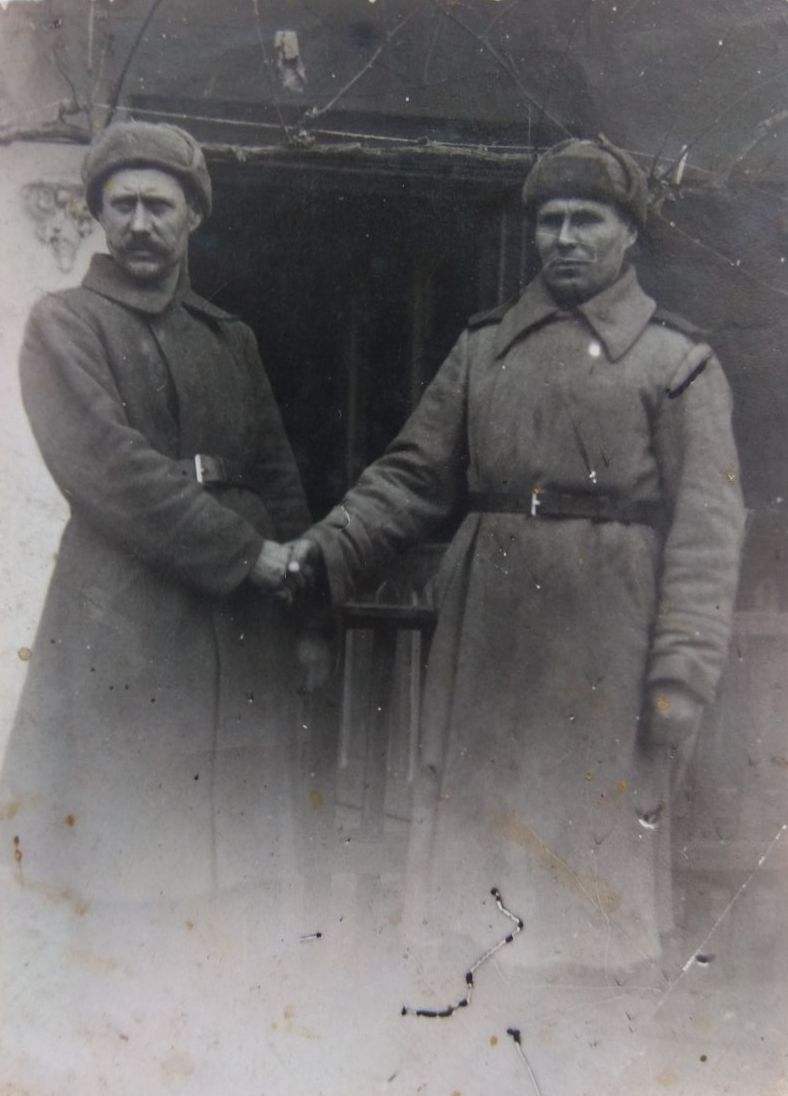
Pylyp Kis (on the right).
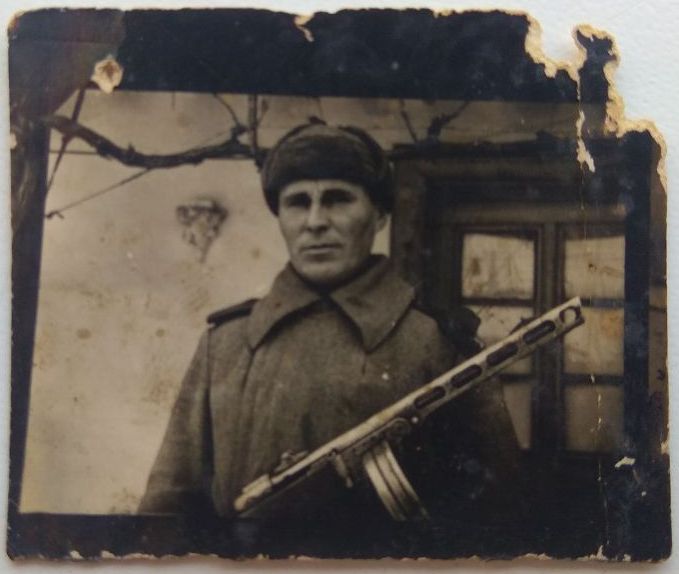
Pylyp Kis.
The Germans began to retreat in 1943, and in September, my great-grandfather and other men went into the forest to meet the Red Army troops. When fighting broke out around Reshetylivka, my great-grandmother and grandfather also went into the forest to avoid danger. On 22 September 1943, the Red Army occupied Reshetylivka. The following month, my great-grandfather was mobilized into the Red Army. In the Red Army, he served as a sapper in the 67th Assault Engineer and Sapper Battalion. My grandfather later recalled that such positions were usually given to "unreliable" people in order to get rid of them.
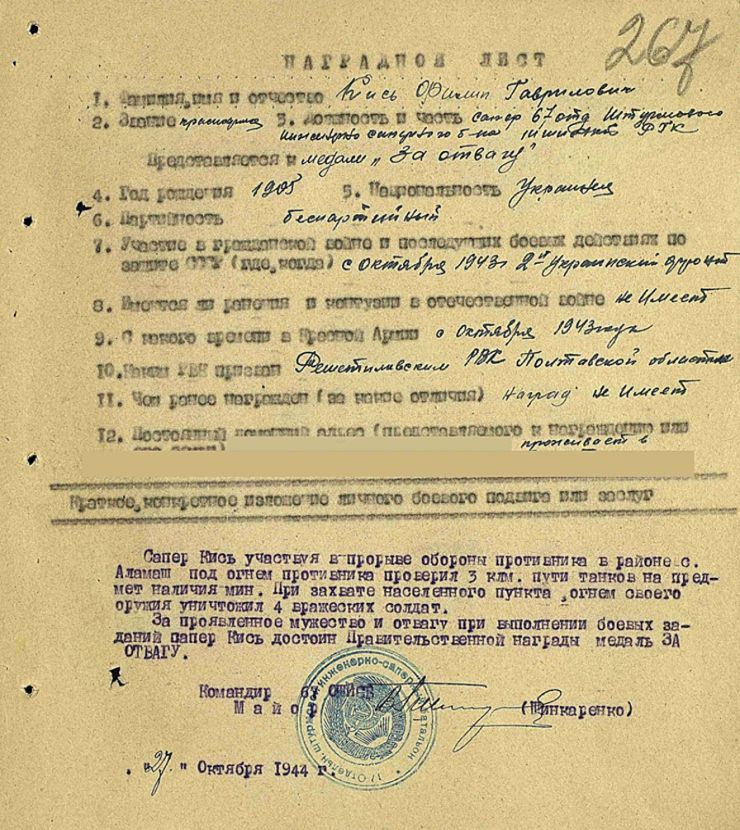
Letter on awarding Pylyp Kis with the Medal for Bravery.
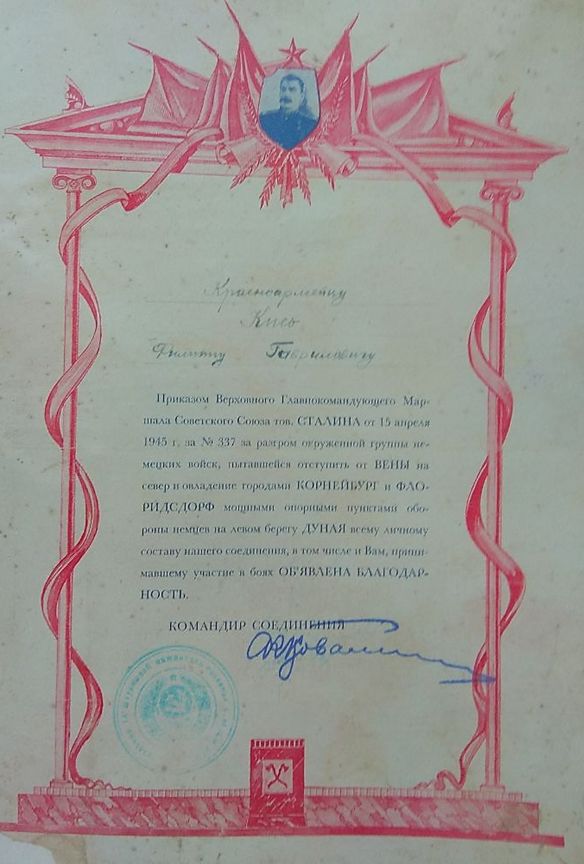
Commendation to Pylyp Kis for participating in the capture of the Austrian cities of Korneuburg and Floridsdorf.
In 1944, after a three-year break, grandfather Vasyl resumed his schooling. That same year, great-grandfather Pylyp was awarded the Medal for Bravery for his role in breaking through enemy defenses near the village of Alamaș (Romania or Hungary).
Later, great-grandfather Pylyp was wounded in one of the battles, but no one knows when or where. Grandfather Vasyl said that his father's military career ended in Budapest. However, the family archive contains a commendation to my great-grandfather for his participation in the capture of the Austrian cities of Korneuburg and Floridsdorf in April 1945. On May 8, 1945, the German-Soviet war ended with the capitulation of the Third Reich's troops. After recovering, my great-grandfather returned to Reshetylivka.
IV. The Cold War. Life behind the Iron Curtain
In 1946, former British Prime Minister Winston Churchill delivered a speech at Westminster College in Fulton. He highlighted the Soviet Union's threat to democratic nations and said that an "iron curtain" had descended on the European continent. Churchill's speech was one of the events that marked the beginning of the Cold War between the Western and the socialist blocs. Meanwhile, post-war reconstruction went on in the Soviet Union, and Ukraine was gripped by famine in 1946–1947. At that time, grandfather Vasyl, at his mother's request, went to the field one last time to gather ears of grain to feed his family.
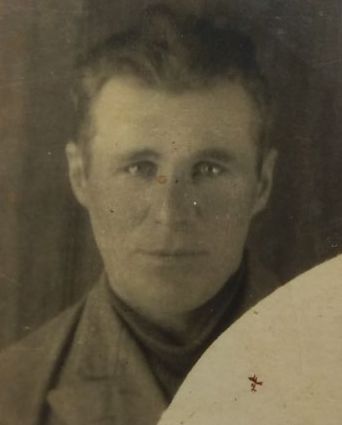
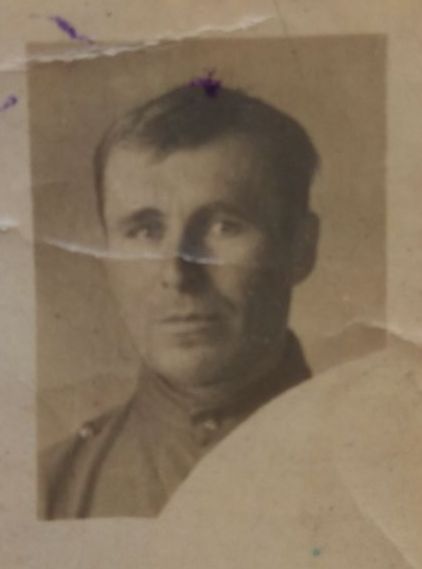
Pylyp Kis
After World War II, attitudes toward the family changed. It was believed that as a soldier, great-grandfather Pylyp had atoned for his guilt in blood. Grandfather Vasyl's party card states that in 1946 he became a member of the All-Union Leninist Young Communist League (VLKSM). Before the war, he was not accepted into the Octobrists and PioneersOctobrists and Pioneers — Soviet youth organizations designed to indoctrinate children into communist ideology. because he was the son of a "kurkul."
My grandfather studied diligently at school and thought about going on to study at one of the republic's universities. He graduated from school in 1951 with a gold medal. On the eve of graduation, the teacher told the boys that they would all be drafted into the army, so it would be better to give the medals to the girls. Why my grandfather ended up in a military school instead of regular service is an open question. My grandfather claimed that at that time, the Soviet army was short of officers, so everyone was sent to military schools. He also often said that after the return of Soviet power to Reshetylivka in 1944, they were marked as residents of the occupied territory, but most likely, this was a separate item in the questionnaire when entering the military school.
As an excellent student, he was offered several options. Grandpa chose the Bohdan Khmelnytsky Military Technical School in Vinnytsia. He tried to fail the entrance exams, but was forced to answer "yes" to the question "Do you want to serve in the Red Army?" He later said that it was impossible to give another answer without further consequences. The following year, on 17 March 1952, my great-grandfather Pylyp died in Reshetylivka.
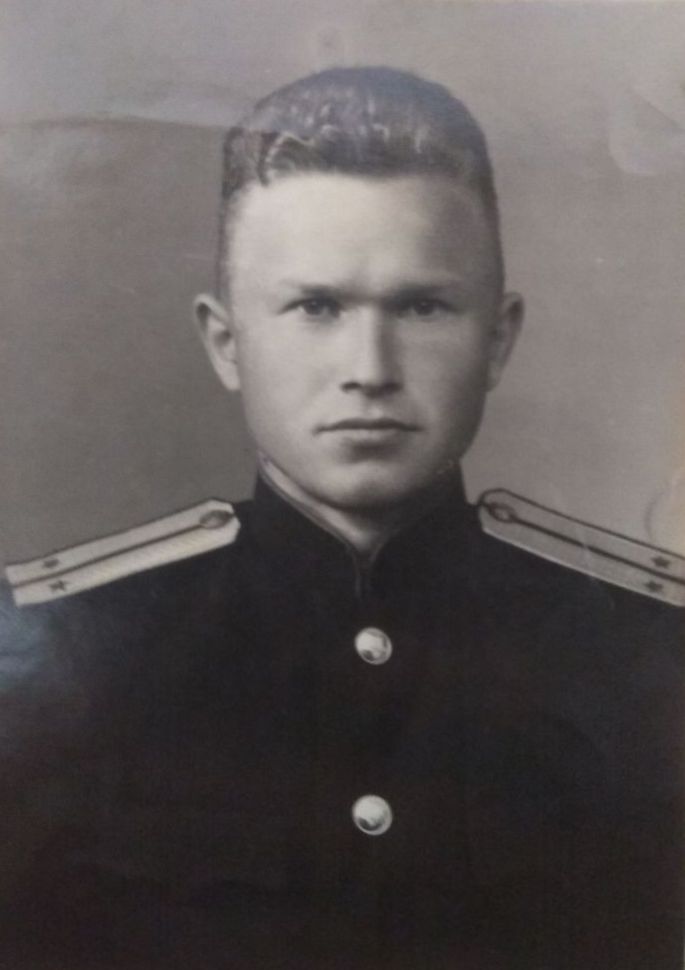
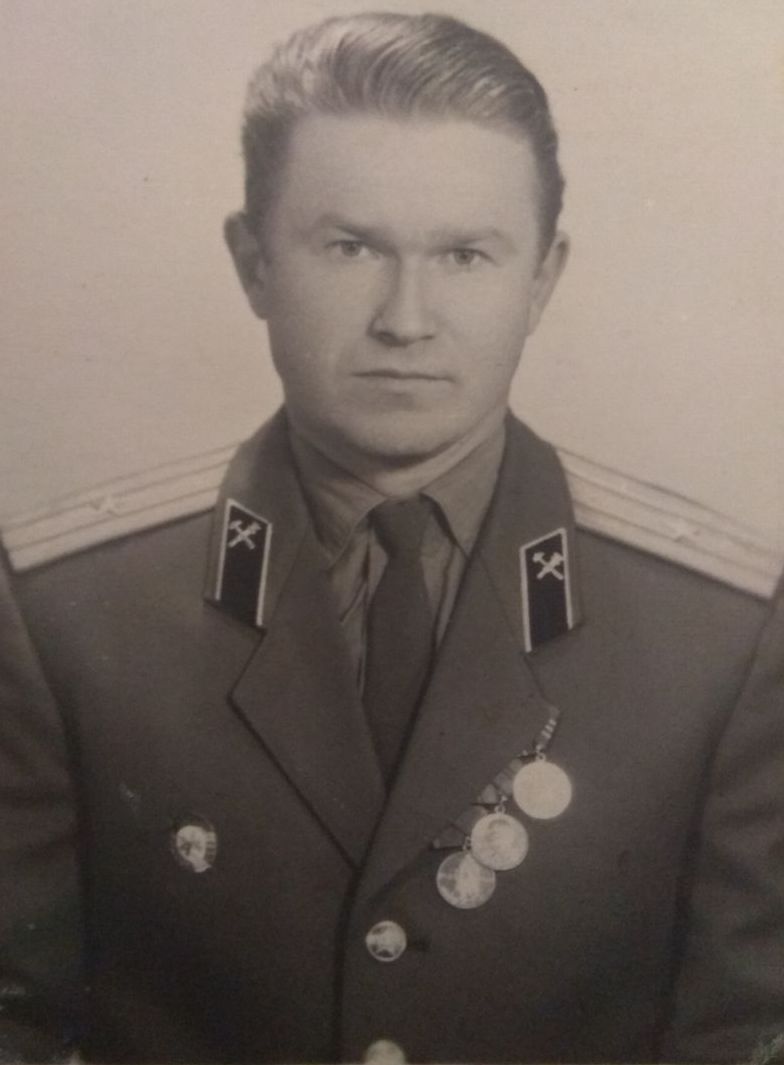
Vasyl Kis.
After graduating from military school in 1954, my grandfather encountered the life of a Soviet officer. Over the following 23 years, he served in several places — Shchyrets (Lviv region, Ukraine), Petropavlovsk-Kamchatsky (Russia), Kivertsi (Volyn region, Ukraine), Khmelnytskyi (Ukraine), and Bruntál (Czech Republic). Despite everything his family had to endure under Soviet rule, my grandfather remained a conscientious soldier. As the person responsible for supplying the military unit, my grandfather was regularly pressured to steal alcohol, as others did, but he refused.
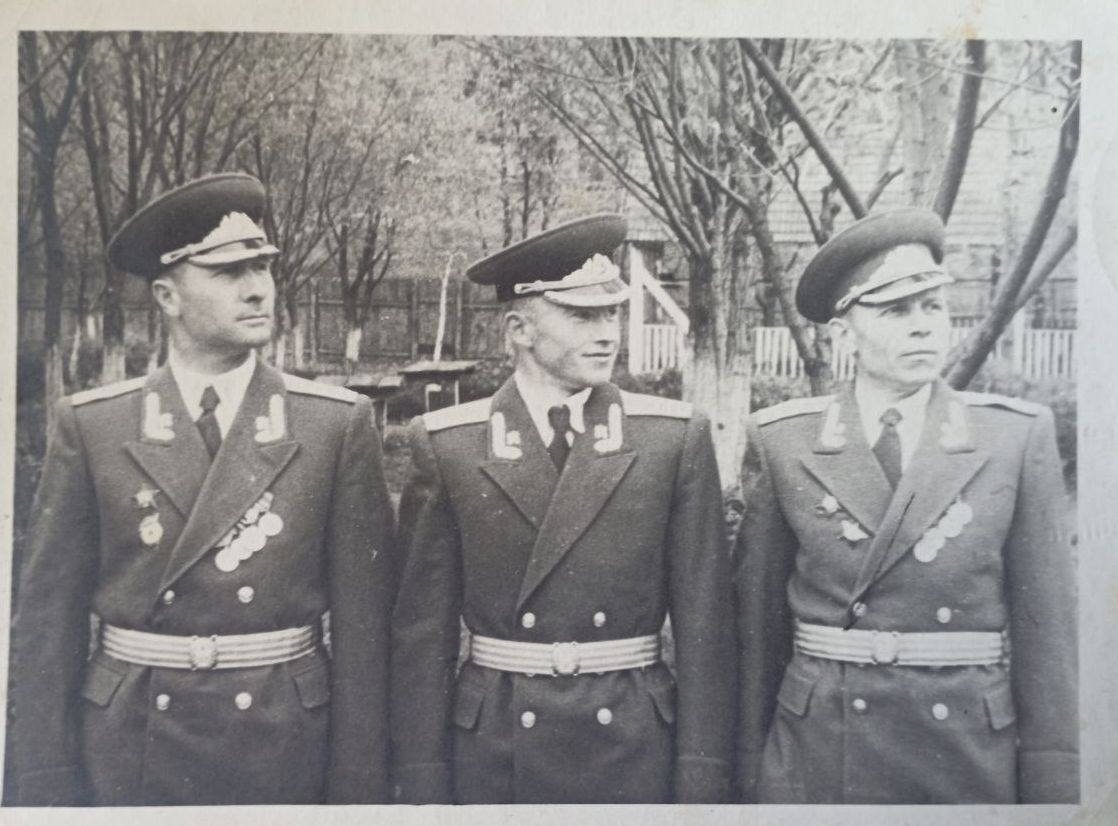
Vasyl Kis (in the center), 07.11.1957.
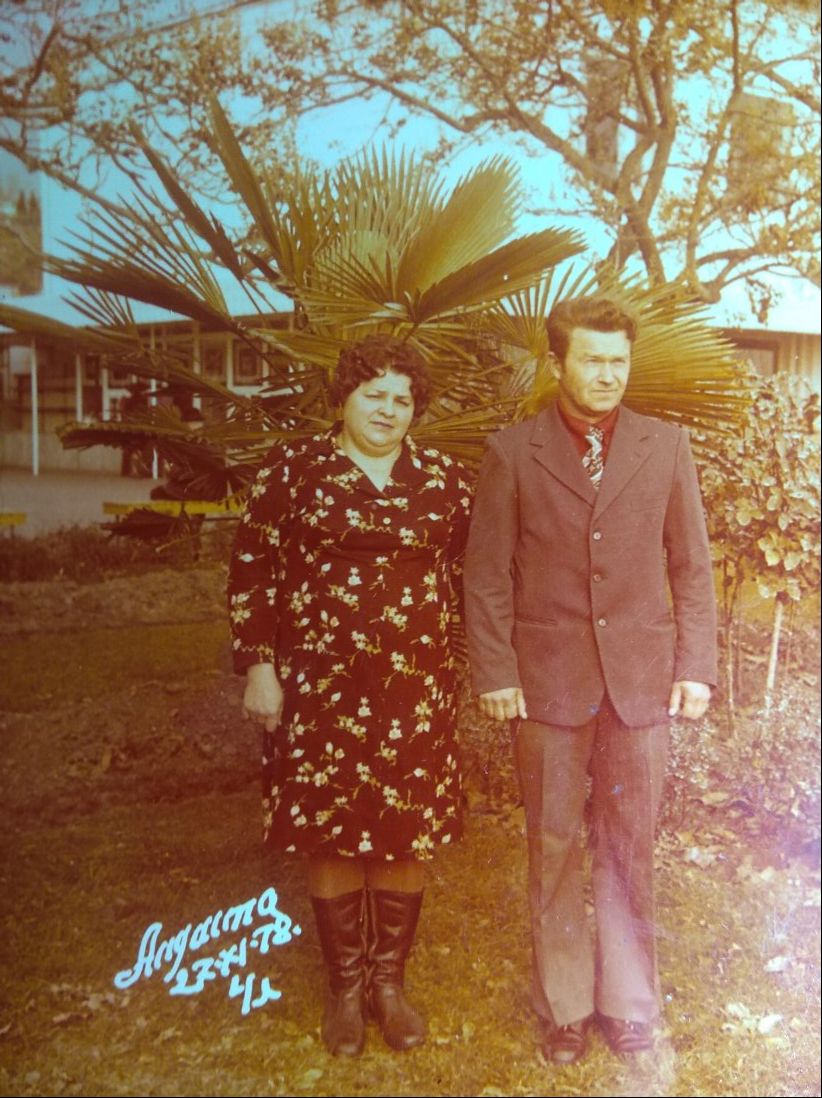
Olha Kis (Hupalo) and Vasyl Kis in Alushta (Crimea), 27.11.1978.
During his service, my grandfather met my grandmother, Olha Hupalo. They couldn't marry right away because my grandmother's aunt lived abroad in Canada, and the authorities needed to check her background. After the background check, my grandfather and grandmother married in Shchyrets on 12 January 1957, and later they had four children.
An aunt from Canada suggested meeting the couple in Italy to give them a wedding gift. However, as an officer in the Soviet Army, the grandfather could not simply leave the USSR, let alone travel outside the socialist bloc. The gift was sent by mail, and it turned out to be a blanket, which has not survived to this day.
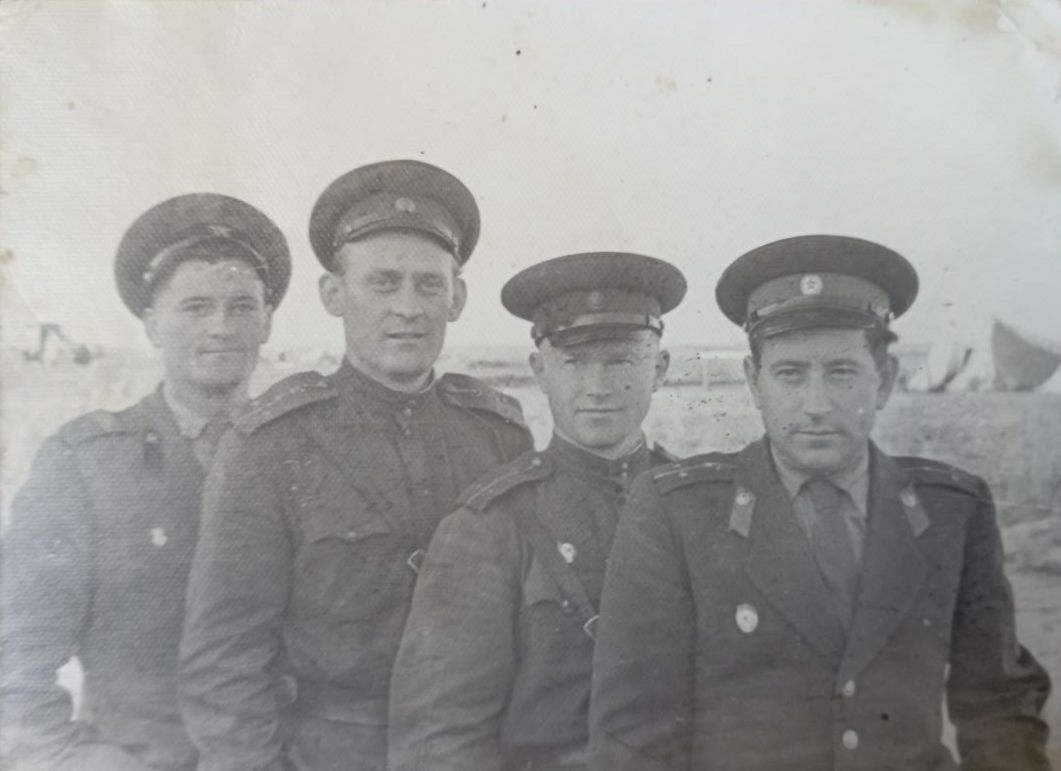
Vasyl Kis (second from the right) in the virgin lands of Kazakhstan, 23.10.1960.
As an officer in the Soviet Army, my grandfather joined the Communist Party of the Soviet Union in February 1959. The following year, he participated in harvesting virgin lands in the Pavlohrad region of the Kazakh SSR. The Soviet regime's effort to boost crop yields with extensive methods ultimately failed.
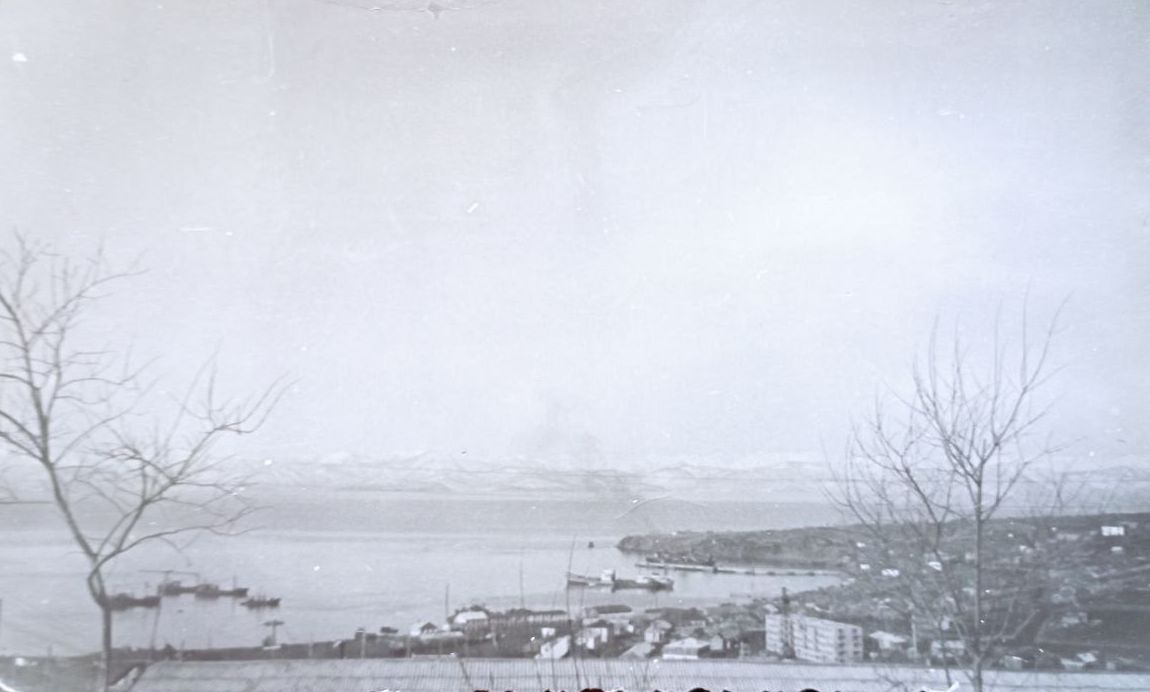
Petropavlovsk-Kamchatskyi, 26.05.1963.
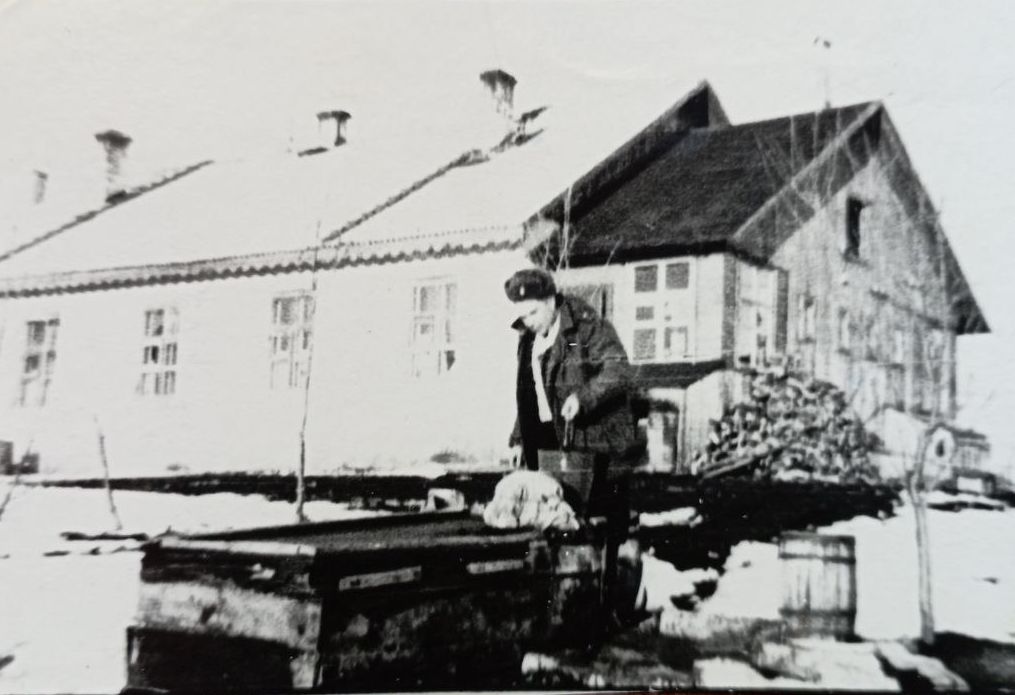
The house where my family lived on the Kamchatka Peninsula.
On 11 October 1964, my mother, Natalia Kis, was born in Petropavlovsk-Kamchatskyi. She spent her first four years living on the Kamchatka Peninsula. Because of this, as a child, she initially identified as Russian based on the territorial principle.
Recruiting large numbers of people into military service helped the Soviet regime shape Soviet society. Most servicemen of all nationalities moved around constantly during their service. After retirement, they did not always return home, but settled throughout the USSR. As a result, different peoples gradually mixed and assimilated. My mother grew up in military settlements, attended kindergarten in Kivertsi, and started first grade in Khmelnytskyi. During her 10 years of schooling, she attended three different schools due to frequent relocations.
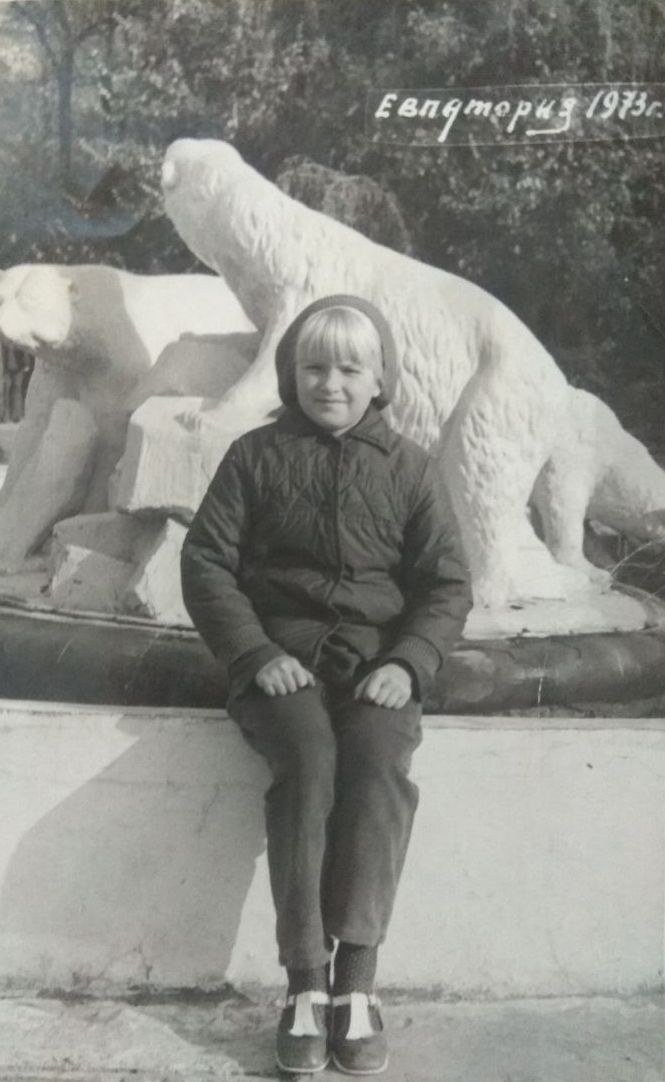
Natalia Kis in Yevpatoria (Crimea), 1973.
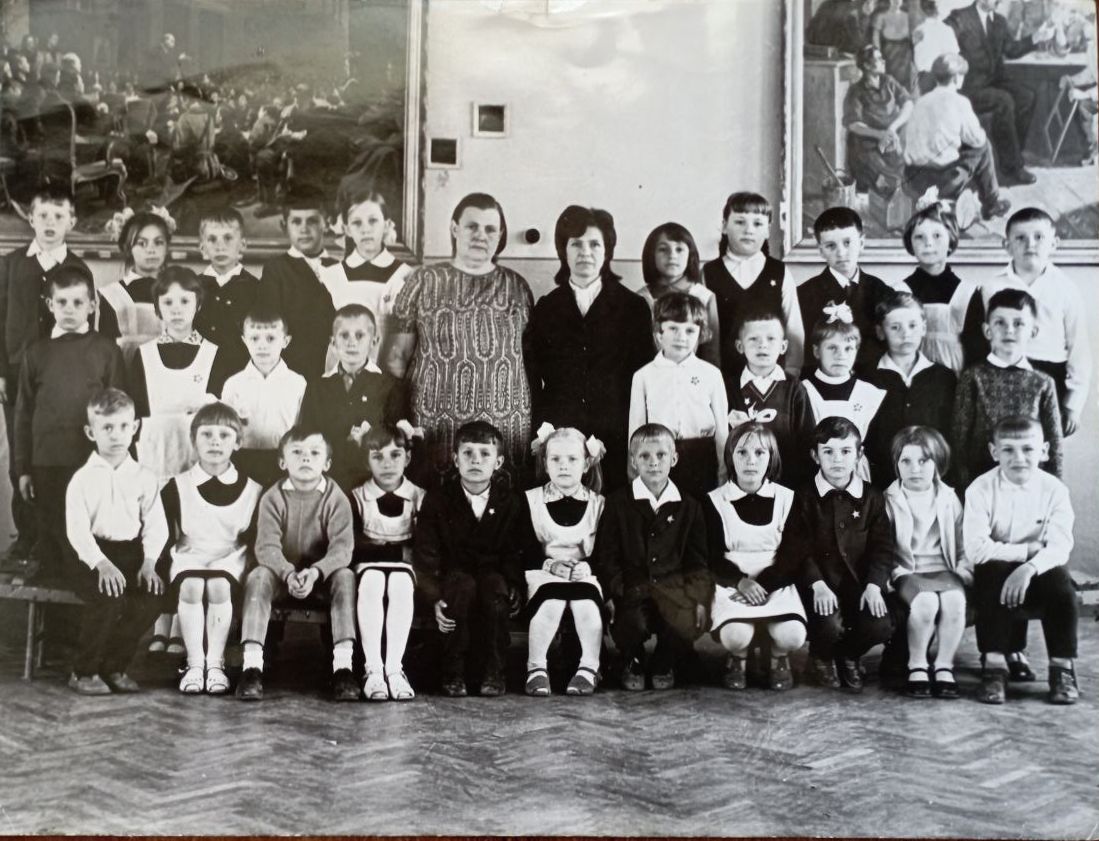
Natalia Kis (bottom row in the center) in the secondary school No. 8 in Khmelnytskyi.
She attended the first two grades at Ukrainian-language secondary school No. 8 in Khmelnytskyi. My mother, like other children of her age, became an Octobrist and received a badge in the form of a five-pointed star featuring an image of Lenin from his childhood. The Octobrist organization was based on communist ideology and prepared children aged 7–9 for entry into the Pioneer organization (aged 9–14).
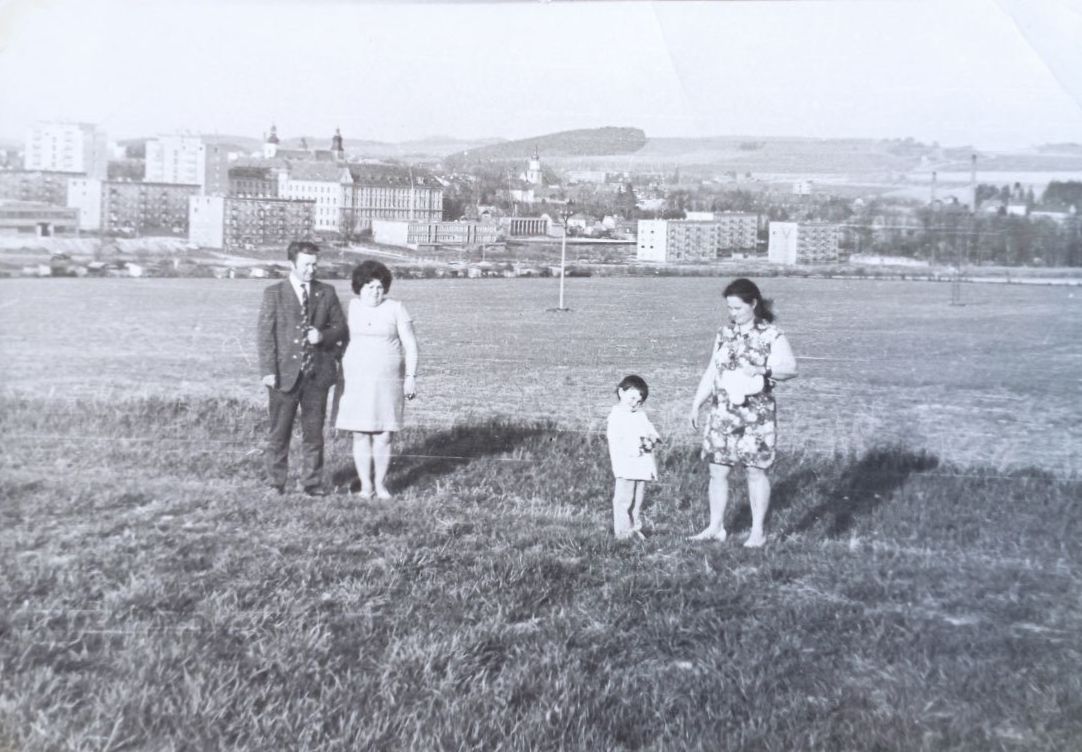
Vasyl Kis and Olha Kis (Hupalo) (on the left) in Bruntál (Czech Republic).
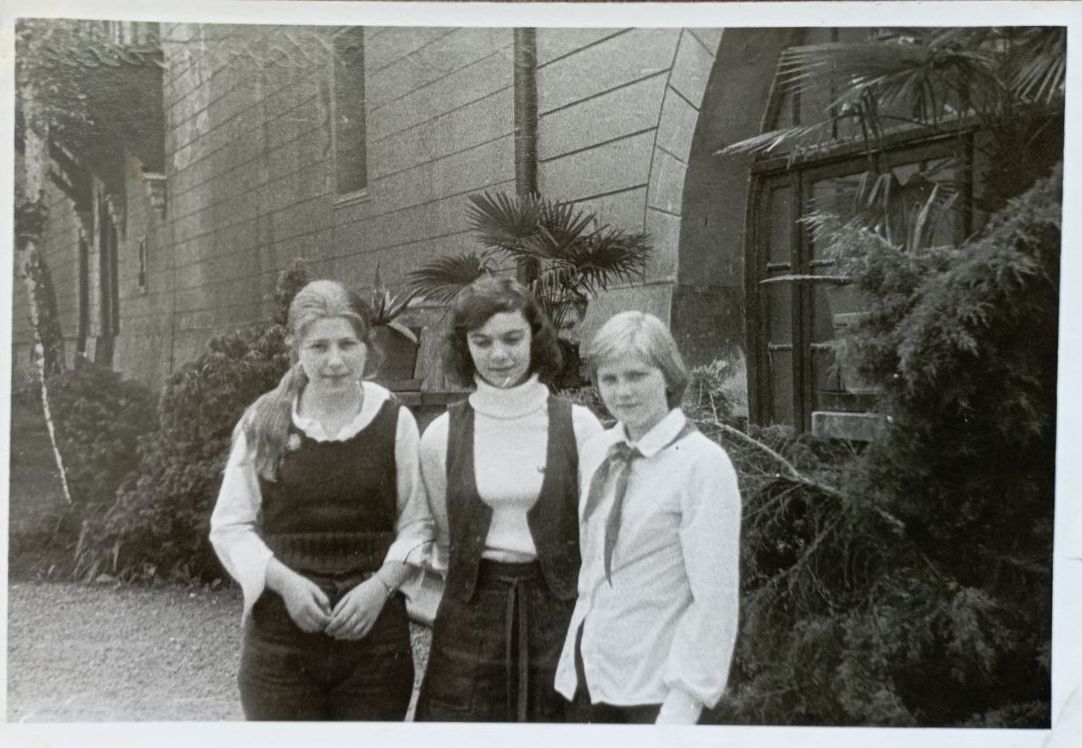
Natalia Kis (on the right) in Czechoslovakia (now the Czech Republic).
In 1972, my grandfather was transferred to Czechoslovakia, and the following year, the entire family relocated to Bruntál. Five years earlier, the events of the Prague SpringThe Prague Spring was a period of political liberalization in the Czechoslovak Socialist Republic that lasted from January to August 1968 and was accompanied by public protests against Soviet influence. had taken place in Czechoslovakia. In August 1968, during Operation Danube, Warsaw PactThe Warsaw Pact Organization was a military alliance of European socialist states (Albania, Bulgaria, Hungary, East Germany, Poland, Romania, the Soviet Union, and Czechoslovakia) led by the Soviet Union, created in 1955 to counterbalance NATO. troops occupied Czechoslovakia. The 31st Tank Division, where my grandfather served, was one of the military units involved in these events.
From third to sixth grade, my mother attended secondary school No. 48 by the Central Group of Forces in Bruntal. The school was situated in a military settlement and was operated by the Ministry of Education of the Russian Soviet Federative Socialist Republic. Classes were held entirely in Russian, with teachers arriving from Moscow and Leningrad (St. Petersburg). There, my mother joined the All-Union Leninist Young Pioneer Organization. Each pioneer wore a satin tie and a badge shaped like a five-pointed star with flames and Lenin's face in the center.
From 1976 to 1978, my grandfather studied at the University of Marxism-Leninism in the faculty of party building and party-political work. In 1978, my mother joined the All-Union Leninist Communist Youth League, known as Komsomol. She really wanted to join the organization, and she succeeded at 13 (the Komsomol usually accepted members from 14). This required obtaining recommendations from the class monitor and answering several questions, including some about history. Komsomol members had a membership card and a badge in the form of a red flag featuring Lenin's face. My mother is proud that the political department of a military unit in Czechoslovakia issued her a membership card.
That same year, after 27 years of service in the Soviet Army, my grandfather retired as a major. The family moved from Czechoslovakia to Khmelnytskyi, Ukraine. Afterward, my grandfather worked at the Khmelnytskyi Motor Transport Enterprise until his retirement, and then at the Voluntary Society for Cooperation with the Army, Aviation, and Fleet.
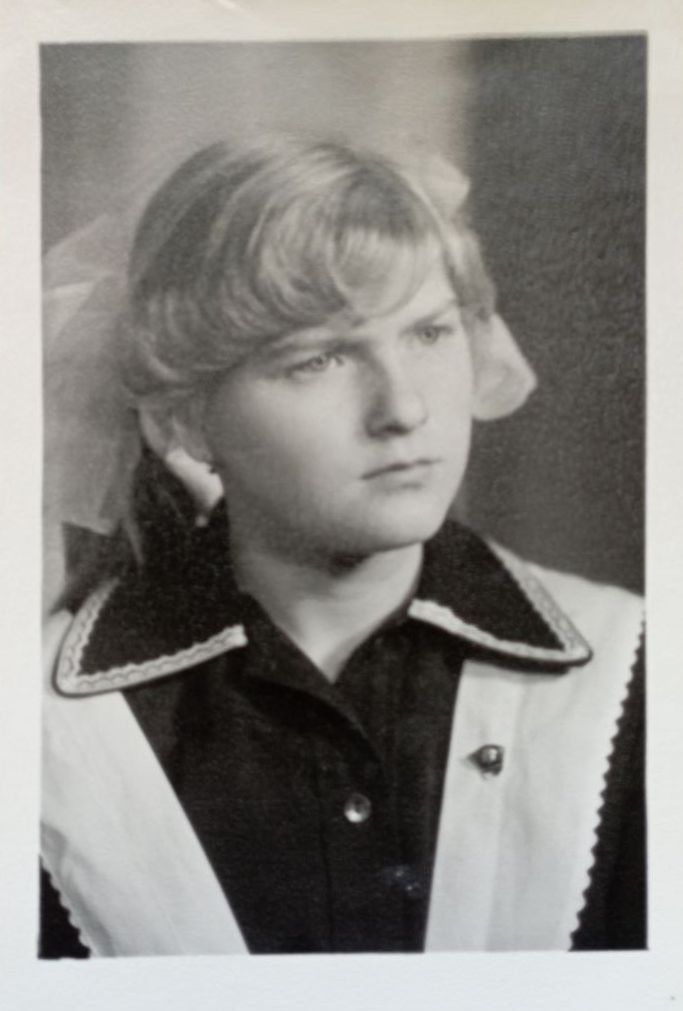
Natalia Kis.
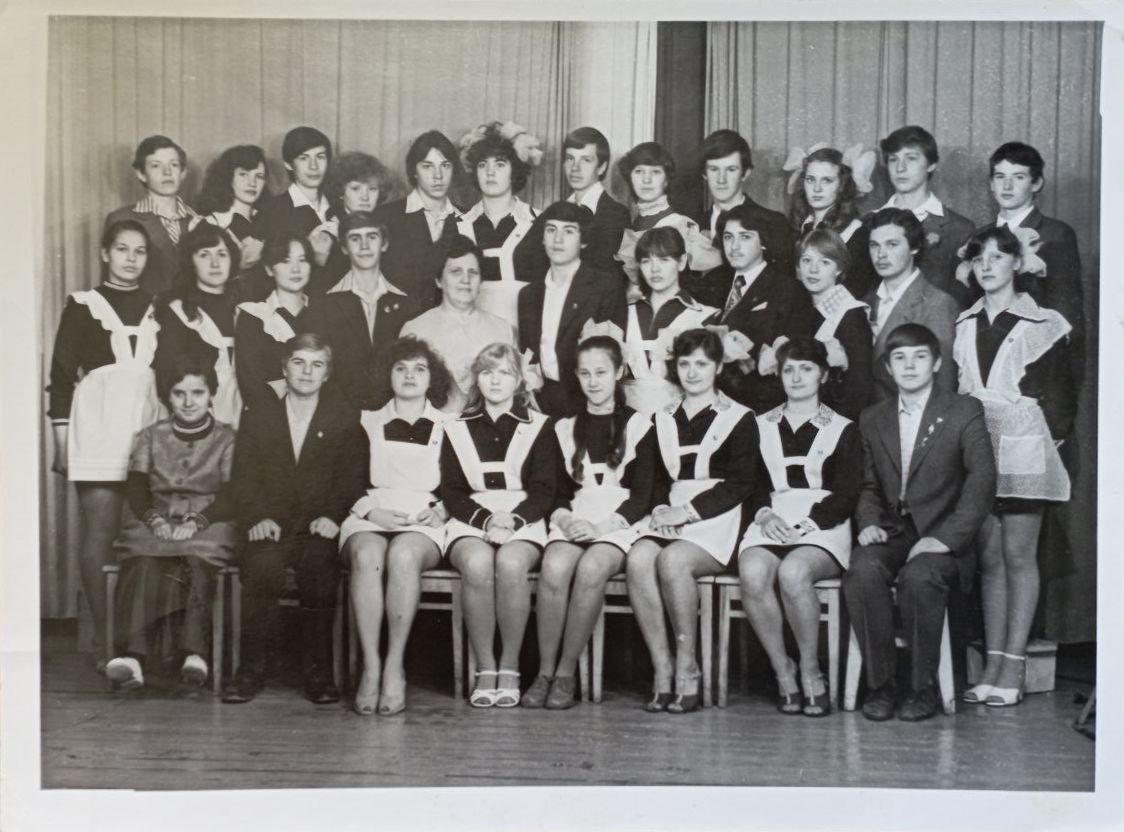
Natalia Kis (bottom row in the center) in secondary school No. 9 in Khmelnytskyi.
During her last three years of high school, my mother attended Russian-language secondary school No. 9 in Khmelnytskyi. She joined the school's Komsomol organization and took on responsibilities for ideological work. At the same time, she practiced shooting and, together with the school team, participated in the military-patriotic game "Zarnitsa."Zarnitsa is a Soviet military-sports game in which schoolchildren practice military drills. It includes lessons in military standards, field exercises, first aid, and physical training, all used for ideological education. The team finished third in the Ukrainian SSR, but my mother did not compete at this stage due to health reasons.
My mother often spoke of the "Ten Commandments" of the Builder of Communism (the Moral Code of the Builder of Communism contained 12 principles). Despite the friendship and brotherhood among all the peoples of the USSR proclaimed therein, their gradual Russification continued. During her ten years of schooling, my mother studied Ukrainian only in the first two. She was constantly immersed in a Russian-speaking environment, and even at home, she often spoke Russian.
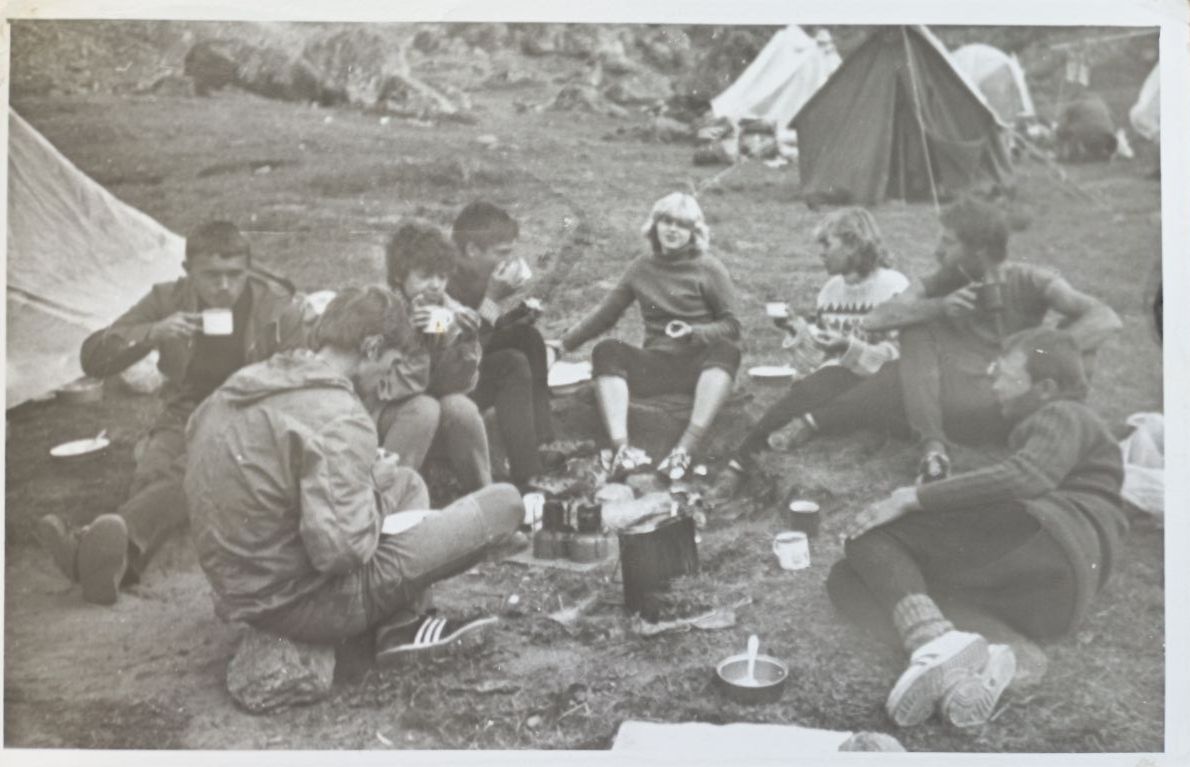
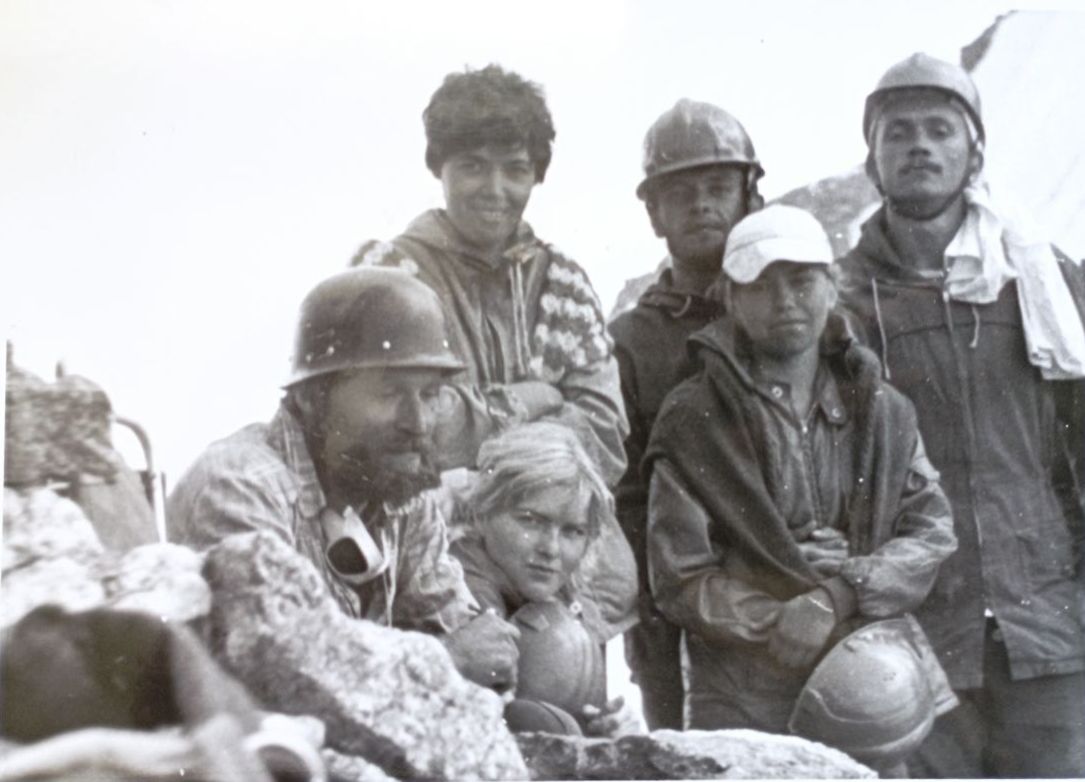
Natalia Kis (in the center) at Caucasus, the 1980s.
After graduating from high school in 1981, my mother enrolled in the Chemistry Department at the Order of Lenin Kyiv Polytechnic Institute. During her student years, she was into mountain tourism and hiked in the Carpathians and the Caucasus. Classes at the institute were conducted in Russian. However, one of my mom's professors, Engelsina, would add a point or some other bonus for taking the exam in Ukrainian. When moving to Kyiv from other cities and villages, Ukrainians who spoke Ukrainian at home switched to Russian. Despite the declared equality of languages, Ukrainian was labeled as a "rural" language, while Russian was considered more prestigious.
With the start of PerestroikaPerestroika was a series of political and economic reforms introduced in the Soviet Union in the mid-1980s that sought to modernize the Soviet system, but ultimately led to the Soviet Union's collapse., information began to be declassified about Soviet labor camps, the 1932–1933 Holodomor, and the mass repressions of 1937–1938. My mother read about this in newspapers and in the novel Children of the Arbat. Before, this information had been classified and denied.
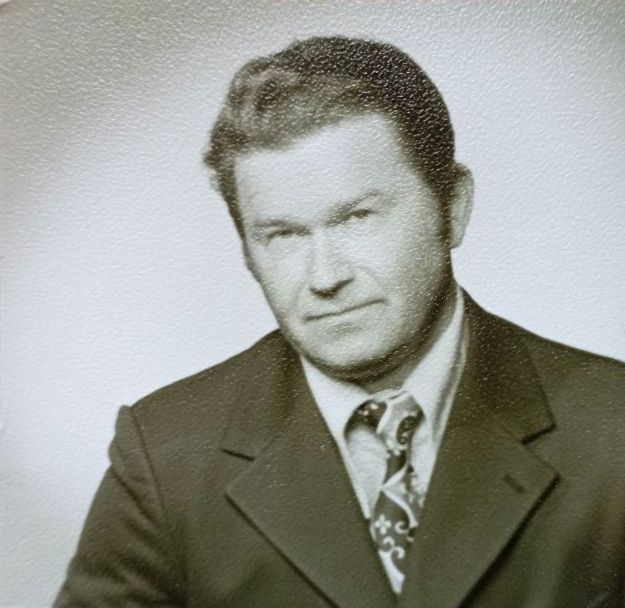
Vasyl Kis.
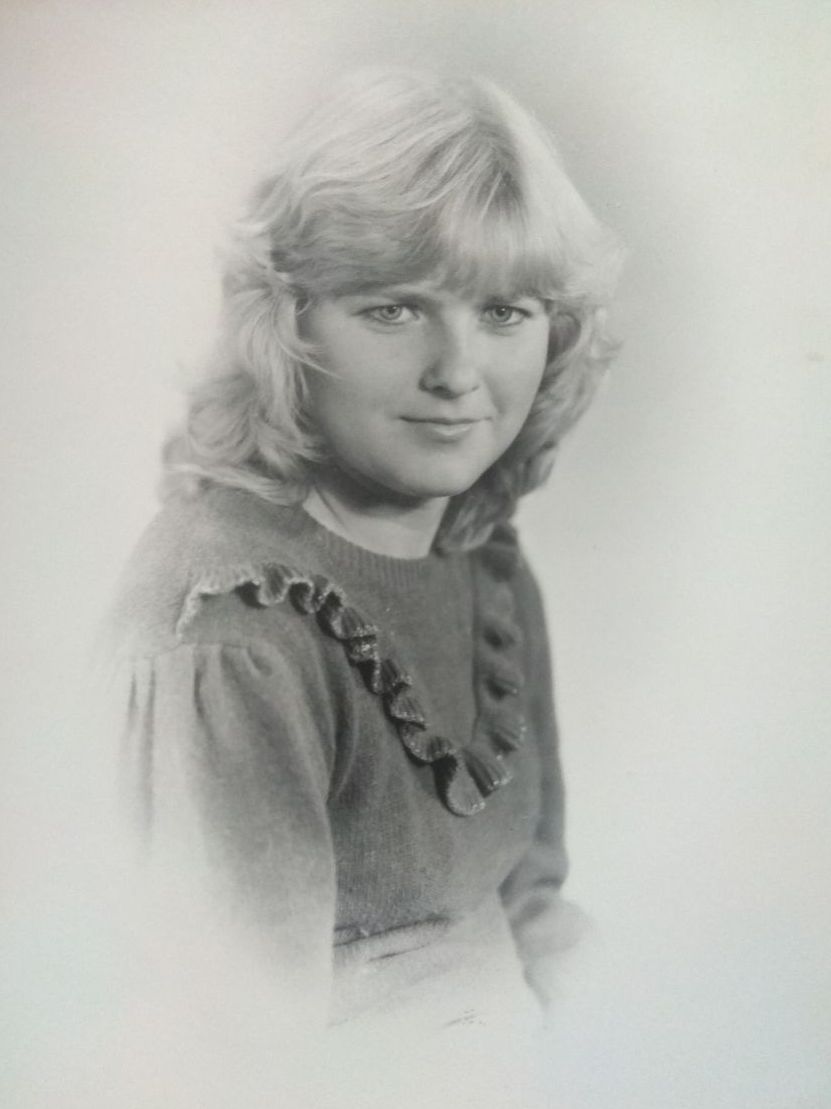
Natalia Kis.
When the accident at the Chornobyl Nuclear Power Plant occurred on 26 April 1986, my mother was studying in Kyiv, and my grandfather was working in Khmelnytskyi. They remember that the news of the accident was reported in a downplayed manner, but the streets were being actively washed down. My grandfather, as an employee of the Voluntary Society for Cooperation with the Army, Aviation, and Fleet, traveled to different locations and measured radiation levels with a dosimeter, while my mother helped rake leaves on the streets of Kyiv that fall.
After graduating from the institute in 1987, my mother worked at the Belgorod Vitamin Plant. The late 1980s were marked by shortages of certain goods and the emergence of "nesuns"Nesun is an employee of an enterprise or other organization who steals raw materials, products, or other property from their workplace. In the Soviet Union, this phenomenon became widespread due to shortages of goods and the population's economic insecurity. at factories. My mother recalls a shortage of mayonnaise, but people usually replaced it with homemade mayonnaise. There was a clear difference in food supplies between cities: it was much harder to get sausage in Belgorod than in Kyiv. My mother's colleagues at the plant regularly stole alcohol to resell. Three years later, in 1990, she returned to Khmelnytskyi and got a job at the local "Cation" factory.
At the same time, society became politicized. Previously, the Soviet authorities had sought to create a society that thought exclusively in terms of communist principles. That is why, up until then, my mother had never heard of Ukrainian dissidents, but was well-versed in the congresses and plenums of the Communist Party of the Soviet Union.
Following the attempted coup in Moscow on 19–22 August, the Verkhovna Rada of Ukraine adopted the "Act of Declaration of Independence of Ukraine" on 24 August, 1991.
The Epilogue. Post-Soviet period
Decades of Soviet occupation changed perceptions of the Soviet Union. Lives filled with fear and an information vacuum let the Soviet authorities shape their own version of events. My grandfather is an example of how witnesses to Soviet repression kept serving in Soviet institutions. They lived in the country where they were born and viewed the world through the Soviet lens. From time to time, the state leadership acknowledged the excesses of its actions, punished the "guilty" parties, and created the illusion of justice. The principle of equality among all peoples and languages of the USSR also remained illusory. In reality, the Russian language dominated every sphere of human life. The Constitution of the USSR recognized the republics' right to secede, but this was impossible to implement in practice.
For over 70 years, the Soviet regime gradually suppressed individuality, nationality, and dissenting political views, thereby establishing a monopoly of communist ideology in Soviet society. Thus, the Communist Party ruled the state single-handedly, and while ordinary citizens could support the prescribed course, they had no opportunity to challenge it.
My mother told me that she believed in advanced socialism and thought that things would get better. She was born in the late Soviet era, when repression had become more selective, so she didn't really notice it. She also lived in military settlements, and such topics weren't discussed within the family, because there was always a risk that a child might accidentally say something they shouldn't to others.
The Soviet authorities formed an atheist society, offering communist ideology in its place. With its own symbols, commandments, holidays, and saints. Therefore, it was the norm to attend marches on 1 May (Labor Day) and 7 November (October Socialist Revolution Day), celebrate Victory Day on 9 May, and wear badges featuring Lenin's image on one's chest.
For some people of my mother's generation, the collapse of the Soviet Union came as a surprise. Nevertheless, they hoped that an independent Ukraine, as the breadwinner of the former Union, would become a prosperous country. The 1990s were a traumatic time for many Ukrainians. Ukraine's shift from a planned economy to a market economy was painful and chaotic. At that time, people had to adjust and learn to live in a new way. Therefore, they thought primarily in material terms, while national concerns took a back seat. The media stopped talking about stability and promising that things would get better; instead, they began highlighting shortages, hyperinflation, factory shutdowns, and banditry. Although some of these processes had begun during the Soviet era, part of society started to yearn for the illusion of stability from those times.
My family's history illustrates how perceptions of the Soviet occupation shift when the transmission of truth and memory to future generations is interrupted. My great-grandfather told my grandfather very little, so he couldn't fully understand what was happening around him — or maybe he just tried not to show it. As a result, my mother had no reason to doubt the reality she lived in, especially since Russian was already the dominant language at home, and she hadn't personally experienced repression, nor was she told about the repressions that were taking place.
Talking with my mom and grandpa, I learned that they don't miss the Soviet Union itself, but mainly the youth they spent during that time. In his memoirs, my grandpa wrote that Russia occupied Ukraine in 1919. At the same time, my mom acknowledges all the crimes of the Soviet totalitarian regime, but cannot admit that it was an occupation of Ukraine. During Soviet times, they were responsible citizens of the state in which they were born. Back then, they saw no future beyond fitting into the existing system.
Despite the lasting occupation, my family responded positively to Ukraine's restoration of independence on 24 August 1991. My grandfather and mother adopted pro-Ukrainian views. Over time, they revived traditions and communication in Ukrainian within the family. Their interest in Ukraine's social and political life also grew. Later, my grandfather and mother supported both the Orange Revolution of 2004 and the Revolution of Dignity in 2013–2014.
Text: Andrii Kis
Translation: Dariia Titarova