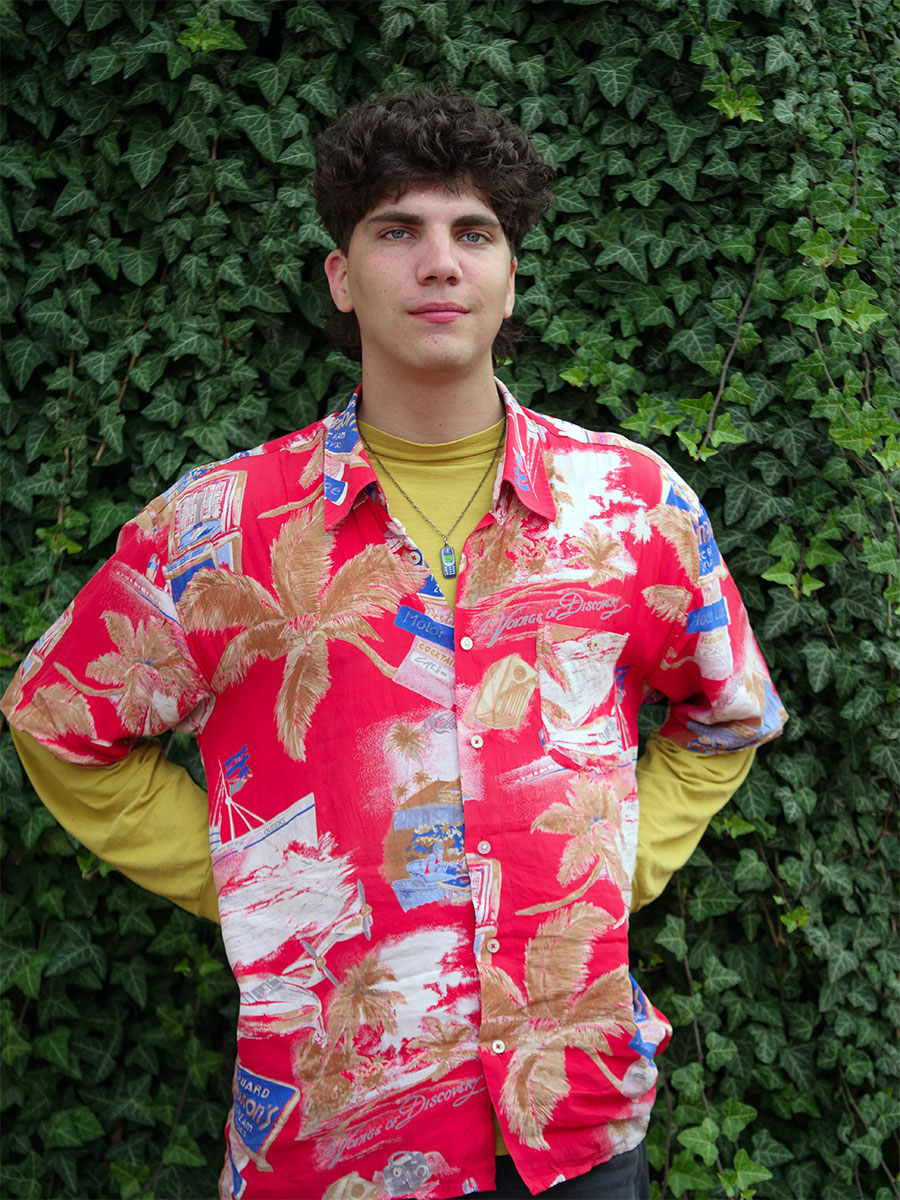
25, teacher, painter
Kryvyi RihKyiv
My great-grandfather, Feodosiy Bebeshko, was born on September 21 (8 — according to the Julian calendar) 1915, in the Chernihiv (Polissia) region, in the village of Ivanhorod, during World War I. His mother moved there to live with relatives while she was still pregnant, after Makariy, her husband, was drafted into the army. Returning from the war in 1917, Makariy took his family back to Kryvyi Rih, where he had previously worked at the Halkovsky iron ore mine.
Feodosiy survived Nazi captivity, returned home, and died in 2004. I had a chance to see him while he was still alive. I remember when my parents and I visited him, he was watching a football game, while my sister and I watched slides on the wall of his living room. Our family archive contains a photograph from one of our last visits, taken after I sang Christmas carols to my great-grandfather.
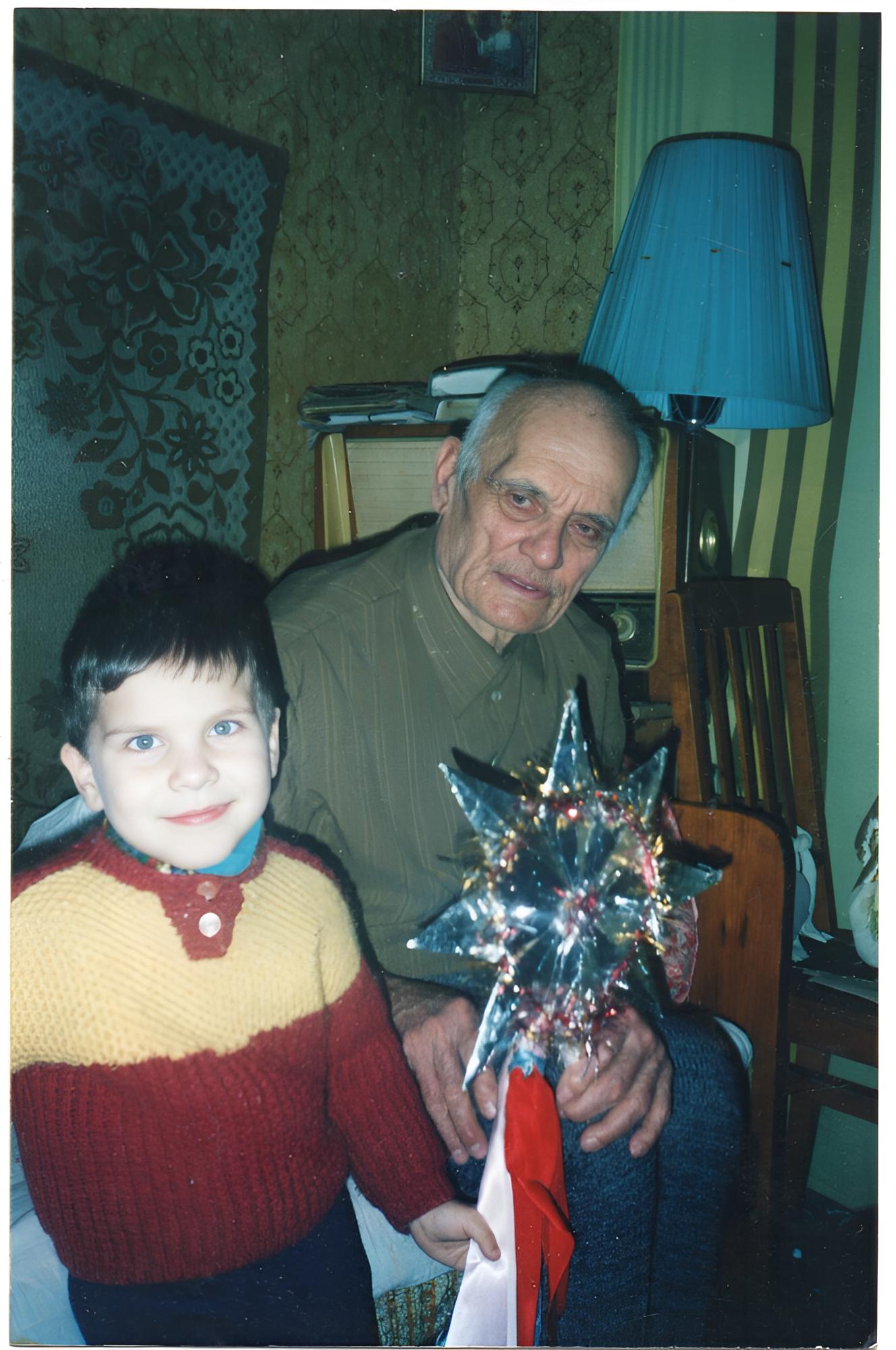
Great-grandfather Feodosiy and I, Kryvyi Rih, 2004
The figure of "grandpa Fedia", as we called him, is almost mythological and occupies the most honorable place in our family pantheon. Stories from his life were regularly retold by my mother and grandmother, his younger daughter, when I lived with them. Even now, my mother still mentions him from time to time during our phone conversations.
At the beginning of this summer of 2025, she spontaneously sent photos of several pages from my great-grandfather's diary to our chat. In them, Feodosiy strongly condemns the Soviet government and calls himself a "bourgeois nationalist." In the stories I heard before, there was no mention of my great-grandfather's nationalism, only references to his negative attitude toward Stalin. For me, he was always a man who spent most of his life working, not in the worst conditions, for the benefit of the "socialist construction project".
It later turned out that these fragments had been written in the mid-1990s and were more like my great-grandfather's late reflections on past events. But when I first came across them, I was convinced they were a sensation. I only picked up "grandpa Fedia's" diary as a child, and even then, it was just to look at a postcard or a chocolate wrapper from Germany, which I really liked. After my mother's message, I decided to take a closer look at who my great-grandfather was — in his own words, not from a third party.
When I got home, I began studying this diary, hoping to discover my ancestor's national consciousness. Unfortunately, my great-grandfather's notes did not contain a comprehensive account of his actual political position. There was only a mention of how he used Ukrainian when filling out work logs, even though the official language for documentation was Russian. This information was not enough to fully satisfy my curiosity and form an image of Feodosiy not only as an "Ostarbeiter" but also as a political dissident.
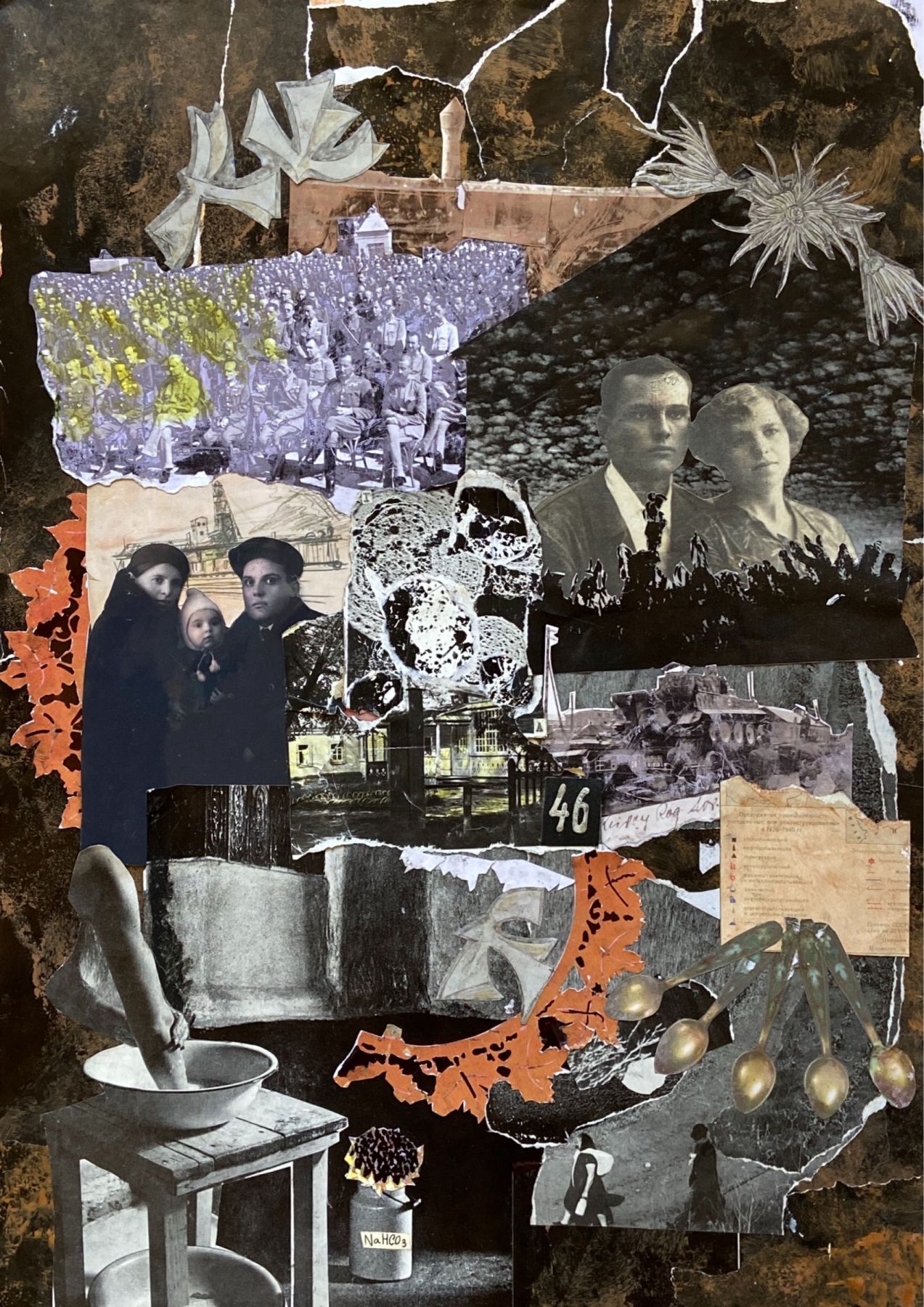
But after reading the entire diary, I decided to memorialize my great-grandfather's experiences, as he described them, using collage as a form of figurative language during the "Recall Reflect Retell" work camps.
Young Destiny
In 1932, Feodosiy graduated from a seven-year school. He fell in love for the first time at school, but fate kept their paths apart. "She was ready to get married, but I was only 21 — too young," he recalled.
Three years later, he met Lena, and "that's when love and attachment became real." They worked together at the HikYuzhRuda enterprise: he analyzed the air in the mine, and she collected samples of the mined ore. Later, Feodosiy was transferred to the chemical laboratory at the Schwartz Mine in Zhovta Richka (now the town of Zhovti Vody). That is where their independent life began. He worked as a senior chemical engineer, analyzing air at several mines, while also studying at the Kryvyi Rih Scientific Research Mining Institute.
In 1939, their daughter Lida was born, followed by another daughter Tonia.
During the war, Feodosiy worked with a deferment from mobilisation, but on July 10, 1941, he voluntarily went to the military registration and enlistment office. The Germans intercepted him and other volunteers near Soldatsk, not far from Kryvyi Rih, and sent them home. Then Feodosiy and Lena made their way to a collective farm near Dolynska in the Kirovohrad region, where they worked for bread.
Soon after, the Germans set up the Mining and Metallurgical Company "East" in Kryvyi Rih, where Feodosiy was hired by chief engineer Tereshchenko, a former prisoner of Stalin's camps. My great-grandfather's task was to keep strict records of the manganese ore the Germans were transporting westward, presumably to Germany.
In the winter of 1941–1942, Feodosiy fell seriously ill with typhus. The Germans sent him by cart to a hospital in the neighboring village of Zhovte, where sick Soviet prisoners of war were being held. Lena visited him twice, traveling through snow-covered roads. Tereshchenko helped organize the trips and allowed her to take her husband home.
After recovering, Feodosiy returned to work in the laboratory at the Artem mine. "We made soap, mirrors, and baking soda. We had one and a half kilograms of bread per family and ten grams of oil per day," he wrote in the diary. This is how the years of occupation passed — in deprivation, but with Lena by his side, who "never gave up and thereby saved me."
It was difficult to survive: harvesting grain, working around the combine harvester, and producing oil. Feodosiy and Lena bought sunflower seeds, shelled, ground, and roasted them, pressed them, and sold the oil. They also earned money in an unusual way: they bought calcined soda, saturated it with CO₂, and produced baking soda (NaHCO₃). Lena sold it at the market for ten karbovantsi per teaspoon.
Stalag No. 338
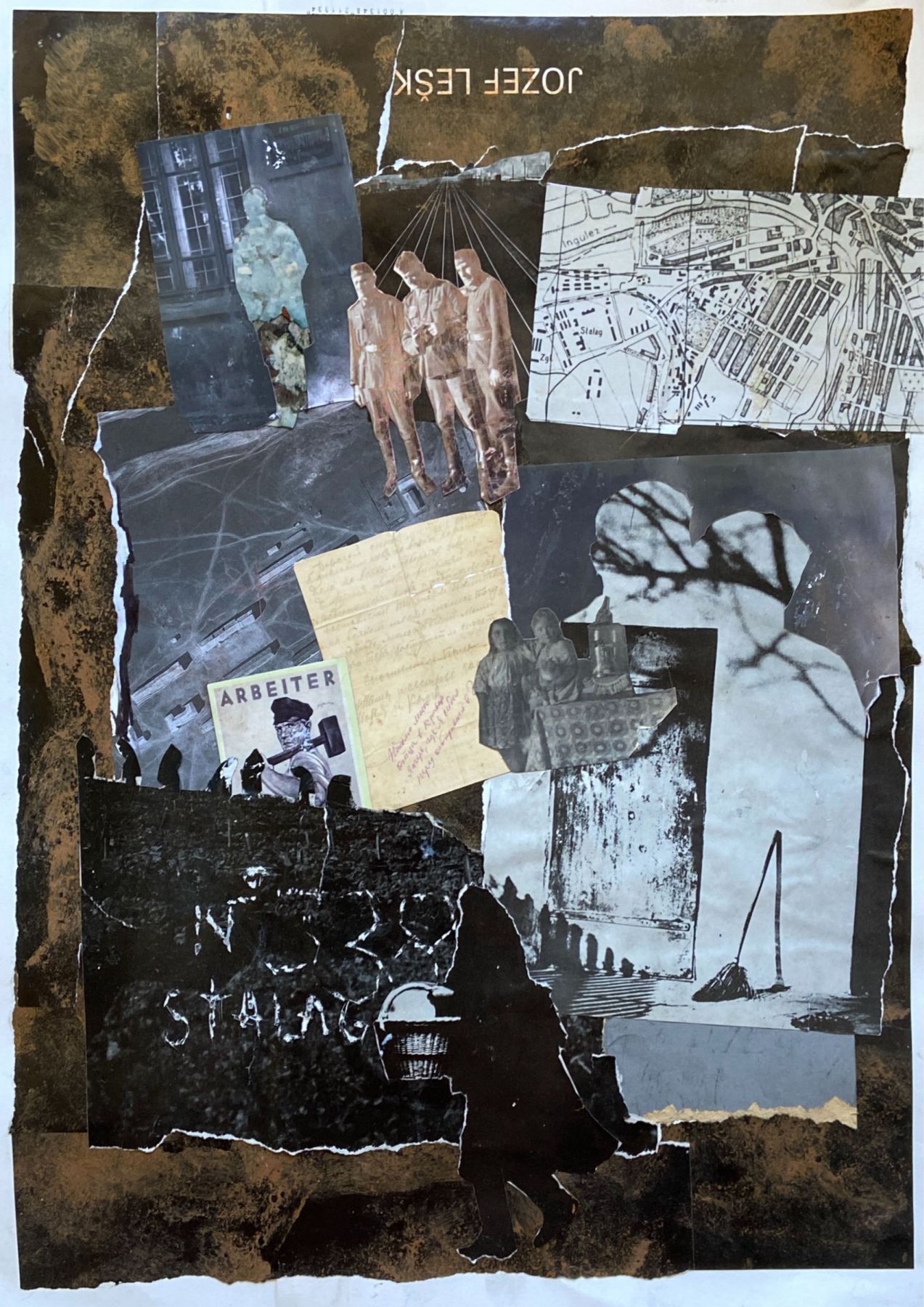
On December 29, 1943, my great-grandfather was working in the chemical laboratory of the Artem mine. Suddenly, several policemen and a German officer with a list in his hands entered. He called out only one surname — Bebeshko. The policemen immediately surrounded Feodosiy and took him to Stalag No. 338, a camp for Soviet prisoners of war located in the military settlement in the Gdantsivka area of Kryvyi Rih.
Life in the camp was unbearable. Meetings with his wife took place through barbed wire. My great-grandfather tried to escape, but in vain, partly because of the policeman Shkolyar's interference. Several times, Lena spent nights in ruined garages near the camp, just to be close to her husband.
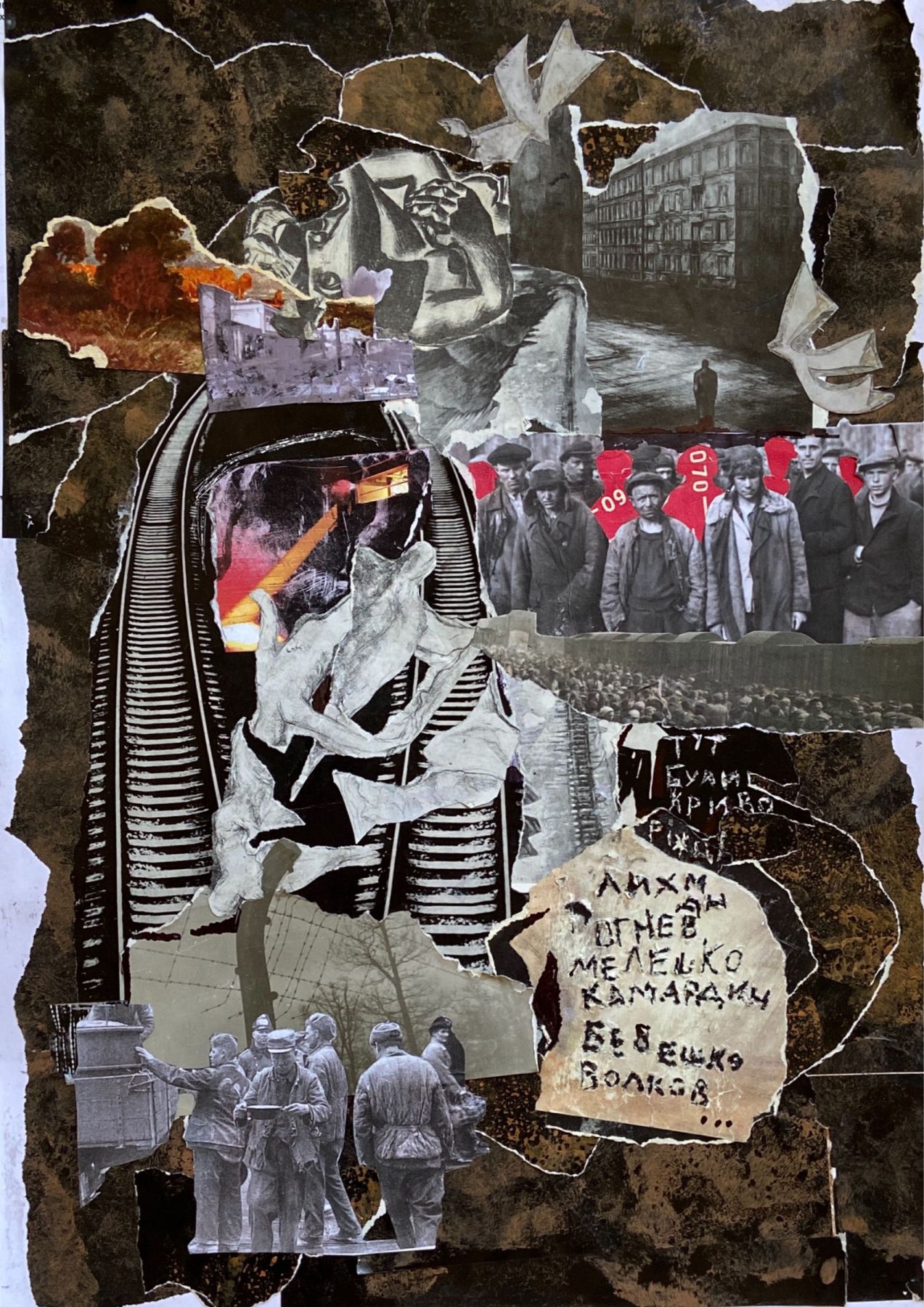
Miners from Kryvyi Rih
On January 9, 1944, at two o'clock in the afternoon, Feodosiy and other prisoners were loaded into train cars at the Kryvyi Rih West station. The hatches and doors were covered with barbed wire. There were fifty men in each car, with "a toilet" in the corner.
Life in the train car was torture. Two days without water: people licked the wet walls to stay conscious. Lice, filth, crowding, prayers.
"We, forty-eight men, were called 'miners from Kryvyi Rih'. Every day in the camp, they lined us up and called out over the radio: '48 miners from Kryvyi Rih, step out of line and go to the barracks'." This went on for several days. Feodosiy then said, "Comrades, it is clear they want to send us to the Ruhr region to work in the mines. Let's not step out. Whatever will be, will be. Maybe we will be in captivity, but at least we will be in the fresh air." And so they did.
After that, they were loaded into freight cars used to transport livestock and taken west.
In the camp in Przemyśl, they were given nothing to do for several days. People were bored and waited for something unknown. Then my great-grandfather decided to leave a trace about himself and his comrades. He found a piece of black substance somewhere and wrote on the wall above the second tier of bunks: "The people of Kryvyi Rih were here: Meleshko, Volkov, Kamardin, Ohnev, Lykhman, Bebeshko, and others."
Later, Feodosiy's neighbor was sent to the same camp. He returned home after the "liberation" of Przemyśl by Soviet troops and told Lena that he had seen great-grandfather's surname written on the wall of a barrack.
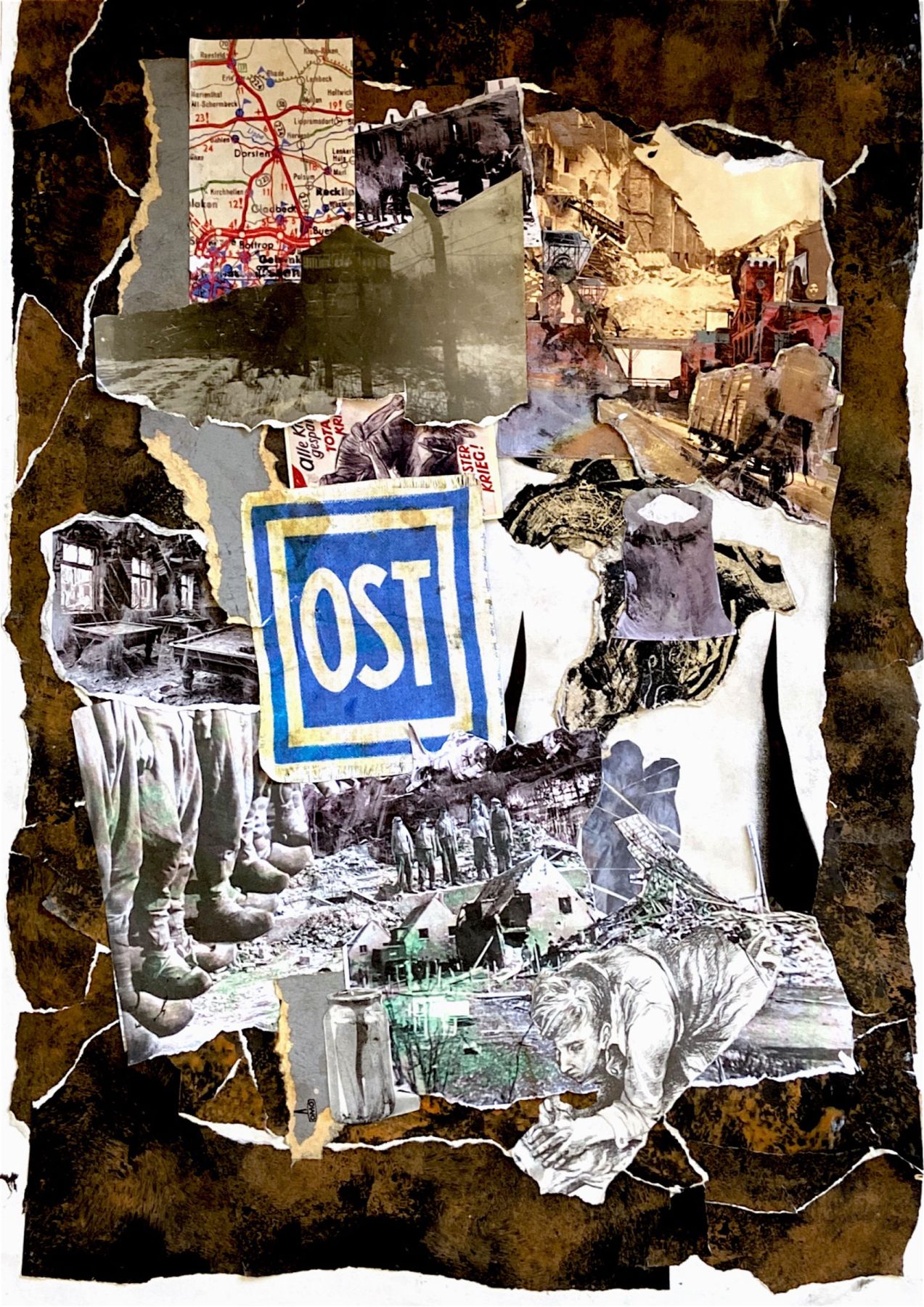
Ruhr region. Barbara Werk
The final destination for my great-grandfather was the town of Gladbeck in the Ruhr region (North Rhine-Westphalia, Germany). He, along with other men from Kryvyi Rih, was sent to a communal camp for railway workers called Barbara Werk. The forced laborers got cotton suits, wooden clogs instead of shoes, and "OST" patches sewn on their clothes. Each one of them was given a number — my great-grandfather's was seventeen.
He had to work on the railway — from Gladbeck West station to Buer North station. The work was hard: repairing railway sleepers, installing switches, and repairing tracks after bombings.
Once, during a trip to the Buer North station, my great-grandfather and other forced laborers had to clear away an American bomber that had fallen on the cables. They spent the whole day moving the debris to clear the tracks. By evening, they had finished. At night, after the men had returned to camp, the plane loaded with bombs exploded.
Hunger was commonplace for forced laborers. My great-grandfather told me how, once, while working, he went into the forest and found a can of meat. No one knew how long it had been there. He ate everything down to the last spoonful, and when he returned to his comrades, he said, "If I die, know this: I will not die hungry." After that meal, he joked that "something stank from the inside, from the very core, and not in the mouth."
After the assassination attempt on Hitler in July 1944, fear gripped the camp. One German told the "Ostarbeiters": "If the Russians are involved in this, you will all be executed." Fortunately, the Germans did it themselves, and laborers avoided punishment.
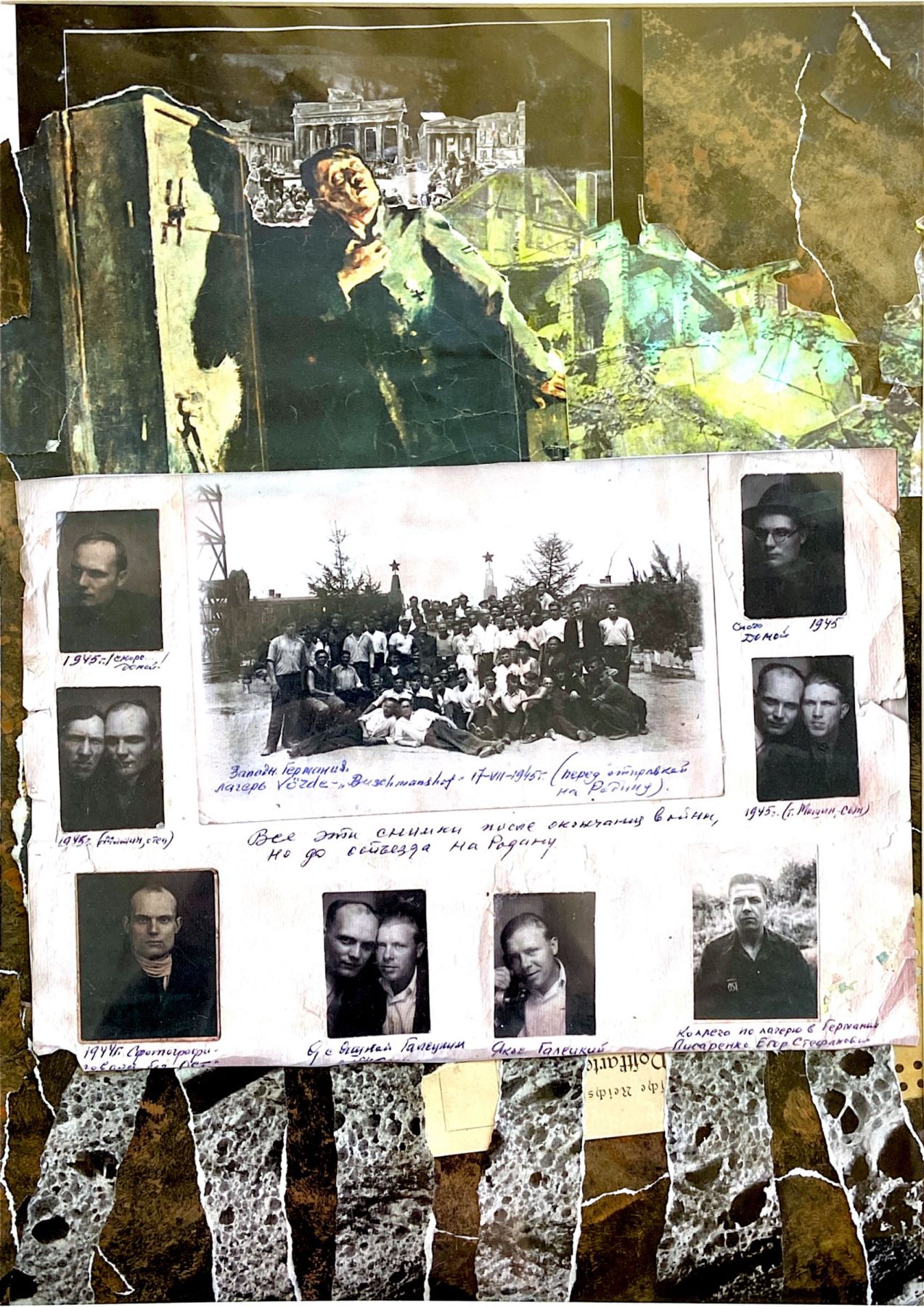
Merciless anticipation
March 1945. Continuous bombing destroyed the station, the tracks, and the city. For three days, Feodosiy and several comrades who had not been evacuated by the Nazis hid from the shelling under a water tower, in tunnels, and in the smoke channels of the Barbara Werk camp.
30 March, they decided to retreat to the rear, where American troops were stationed. After several days of walking through the forest, they reached a camp in Dinslaken. They were assigned to a camp for "Ostarbeiters". Conditions were harsh: a ban on leaving the camp, punishment for disobedience, and limited rations. They ate potato scraps and shared bread and tobacco among each other. In May, they heard the news of Germany's surrender, but liberation did not come immediately.
Repatriation began a few months later. On 9 August, Feodosiy set out for the Soviet border, where he waited several weeks for permission to enter. On 9 October 1945, he and an acquaintance from Kryvyi Rih, whom he had met in Brest, first arrived in Dnipropetrovsk (now Dnipro) at the regional NKVD department handling repatriation cases, then in Piatykhatky in the Dnipropetrovsk region.
After a series of camps and a grueling journey for which he had waited what seemed like an eternity, Feodosiy returned to his native Karnavatka and Halkovsky Kut areas in Kryvyi Rih — places where his young life, not yet ravaged by the camps, had once blossomed.
He resumed work in the chemical laboratory of the Dzerzhinsky Mine. In the 1990s, after many years of service, he retired and wrote about his life in a diary.
Collages, text: Mykyta Tokarchuk
Translation: Dariia Titarova