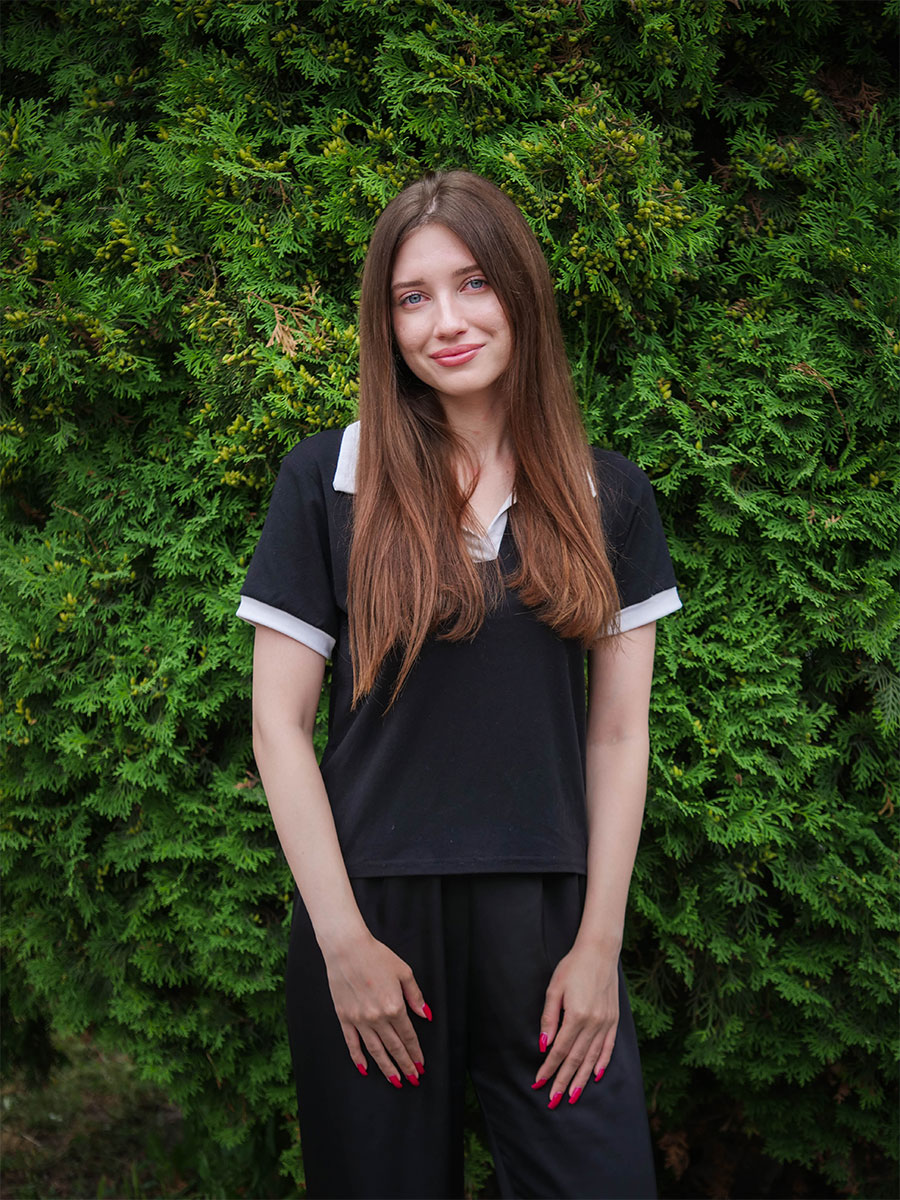
20, historian, museum worker
PavlohradDnipro
After enrolling in the history department, I began to learn more about the histories of different peoples and the events that shaped their lives. In particular, I learned about the deportation of the Crimean Tatars in 1944. As I studied this topic, I wanted to address it through people's testimonies — so that readers could not only hear the facts but also, as much as possible, understand the pain this tragedy caused.
The Soviet system regulated universal human practices such as daily life, interpersonal relationships, and wedding or funeral rites; instead, it attempted to carve out its own — an artificial, fabricated version. Many distinctive features of the ethnographic and national character were lost in this eradication process. People who, during the era of the Crimean Khanate, were renowned for their courage, economic prowess, horticulture, the refined art of jewelry-making, coffee-drinking traditions, and a strong family culture, were transformed into a "collective enemy". The Soviet Union created the image of a "traitorous" people, erased the history of the Crimean Tatars, and suppressed their native language (Russian still dominates their everyday lives). Traditional forms of craftsmanship and agriculture were temporarily lost due to collectivization and deportation; long-established ways of organizing the home and personal space were subjected to unification; and religion was banned.
Through the respondents' stories and my own experience, I have become convinced that the Soviet image of the Crimean Tatar people has still not been debunked in Ukrainian society. Soviet ideology spread propaganda like wildfire, and the ideas it instilled are still alive today. The ethnic origin of Ukraine's indigenous people continues to shape their image: rejection of a different faith leads to bullying, while differences in lifestyle lead to misunderstandings. Prejudice leads to various forms of discrimination. For many of our fellow citizens, Crimean Tatars remain not just "different" but complete strangers. So, I realized there is still a lot of work ahead, and there is a need to share personal experiences.
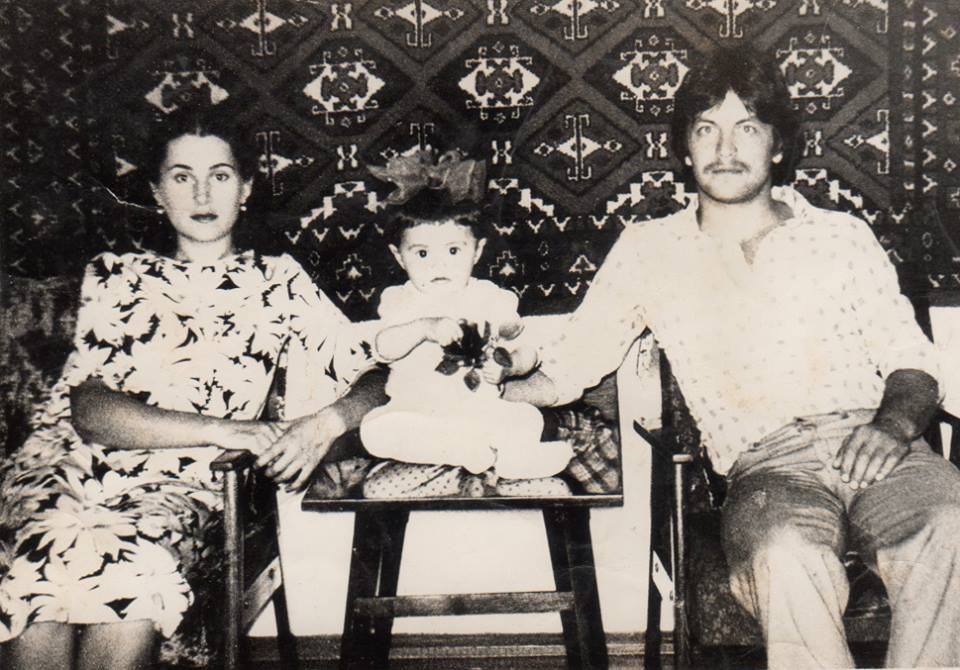
Lerane Khaibullaieva with her parents. Photo from Lerane Khaibullaieva's personal archive.
This is how the "Voices From Within" project came about, a project that focuses on oral history testimonies from Crimean Tatars whose families suffered during the Sürgün, the 1944 deportation of the Crimean Tatar people. Since many years have passed and the generation of eyewitnesses is no longer with us, today we hear the voices of people who did not experience the deportation themselves but grew up hearing stories about it.
***
The Soviet Communist regime deported the Crimean Tatars from Crimea in three days, from May 18 to 20, 1944. This was the largest mass deportation based on ethnicity ever carried out on the territory of Ukraine. The reasons were cynical: according to Lavrentii Beria, head of the NKVD's Main Directorate of State Security, it was revenge for "treason/collaboration" during World War II. Andrii Kohut, director of the Sectoral State Archive of the Security Service of Ukraine, explains this as preparation for a war with Turkey, which the Soviet leadership feared.
During the forced displacement, the Crimean Tatars were given only a few minutes to gather their belongings. Many believed they were being led to their execution, so they took nothing. The rest managed to take what they considered most essential and valuable. These household items were pieces of home that helped them survive, created a sense of home in a foreign land, and connected them to their homeland, culture, and traditions.
Voice One
Niyara Mamutova was born in 1986 in Samarkand (Uzbekistan). During the deportation, her family was scattered across various regions of the Soviet Union. Her grandmother ended up all the way in the Urals.
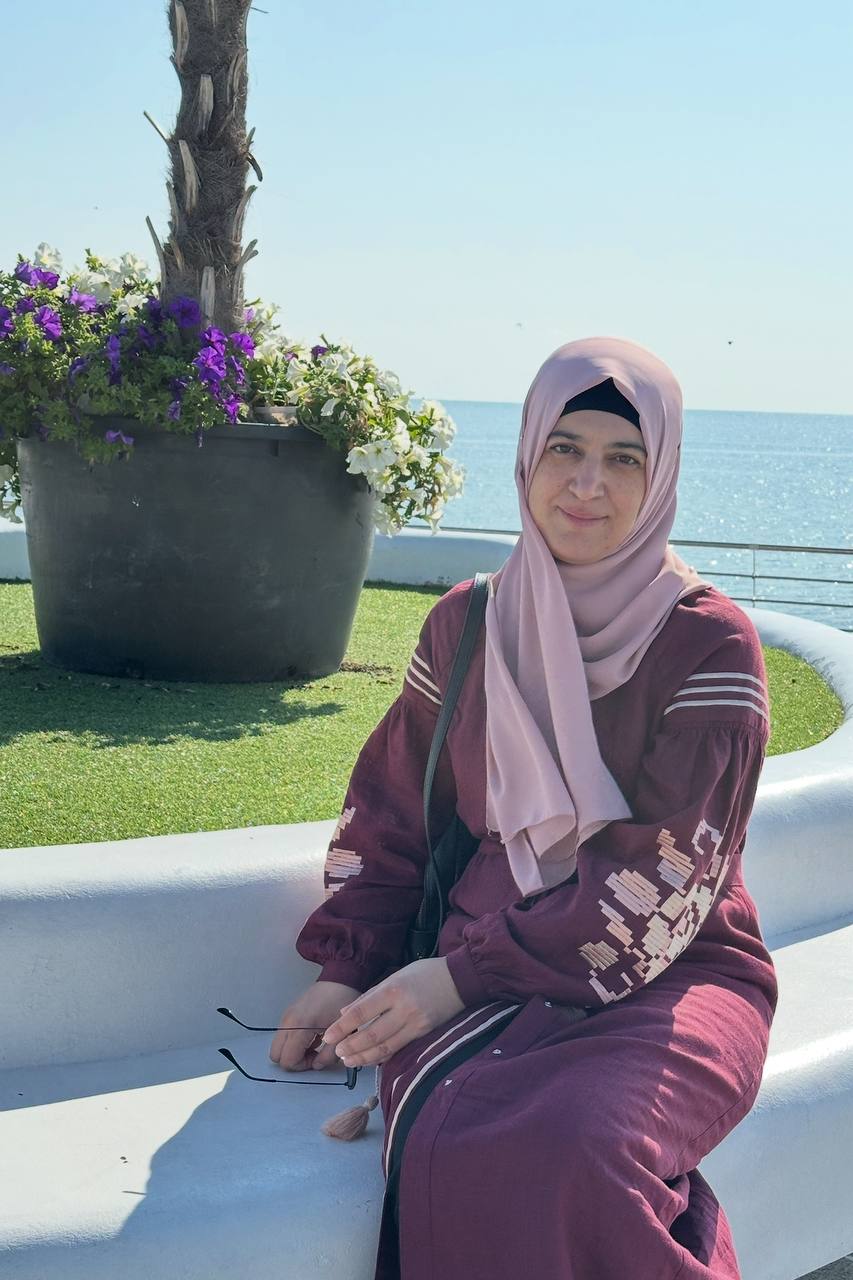
Niyara Mamutova. Photo from Niyara Mamutova's personal archive.
The Crimean Tatars were deported in overcrowded freight cars, with almost no food or water. Many people — including children, the elderly, and women — did not survive the journey. Niyara's family managed to endure the forced displacement thanks to a sack of flour they had taken from home and ate on their way into exile. In Uzbekistan, Soviet officials incited the local population to greet the "traitors" with stones, but the locals treated them with compassion.
"The Uzbeks themselves said that when those freight cars opened, and children and older women stepped out, they saw something different from what they had expected and began to think about how to help. They brought water — because the people hadn't been given any — and something to eat; in other words, they welcomed them in a different way," Niyara shares.
The Crimean Tatars also often brought coffee with them as a symbol of Crimea and their culture.
The Niyara family settled into their new home with items they had brought from Crimea.
"For example, a minder. It's a kind of mattress, but covered in beautiful fabric. It could be velvet, some kind of floral pattern," says Niyara.
They would lay these mattresses on the floor and decorate them with pillows. Over time, Niyara's family built a set themselves — a wooden bench, which they also decorated with minders and pillows.
Niyara recalls that her grandmother used to embroider napkins — she would make small holes in the fabric and finish them with a special stitch. This was likely the Richelieu technique, a type of openwork embroidery. These napkins were used to cover pillows when making the bed. Niyara adds that Ukrainians did the same.
Even in exile, Crimean Tatar women embroidered their own dowries and decorated their walls with embroidered towels. In this way, they preserved their skills, which they later passed on to future generations. Crimean Tatar ornamentation, or Örnek, carries deep meanings tied to family lineage — both the patterns and the techniques used reveal valuable ethnographic details and historical context.
The most precious thing in Niyara's family has always been the Quran. They would hang it on the walls and take it down to read it.
"Wherever, for example, a rug was hanging, there was always a Quran in a bag on top of it," says Niyara.
The Quran is the item respondents most often mention as one of the heirlooms their families felt it was necessary to take with them. It is an integral part of the Crimean Tatar people's identity and spirituality. As a sign of respect, the Quran always occupies the highest place in the home.
Voice Two
Lerane Khaibullaieva was born in 1980 in Uzbekistan. Her great-grandfather was repressed in 1937, and to this day, there is no information about him. During the deportation, Lerane's mother's stepfather, Seit-Yaia, and her grandmother, Medine-Sherfe, died on the way. Part of her family on her father's side ended up in Siberia. Lerane's grandmother was only 18 years old at the time; she was forced to live in a barrack and work hard at a sawmill. The first winter in Siberia was very difficult for the Crimean Tatars. Coming from a warm region, they found themselves in a climate with long and very cold winters. Lerane's parents met in Uzbekistan, where they later moved.
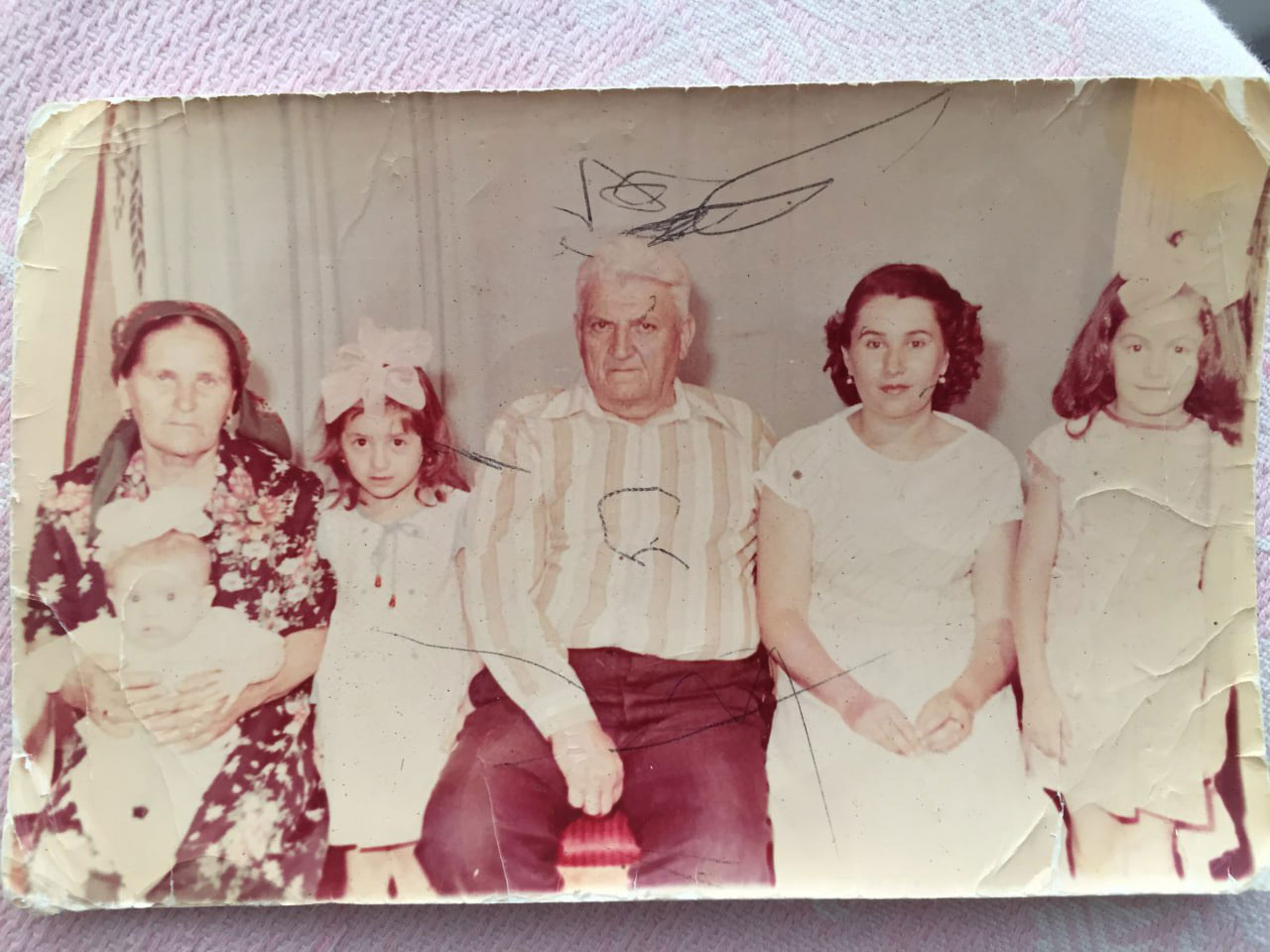
Lerane Khaibullaeva’s family in Uzbekistan, one month before their return to Crimea. Photo from Lerane Khaibullaeva’s personal archive
Lerane recalls that in 2024, the Crimean House in Kyiv hosted an exhibition of Qurans printed in Crimea before the deportation, which survived the exile and later returned home. These Qurans were collected by Amin Al-Kasem, the owner of the Muhammad Asad Islamic Cultural Center. He bought them, exchanged them for new ones, and negotiated with their owners, who had survived the Surgün, the 1944 deportation of the Crimean Tatar people. One of these Qurans, also part of the exhibition, is in the possession of the Lerane family.
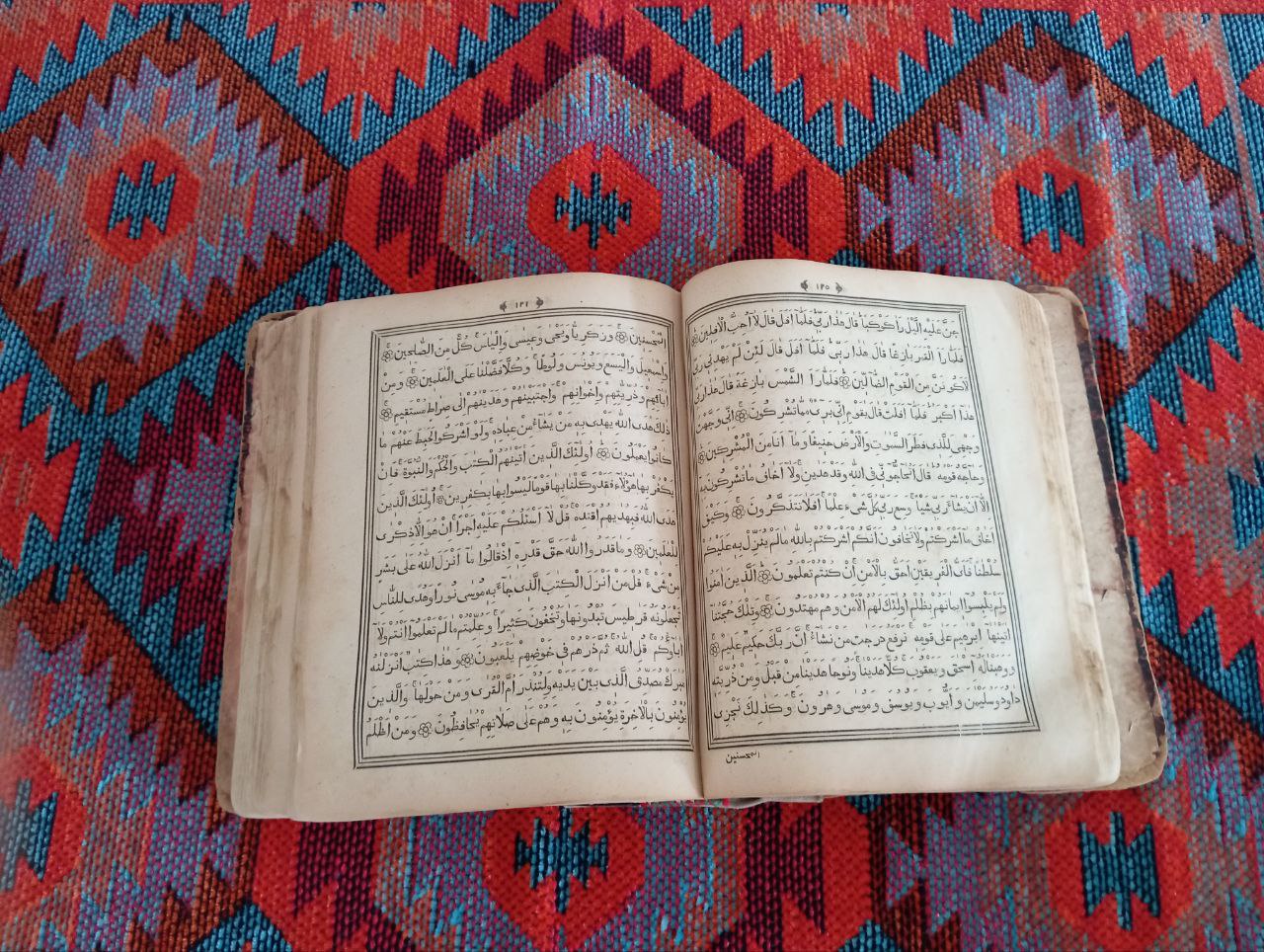
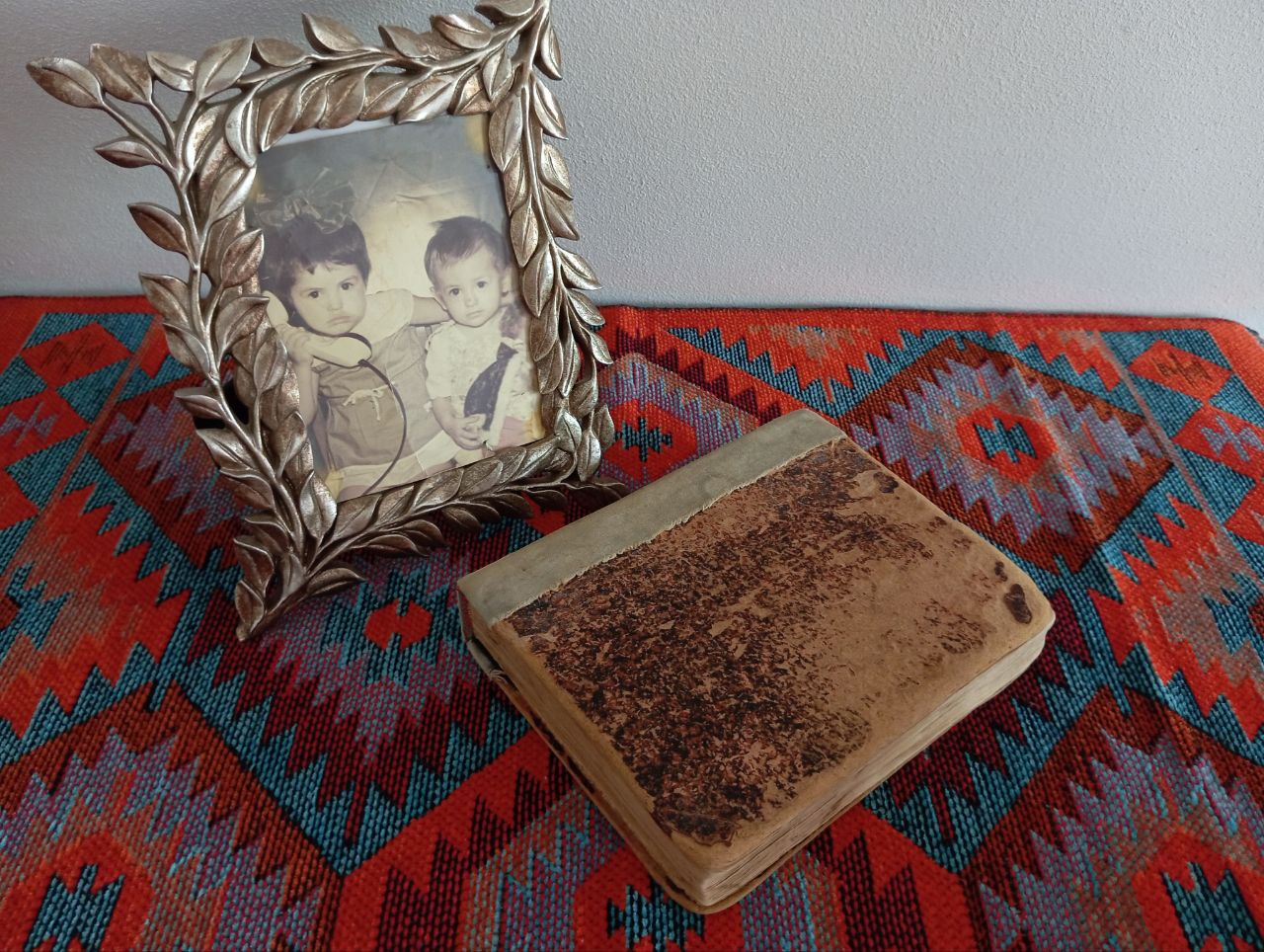
The Quran kept by Lerane Khaibullaeva's family. Photo from Lerane Khaibullaeva's personal archive.
Crimean Tatars often managed to take their valuables with them: coins and jewelry, including the kushak, a gold or silver belt. However, they were often unable to keep them and sold them for next to nothing to feed their families in exile.
"My great-grandmother's sisters held on to the family's precious jewelry, which was already 100 years old at that point, until the very end to preserve the memory of Crimea. They went hungry, but they didn't trade their earrings for food. They tried to earn food by working. They sewed dresses for Uzbek women for cheap, or something like that," says Lerane, adding that she later saw those earrings on her aunts' daughters.
The items the Crimean Tatars took with them served as bearers of memory and were associated with the preservation of their identity. Lerane had heard about antique fezes (headwear), garlands of coins, and tools of the trade, such as a sewing machine or an accordion.
"My grandfather (who, by the way, never got to see Crimea — he passed away) used to invite Crimean Tatar musicians over on weekends, and they would put on impromptu concerts. During the deportation, these people took their musical instruments with them, but on weekdays they didn't work as musicians. My grandfather earned a decent living as a carpenter and paid them so they wouldn't forget the music and songs of the Crimean Tatars," says Lerane.
***
Crimean Tatars were forbidden from returning to their homeland even after Stalin's death, during Khrushchev ThawThe Khrushchev Thaw was a period of relative political liberalization and reduced repression in the Soviet Union under Nikita Khrushchev, roughly from 1953 to 1964., when other political prisoners were released, and other ethnic groups were allowed to return to their homelands. For example, Chechens and Ingush, who were also deported in 1944, were allowed to return home as early as 1957. Niyara and Lerane's families returned to Crimea in the late 1980s. But after Russia's occupation of Crimea in 2014, both women were forced to leave the peninsula and move to territory controlled by Ukraine.
Text: Anastasiia Dodonova
Translation: Dariia Titarova