18, studies architecture and urban planning
DonetskKryvyi Rih
A century-long journey through family history: impact of wars on family’s path
In 2024, I realized that for ten years — half of my life — I had to survive under military aggression. During this time, I gained difficult experiences: adapted to the displacement from Donetsk city in 2014, formed my identity and learned about my origins, got integrated into a new cultural and mundane environment despite the challenges, and learned how to respond to mass missile attacks and pursue education in the wartime amidst blackouts and absence of water due to the collapse of Kakhovka dam, got used to the destruction of peaceful life around. I questioned myself: Is it only my generation who has this experience? This question encouraged me to discover the history of my big family, where every generation has had to survive in the conditions imposed by different forms of imperialistic wars since the late 19th century.
There are numerous definitions of imperialistic war in contemporary historical and political discourse. In my work, I define an imperialistic war as a general conflict between dominant and subordinate states across different time periods caused by a country’s desire to expand the boundaries of its political influence. It is unlikely that any political regime considered the cost of it, specifically the broken fates of individuals.
This four-year research has revealed a strange picture of my country's historical past, woven from the difficult life paths of my ancestors, in particular. It is unusual to discover often hidden examples of survival amid the war within my family, accompanied by clear guidelines on preserving our cultural and national identity, our pursuit of freedom and a better life. In this research, presented as an essay, I invite you to explore five generations of my family affected by military conflicts in the territory of Ukraine.
World War I
My maternal great-great-grandfather, Karp Pochapskyi, was born in 1898 to a Ukrainian family in Sloboda-Hulivska village, Vinnytsia region, Ukraine.
After the Russian Empire announced mobilization on 30 July 1914 and entered World War I on 1 August, my great-great-grandfather was drafted into the Imperial Russian Army. As a junior non-commissioned officer, he was assigned to serve in the 6th company of the 257th Yevpatoria Infantry Regiment. In early September that year, he was on the southern flank of the Eastern Front.
Once, in October 1914, returning from a reconnaissance mission to his military unit, he was taken into German captivity. After great-great-grandfather Karp was released, he shared the following details in a questionnaire: “We — 22 infantrymen, two cavalrymen with a senior reconnaissance warrant officer Soloviov — were assigned to reconnaissance on 15 October 1914, around 7 verstsVerst (verstva) is an obsolete unit of length used on the territories of Ukraine, Belarus, and Russia; equal to 1.0668 kilometers. from Turka town. On 16 October, at dawn, I was detained by 7 men from the enemy side. At that time, I was returning from my company with a message about reconnaissance results.”
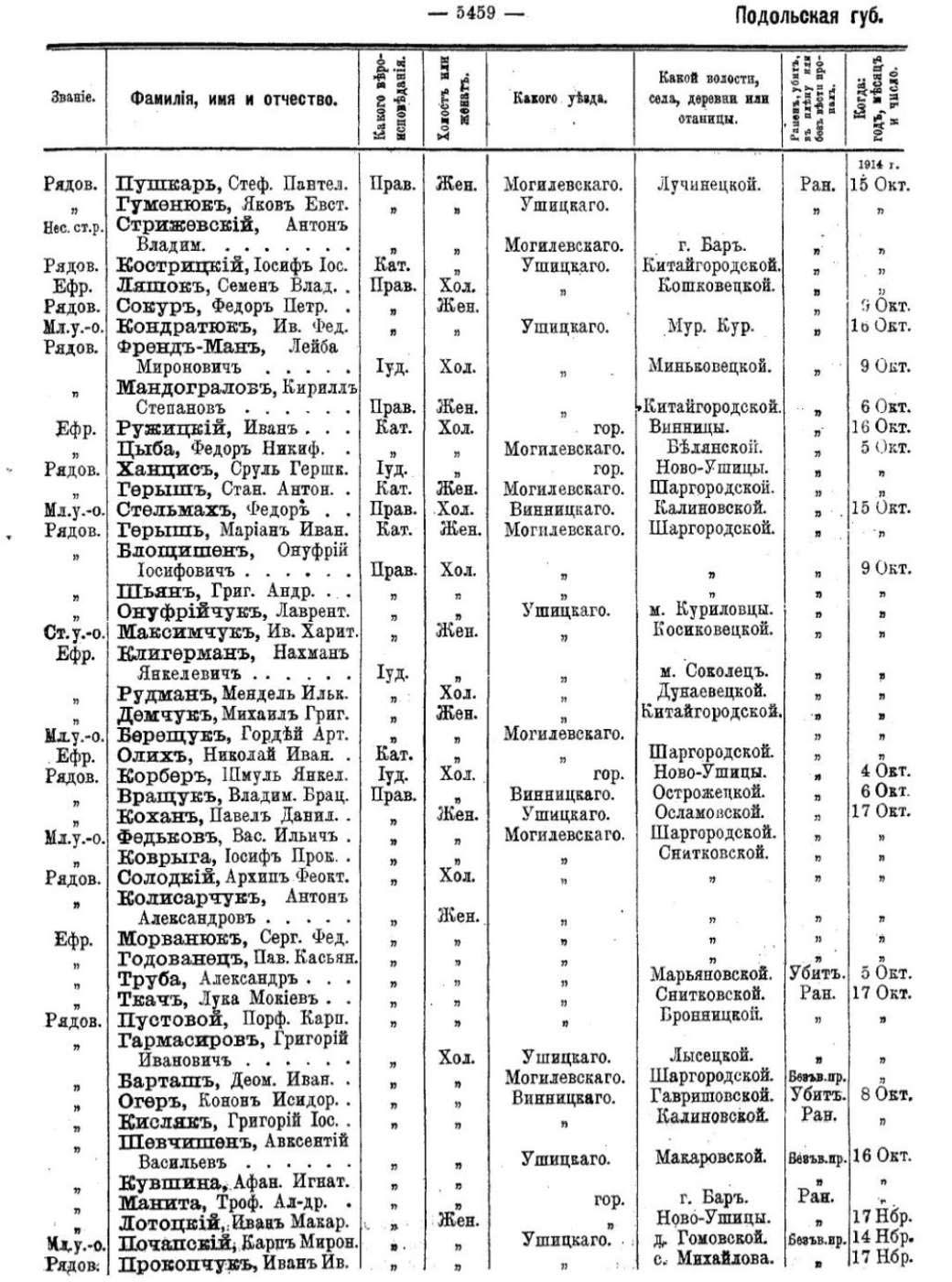
Picture 1. The list of killed, wounded, and missing soldiers of lower ranks in Podilska Hubernia (Eng. governorate), 1914.
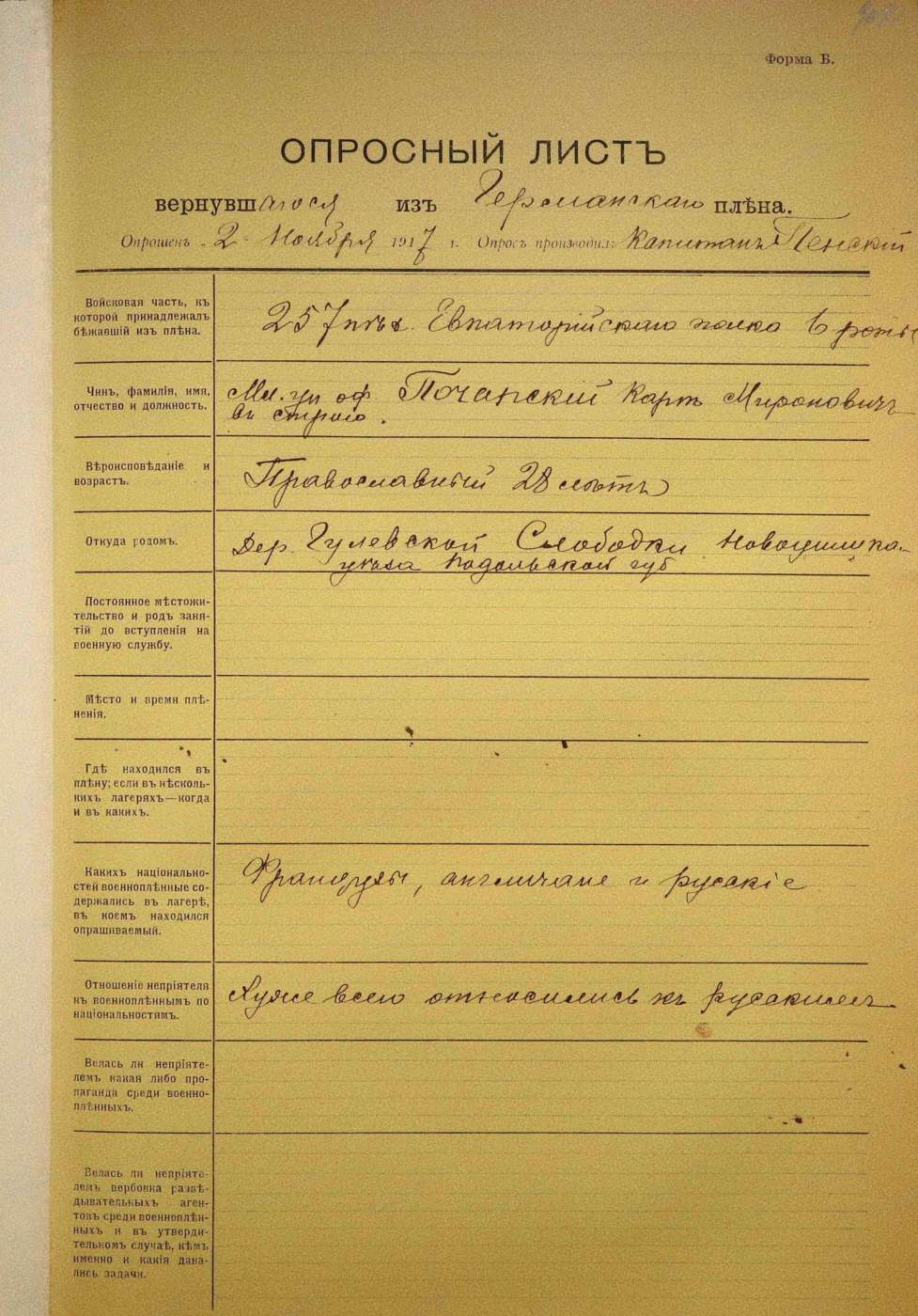
Picture 2. A questionnaire of Karp Pochapskyi, who returned from captivity, 1917.
Germans sent Karp to a prisoner-of-war camp in Theresienstadt (Czech Republic). The prisoners were transported in freight cars without windows; there was only hope to see a blue sky and a white sun someday. In June 1915, my great-great-grandfather was moved from there to the town of Wetzlar, the German state of Hesse. After two weeks, he was transferred to a camp in Wahn town, the German state of North Rhine-Westphalia.
As my great-great-grandfather noted in a questionnaire, the camps included French, English, and people from the Russian Empire. The guards treated the latter the worst, especially in the Wahn camp. They fed those prisoners of war poorly, tortured them, and even hung and shackled them. The camp guards were mostly older Germans. Karp wrote: “Obviously, they also had hard times.”
The prisoners of war worked in the fields, namely plowing the land with cows, as many Germans were at the front, and few workers were in the rear to cultivate the soil and yield a harvest. Bread and milk were taken from the prisoners. My great-great-grandfather pointed out that the harvest in 1917 was poor, and even local children didn’t have enough food.
Karp worked on a rural farm near Niederkassel, in the state of North Rhine-Westphalia, for about three weeks in 1915. And then until 1917, he worked in a village near the Dutch border. In the section about desertion in the German army in the questionnaire, he noted that up to 150 people crossed the Dutch border every day.
On 25 July 1917, my great-great-grandfather Karp escaped from captivity while working on a farm near Niederkassel. He remembered walking through unfamiliar towns and along a road that many German troops had taken. On 4 August 1917, Karp crossed the Dutch border, and the Russian state took him back in the fall.
Karp returned to his village, to his family. After the war, he had five children. My family usually didn’t discuss the events of World War I, so the fact that my great-great-grandfather was in German captivity surprised us all: me and my parents.
World War II
My maternal great-grandmother, Maria Pohribna, was born in 1927 to a rural Ukrainian family in the village of Budo-Orlovetska in the Cherkasy region. The Pohribnyi family had four children, and Maria was the third.
Her older brother Oleksandr was mobilized into the Soviet Red Army in 1940. Oleksandr’s certificate of merit, which is still preserved today, states that during World War II, he worked as a mechanic in a car repair workshop and served in the 670th Airfield Maintenance Battalion in the town of Briansk (Russia).
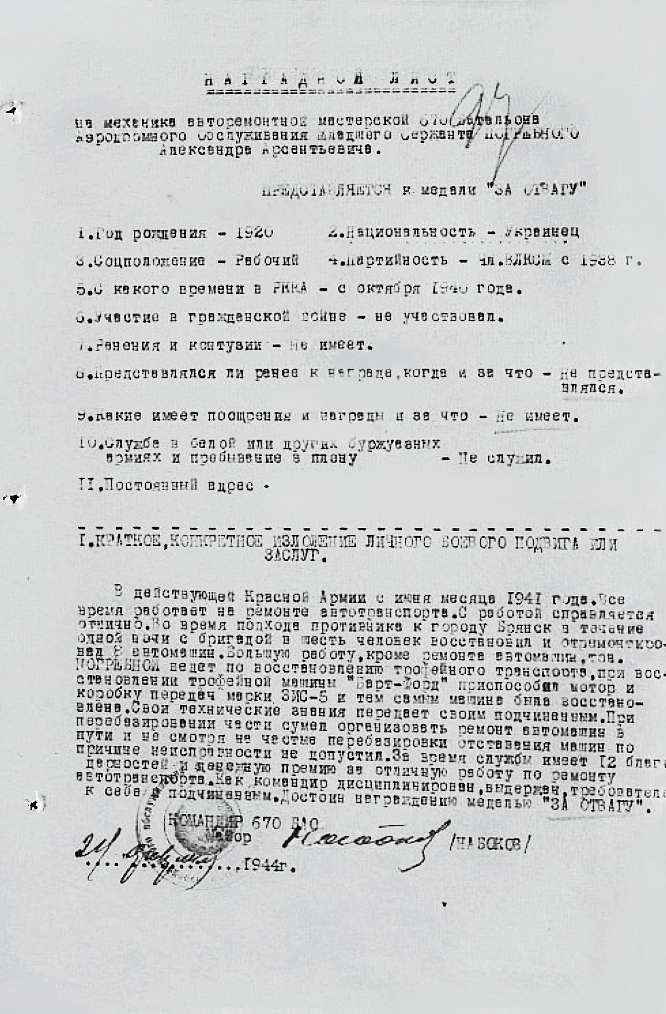
Picture 3. Oleksandr Pohribnyi’s certificate of merit, 1945. This document is taken from the “Pamiat Naroda” (Eng. people’s memory) united database (currently blocked in Ukraine as it is funded by the Ministry of Defense in Russia, which is responsible for the military invasion).
Maria’s second brother, Ivan, was taken for forced labor in the German town of Saalfeld/Saale, located in the state of Thuringia, in 1942. The State Archives of the Kyiv region preserved a letter from Ivan to his father, Arsenii Pohribnyi. In the letter, Ivan informed his parents that he was alive and healthy and asked them not to worry about not hearing from him, as they had assumed in previous letters that he was gone. Unfortunately, the letter did not reach the Pohribnyi family.
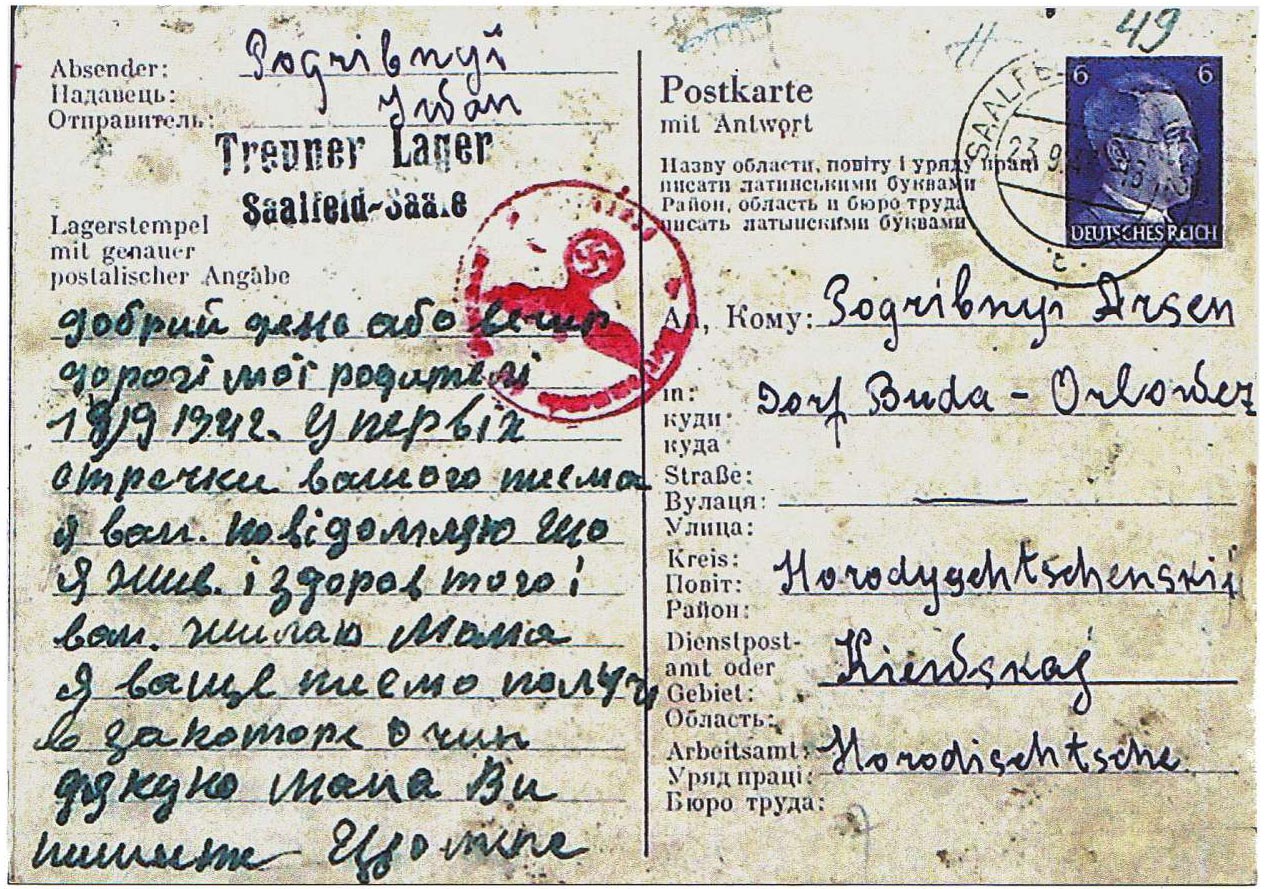
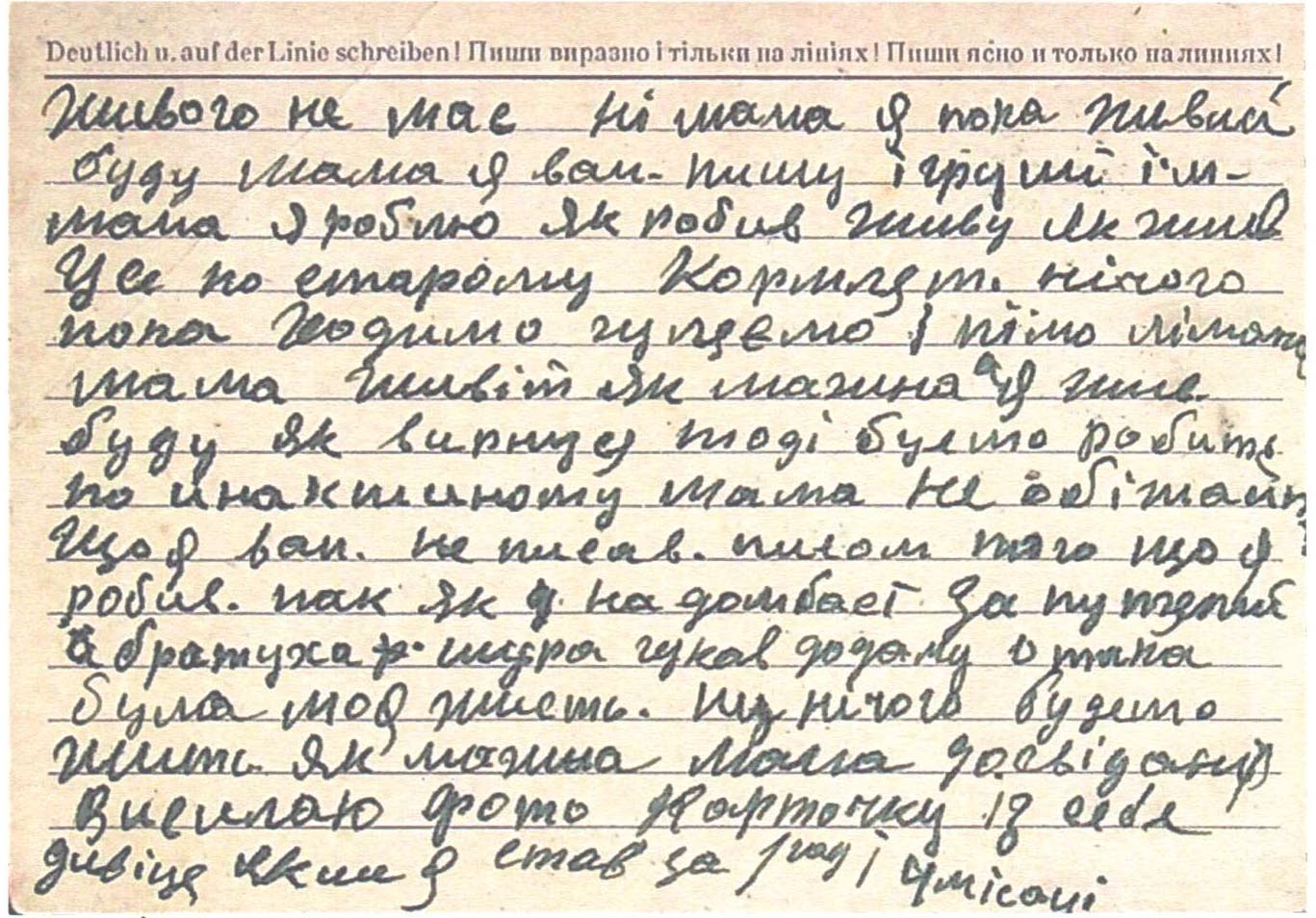
Picture 4 and picture 5. Ivan Pohribnyi’s letter to his father, Arsenii Pohribnyi, written on 18 September 1943. Photos from the State Archives of the Kyiv region.
From May to December 1942, Ivan Pohribnyi was at the Treuner Lager camp located at 69 Kaiserstraße in Saalfeld/Saale, the German state of Thuringia. This information was uncovered by researcher Patrick Brion and data from the Rudolstadt State Archives. The camp occupied a residential building that had belonged to Hans-Joachim Schaede, a washing machine manufacturer, until 1933. Subsequently, this building was destroyed during the air raids on Saalfeld in April 1945.
In March 1945, Ivan Pohribnyi began working at the REIMAHG GmbH factory in Großkamsdorf. The company's biggest and main plant was located in the neighboring town of Kahla, and the factory in Großkamsdorf manufactured engines for the Messerschmitt Me 262 fighter aircraft. According to the archives, Pohribnyi worked there for five days. The Ukrainian archives have no filtration materials regarding Ivan Pohribnyi, making it impossible to study the details of his dismissal and work in Germany.
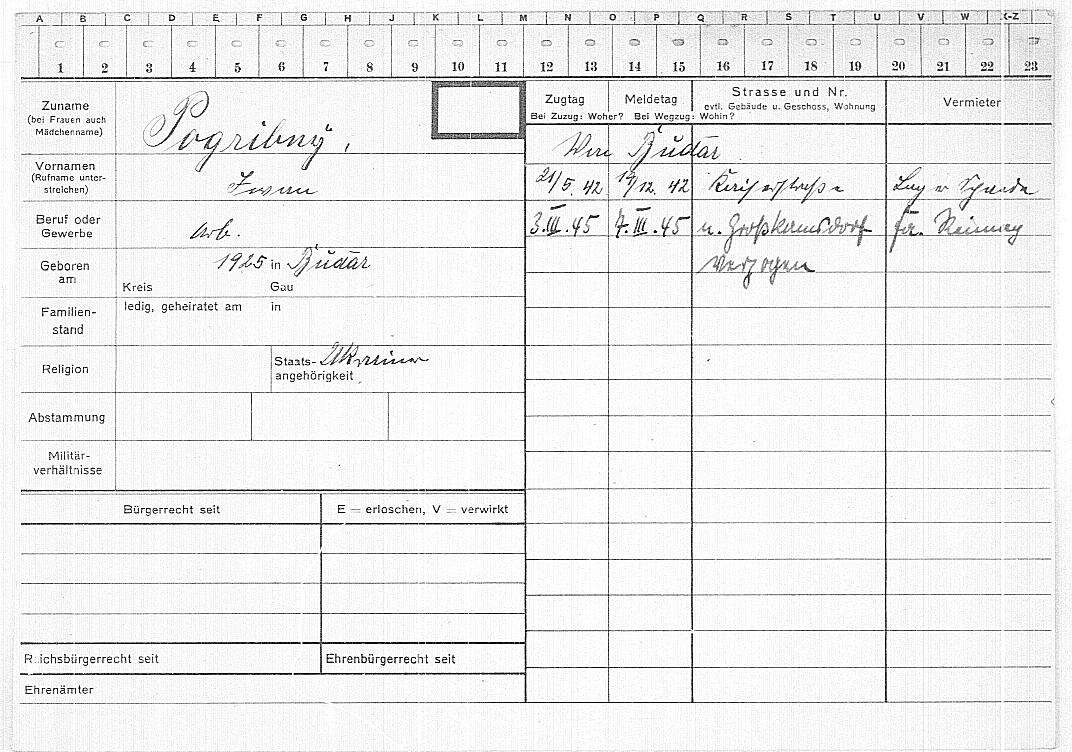
Picture 6. The registration card of a forced worker Ivan Pohribnyi, Saalfeld town. Taken from the Arolsen Archives.
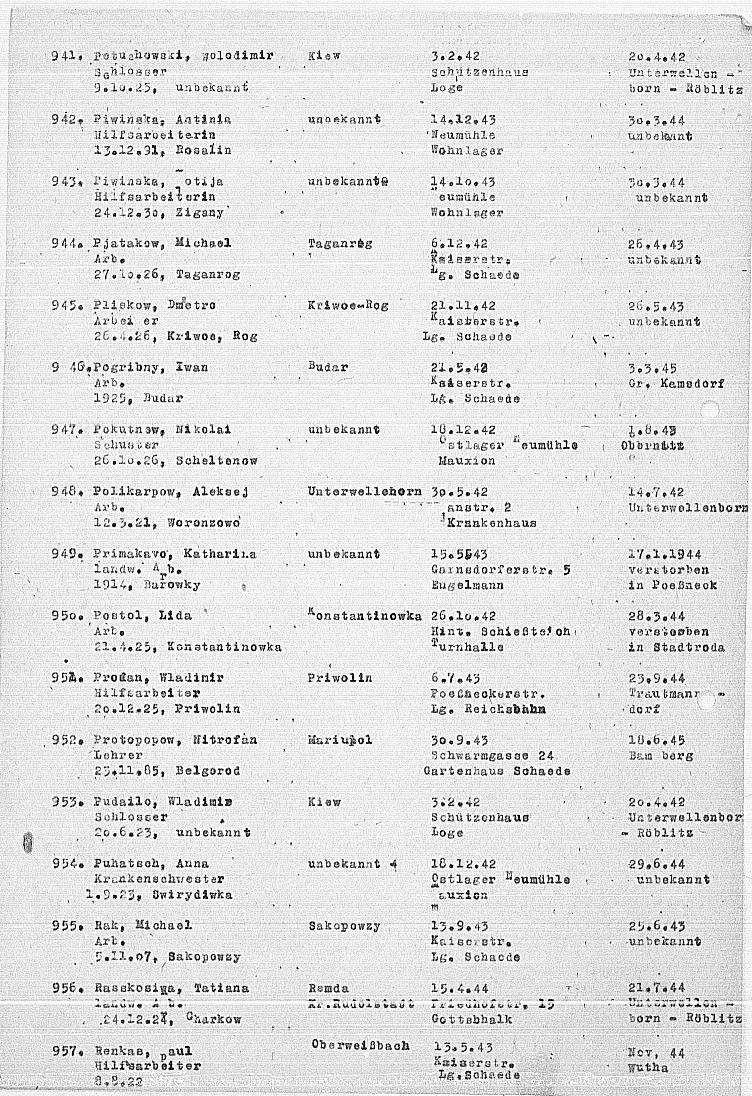
Picture 7. The card indicating Ivan Pohribnyi’s place of stay. Taken from the Arolsen Archives.
My great-grandmother Maria had just turned 16 when she was taken alone as a forced laborer. Her daughter, my grandmother, said that a chief of the village visited Pohribnyi’s house several times in March 1943 and required someone from that household to go to Germany. Every family had to send a certain number of people. Initially, the wife of my great-grandmother’s older brother was supposed to go, but since she had a small baby, the family sent 16-year-old Maria instead of the young mother. The village chief intentionally changed Maria’s birth year from 1927 to 1925.
In March 1943, Maria took off in a freight train. She didn’t know what she would end up with: prison or forced labor. During a stop at one of the railway stations, people from the other train shouted: “If your train takes the next turn, it means you go to the crematorium, if not, then you go to Germany.” Maria arrived in Austria, in the town of Zell am See, the state of Salzburg.
My great-grandmother worked as a maid for an Austrian woman who owned a large hotel with a restaurant. She washed the dishes, cleaned the rooms, and assisted with various household chores. Maria had her own room in a house that she didnʼt have to share with other workers. Having gone through a tough life back in the USSR, young Maria was surprised by how many high-quality clothes and shoes her boss owned. Maria became familiar with additional rules of housekeeping and communication. Her life was organized around a strict daily schedule at the hotel, which was followed by nearly all family members. Mandatory hygiene procedures, personal care and dishwashing supplies were also new to the young woman.
Once, a hotel owner’s little grandson tripped Maria while she was carrying dishes. A young woman fell to the floor, and the dishes shattered. Maria feared that the owner might severely punish her or even send her to a concentration camp for this. Panicking, she fled to a relative, who worked as a forced laborer nearby. The relative’s boss advised Maria to return to the hotel, warning that the situation could worsen. Several hours later, on her way back, Maria saw police in the hotel's yard and thought the owner had called them because of the incident. However, the owner believed that Maria had complained to a city official about her working conditions, namely about the absence of weekends and the ban on leaving the hotel's territory. After that incident, Maria was allowed to leave the hotel premises on weekends to meet other “Ostarbeiters”, forced laborers from the Soviet Union.
My great-grandmother Maria shared the memory of a time when she felt embarrassed about her origins. In 1944, the hotel owner’s son came to Zell am See on vacation. He was a Luftwaffe pilot and had spent some time in the occupied territory of Ukraine. One evening, as the whole family gathered for dinner, the man told them what he had seen in Ukraine and how Ukrainians lived in villages. The hotel owner called for Maria to confirm that her son was joking. The family couldn’t believe that villagers lived in mud huts under the same roof as their cattle. Maria assured them that her household was just like theirs in Austria. But in fact, she felt ashamed because, due to Soviet repressions and artificial famines, Ukrainian villages had been practically destroyed. Rural people survived rather than lived, struggling to make ends meet. Maria lived in the same conditions as the hotel owner’s son described: in a small house where the family lived together with domestic animals in winter because they were the only hope for surviving hunger.
For a 16-year-old girl, the forced labor was sheer torture, and, understandably, the hotel owner seemed to her like a tyrant. However, after analyzing some situations, it becomes clear that the hotel owner felt responsible for her worker. For example, when Maria thought she spotted her mother in a camp for “Ostarbeiters”, she boldly told her boss. The latter did not dismiss her words and reached out to local authorities to find out if Maria’s mother was in that camp and if she could bring her to the hotel. Eventually, the Austrian woman compassionately told my great-grandmother: “Mary, your mother is not here.” In my view, it was a caring gesture, considering the difficult circumstances.
Maria met Petro Pochanskyi, the son of the previously mentioned Karp, at the gathering of “Ostarbeiters”. In the winter of 1945, Petro and Maria got married. My great-grandfather was born in 1922 in the village of Sloboda-Hulivska, Vinnytsia region. In May 1942, he was sent to Austria to perform forced labor. He worked as a handyman for Gojberg-Josef Scherer in Gries im Pinzgau, near Zell am See. After Maria got married, she began working for Petro’s master. The hotel owner opposed Maria leaving, so she offered Petro a job at her place. Even when she was offered three other workers in place of Maria, the woman refused to part with her.
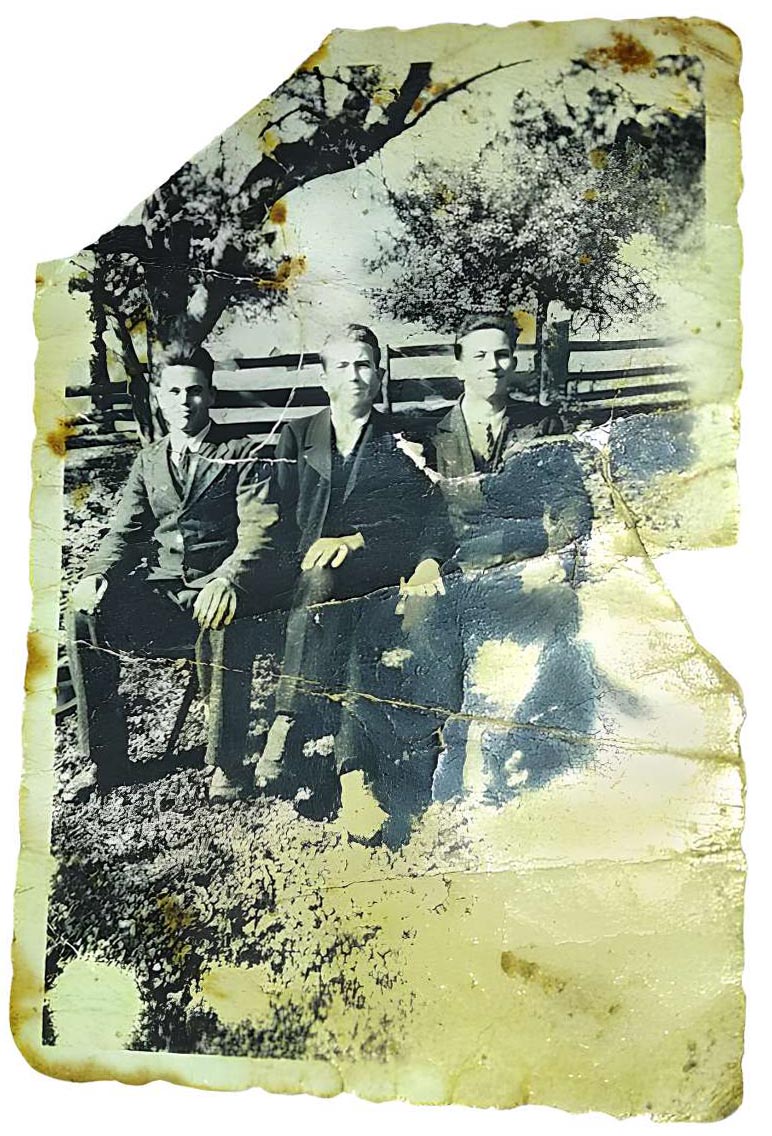
Picture 8. Petro Pochapskyi (left) and his cousins, Austria, 1944. A photo from a family archive.
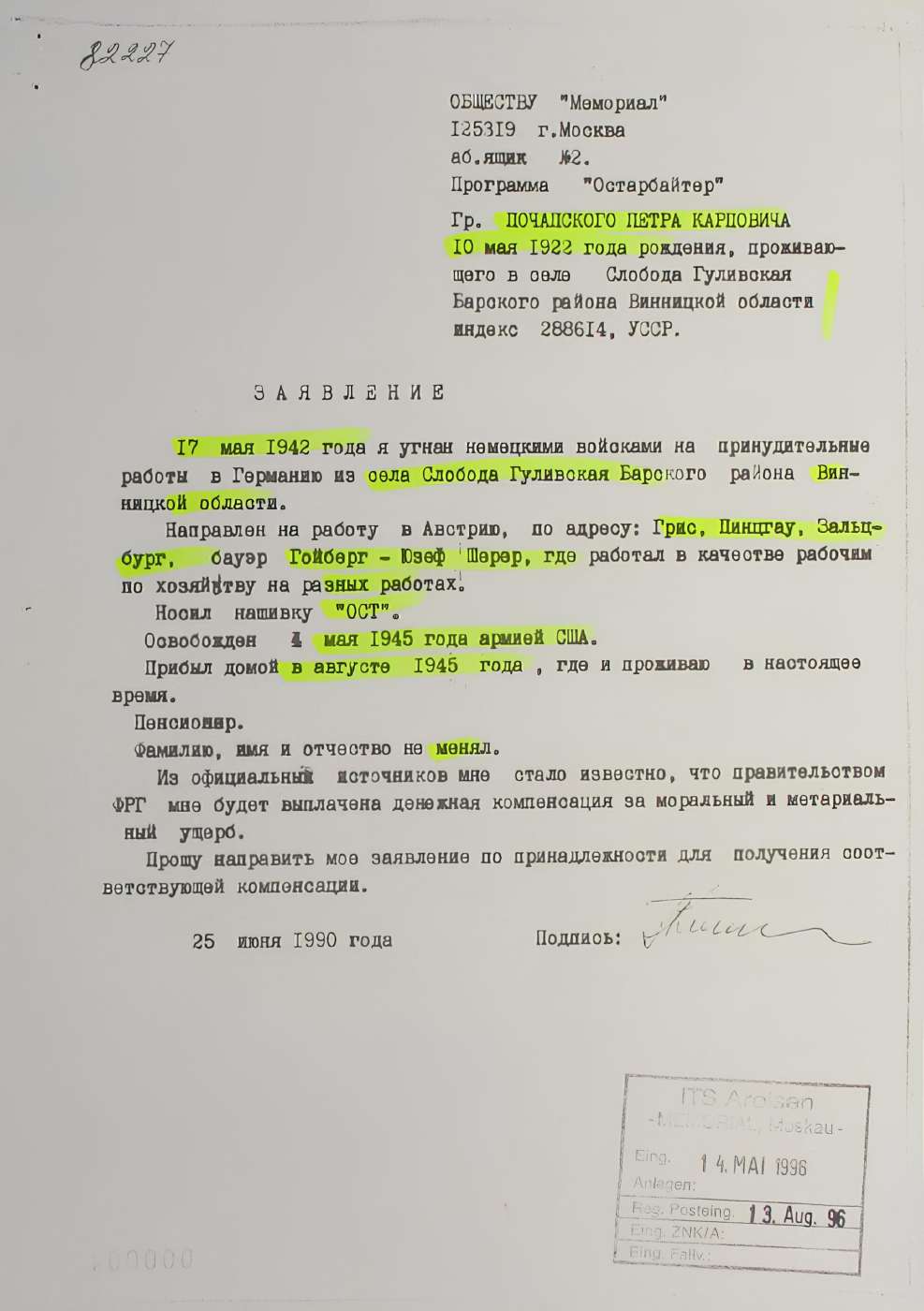
Picture 9. Petro Pochapkyi’s statement about his experience of forced labor. Taken from ITS Digital Archive, Arolsen Archives.
Rumors were spreading in the Ostarbeiter community about the Soviet army’s actions in the villages and towns they invaded: reports of civilians being raped and instances of property being repeatedly looted. It was also said that once a town was liberated, Soviet forces sent “Ostarbeiters” to Siberia. Young Maria was frightened and worried for both — herself and her future child.
In May 1945, American troops liberated Zell am See. The commandant's office offered Maria and Petro the chance to emigrate to the United States, but Maria declined. The hotel owner visited Maria at a displaced persons camp and gave her dresses and jewelry. She offered to stay with the Austrian family, but Maria declined once again. She longed to return home with all her heart, even though she didn’t know if her older brothers were alive or if her parents were waiting for her.
The Cold War
My grandmother Vira was born to Maria and Petro Pochapskyi in Budo-Orlovetska village, Cherkasy region, in mid-October 1945.
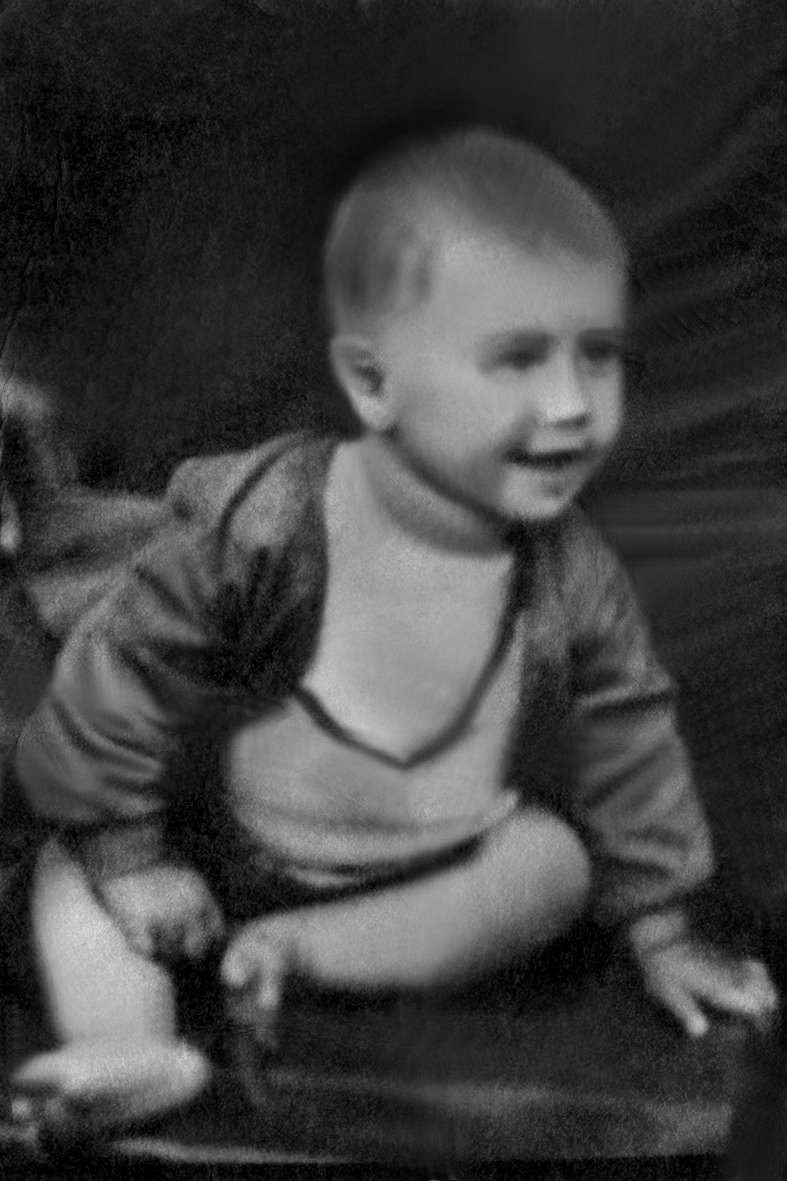
Picture 10. My grandmother Vira Pochapska, 1946. Taken from the family archive.
Maria and Petro's past had never left them due to the government's intrusion into their lives. Until the mid-1950s, the KGB regularly interrogated the couple about their life outside the Soviet Union during the war. The USSR ensured that former forced laborers (essentially slaves) never forgot that they were not seen as “trustworthy citizens”: they were always under surveillance. The scars of this traumatic experience — feeling unworthy as human beings and having no rights for the future in their own country — had remained with my great-grandmother and great-grandfather.
In a post-war Ukrainian village, even remotely acceptable living conditions proved to be a struggle. The benefits of rural life, such as growing food on a personal farm, seemed like a distant dream due to the economic crisis and the humiliating conditions faced by villagers who had no access to well-paying jobs or the opportunity to receive state financial assistance. Additionally, villages suffered from a severe lack of food and household supplies. This overall deficiency in the state was particularly felt here. Consequently, the family decided to return to the Donetsk region, which appeared to have a more developed economy and better living conditions.
In the mid-1930s, Maria’s family moved to the Donetsk region for the first time, where they lived until military actions began in 1941. The DonbasDonbas is a geographical region of the Donetsk coal basin of Ukraine. It is one of the country's most developed industrial and energy complexes, with significant natural resources and strong production potential. mines let families sustain themselves in the conditions of the destructive policy toward Ukrainian society imposed by the Soviet authorities at that time. The Pohripnyi family chose to live in the small town of Snizhne, which is located by the Russian border.
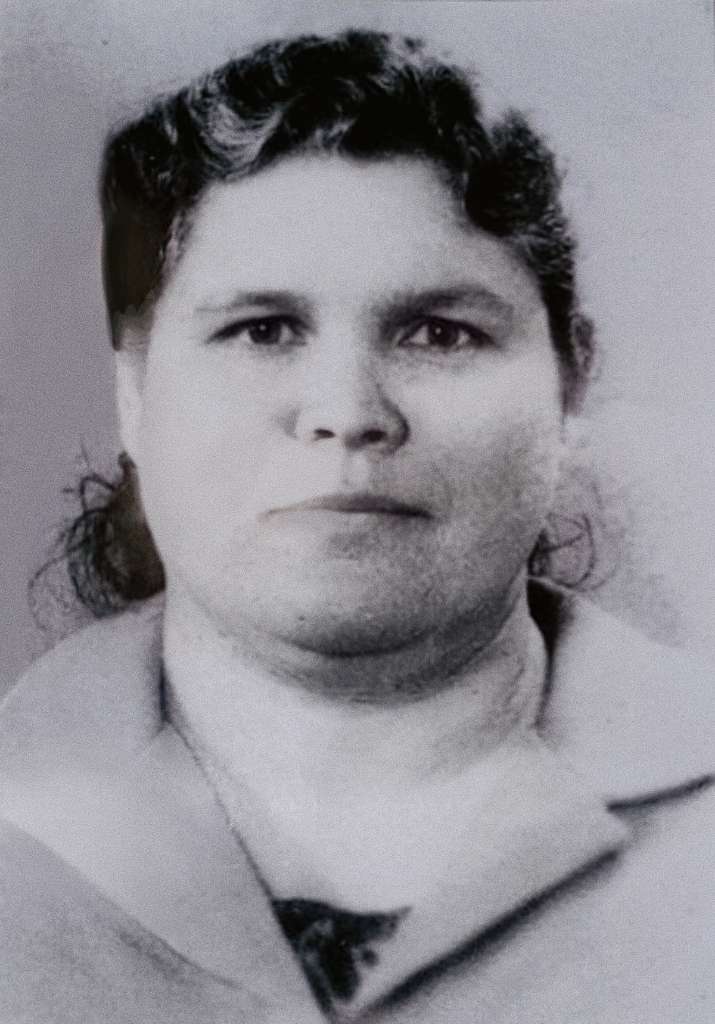
Picture 11. Maria Pohribna as an adult. Taken from the family archive.
The development of Donbas is historically connected with the mining of hard coal reserves in the eastern part of the Donetsk region. The towns in this area include relatively isolated mines and mining communities, which emerged as satellites of these mining companies. Workers chose to live in locations closest to the mines because they operated 24/7, but no transportation system was in place. Each of these mining towns and villages had its own centers of work life (a square in front of the mine's central administration building) and public life (a cultural center or a grocery store with a market square). These two centers were never close to each other within a single town.
The isolation of mining communities and the absence of regular public transportation between them created conditions akin to ghettos. These communities' residents endured challenging and sometimes tragic survival experiences during World War II. Sometimes, one could notice a high concentration of a certain national minority in one mining community, but there is no clear explanation for this phenomenon. For instance, the community of mine 4 was primarily inhabited by Tatars, while many ethnic Germans lived in the communities of mines 1, 2, and 3. The communities surrounding newer mines, such as 18-22 or 27, included many former Ostarbeiter residents as well as individuals who had experienced Nazi captivity or had family members who were repressed.
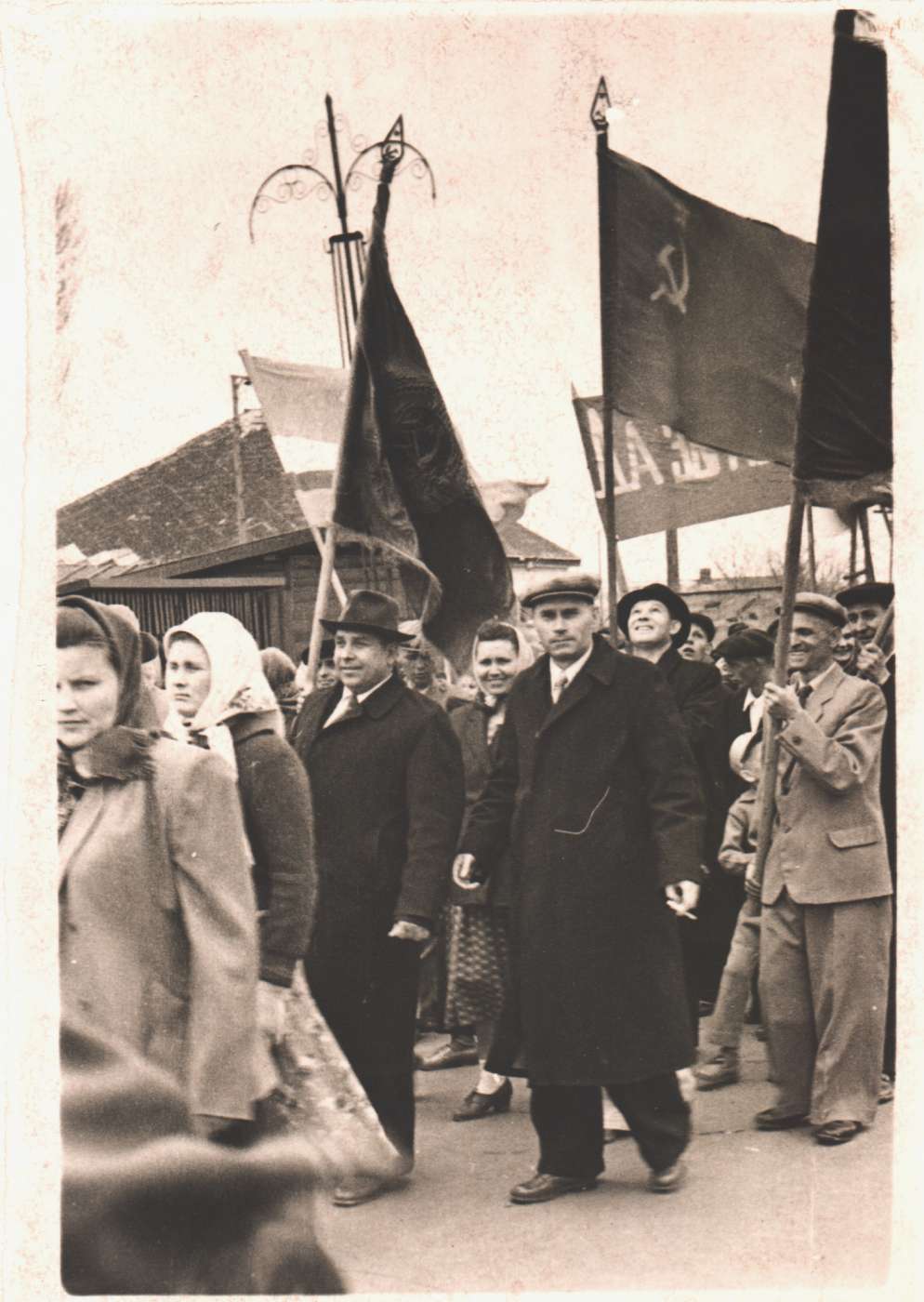
Picture 12. A parade commemorating the 40th anniversary of the October RevolutionThe October Revolution is the second phase (after the overthrow of the imperial government) of the Russian Revolution of 1917. During this event, the Bolshevik Party seized power in Russia and established the Soviet regime., a group of workers from the Udarnik Mine No. 9 company. Lenin Street, Snizhne town, Donetsk region, 1958. Taken from the family archive.
Such experiences in the Soviet times left a lasting mark on the lives of the person, their family, and friends. An individual viewed the experience as a sign of her own non-compliance with the high ideal of a Soviet citizen. Everyone understood that such a background could pose risks to her and those around them. However, the boundaries — whether temporal or spatial — of this danger were unclear, leading many people to "act like others” and "suppress their own opinions" to protect themselves and their loved ones from potential threats from the state.
After World War II, the lives of Maria Pohribna’s brothers, Oleksandr and Ivan, were challenging. Wounded and concussed at the front, Oleksandr suffered from the consequences of those traumas throughout his life. He appeared ordinary, but sometimes the past would resurface. Occasionally, he behaved as if he were back on the battlefield, issuing orders, dodging imagined shelling, and calling out to his comrades-in-arms. After the war, Ivan returned to his family in the Donetsk region. His relatives, even his children, believed he had participated in combat. However, in 2024, we discovered that he had endured forced labor in Germany during World War II. Clearly, those experiences significantly impacted his life, as he kept them hidden even from his closest loved ones. Ivan died of a heart attack at 42, never revealing the truth about his experiences during World War II to his family.
Life in the mining communities revolved around the mine's schedule. All residents were familiar with the miners’ shift timings, allowing them to catch a “working bus” to the town center. Knowing when delivery of bread and other groceries arrived at the canteen was also crucial, as the community was poorly stocked compared to the mine’s canteen.
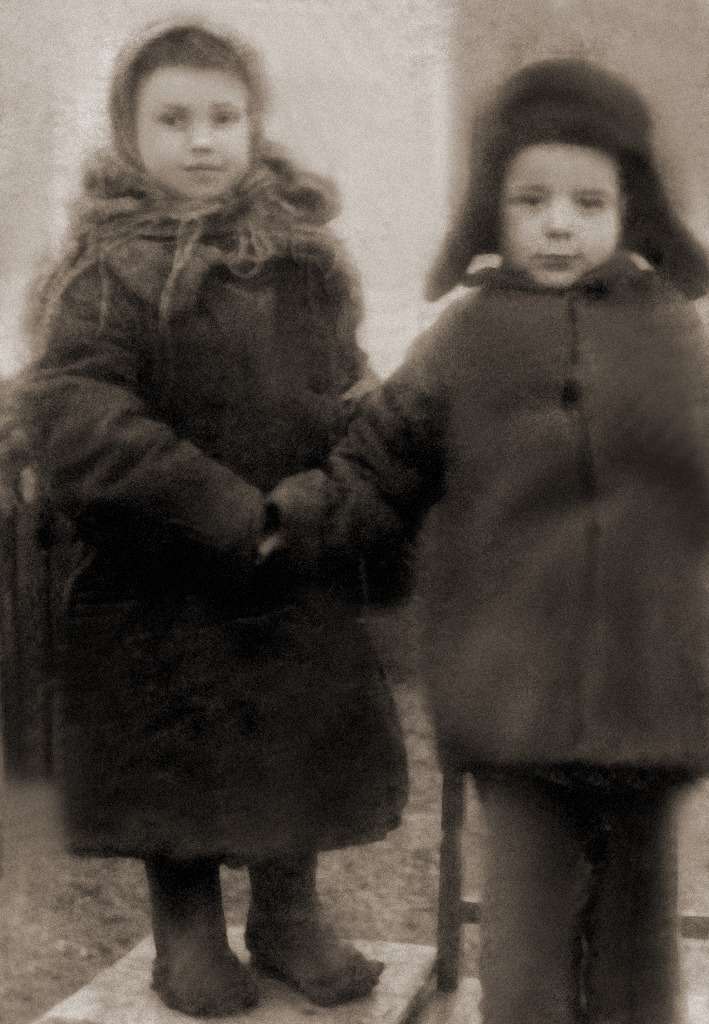
Picture 13. 6-year-old Vira (my grandmother) standing on the street with a neighbour boy, Snizhne town, 1950. Taken from the family archive.
Sanitary conditions in post-war mining communities were far from normal. Residents primarily used public restrooms located in hastily constructed wood-plank houses that lacked heating and running water. All workers first lived in barracks, but later engineering and technical workers (ETW) resided in brick homes called ETW houses. These could be either apartment buildings or individual homes. Securing a spot in such a house was considered a dream come true.
As mines developed, communities constructed two-story apartment buildings with adobe walls and wooden partitions. Each floor contained two to four apartments. One apartment accommodated from two to four families, depending on the number of rooms.
My grandmother’s family lived in an apartment like that in the 1950s. It was on the second floor and had two rooms, a hallway, and a kitchen. Two families lived in the apartment, with a total of 12 residents, four of whom were adults. The rooms were small, with low ceilings. During the cold season, the stove in the kitchen warmed the space. At that time, it was impossible to have a restroom or bath.
However, people found ways to improve their living conditions. Every family built a summer kitchen and a shed in their yard. The yards of apartment buildings resembled hives, with small fenced land plots and tiny houses that looked like honeycombs. These houses included a stove, a table, and cooking supplies. There was also a root cellar for storing food — potatoes and other vegetables that families attempted to grow on their land along the railways outside the mining communities and mines.
Child exploitation was widespread in Soviet schools and was usually called “factory patronage assistance”. Schoolchildren were forced to work in factories and plants, sometimes 8 hours per day, often without any personal protection equipment or even water. For instance, the school group that my mom was a part of was sent to the factory to unload bricks from freight cars. Furthermore, children joined work in collective farms, cultivating fields, making brooms, and collecting and disposing of metal and waste paper. Another popular practice was having the whole school go out to clean up parks.
Children’s safety was frequently overlooked. My mother’s schoolmates once discovered a soldier’s helmet while working in the fields near Savur-MohylaSavur-Mohyla is a tumulus in the eastern part of the Donetsk region near Snizhne town.. They often came across shell fragments from World War II.
In addition, participation in festive parades on 1 May (International Workers' Day) and 7 November (Day of October Revolution) was mandatory. Children had to stand with banners and balloons even in rain and snow. Refusal to participate could result in social condemnation. Teachers could initiate bullying and turn schoolmates against a child. This made life at school unbearable for those who tried to avoid these mandatory events.
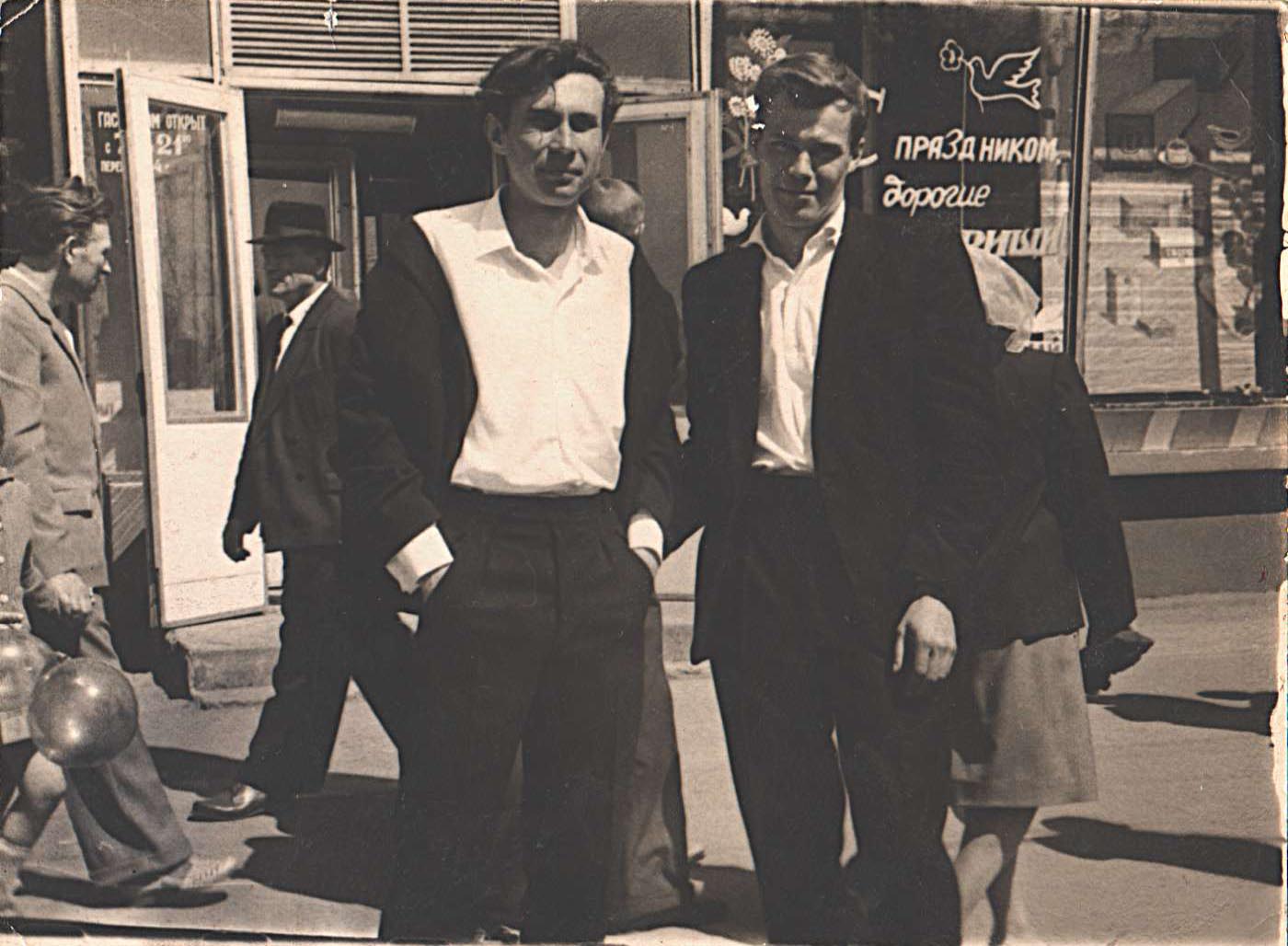
Picture 14. On the left – my mother’s father at the 1 May celebration, Snizhne town. Taken from the family archive.
ATO (Anti-Terrorist Operation)
The ATOThe Anti-Terrorist Operation is a set of military and special organizational and legal measures implemented by Ukrainian law enforcement agencies from April 2014 to April 2018, aimed at countering illegal Russian and pro-Russian armed groups during the war in eastern Ukraine. period began for me in the summer of 2013 when tension and unease filled the air in Donetsk. A variety of events were taking place in the city at that time; mass gatherings in the central square or in a park near the Donbas Arena stadium became a daily routine. Almost every weekend, the central blocks were closed off. Most participants in the demonstrations actively supported Yanukovych’sViktor Yanukovych is a pro-Russian politician from Donetsk region who served as the fourth president of Ukraine from 2010 to 2014. Yanukovych was removed from the presidency in the 2014 Revolution of Dignity. Since then, he has lived in exile in Russia. decisions. Even then, discussions about the region's separation from Ukraine were underway, with people claiming that the Donbas mines and miners “fed the entire country”. These moods created a sense that significant changes were on the horizon.
As a junior schoolgirl, I perceived the beginning of the Revolution of Dignity in November 2013 through the anxiety my parents and teachers expressed. Everyone discussed how Viktor Yanukovych, the president at that time, had publicly refused to sign an EU association agreement and explained the reasons behind his decision. Opinions on this matter were divided in my surroundings. The majority supported Yanukovych’s decision, which was surprising since my classmates spent their holidays with their parents in EU countries. However, the differing views on this event didn’t lead to open opposition in my school and family. Life seemed to be going on as usual.
The brutal dispersal of a peaceful student protest in Kyiv in late November 2013 caused significant stress for my family and the school administration. Everyone discussed the event, and we, the children, perceived it as a barely understandable source of unease. From that moment on, the general tension in Donetsk increased. People were worried and openly talked about the latest news. Everyone wondered what consequences it would bring for the future.
In early December 2013, supporters of Eurointegration began protesting near the Taras Shevchenko monument in Donetsk, just two blocks from my school and three blocks from my home. The Donetsk MaidanMaidan (literally, Square) is a mass action that defends personal and public freedoms, state independence, and democracy in Ukraine. The name is related to Maidan Nezalezhnosti Square in Kyiv, where the leading civil society movements were concentrated. was neither large nor loud. Most citizens didn’t grasp the purpose of these protests, but the uncertainty worried them. On New Year’s Eve 2014, our family celebrated in the city center at Lenin Square, and we could hear amongst the wishes that “let it all end sooner”.
People followed the TV news to find out what was happening at Maidan in Kyiv. Some traveled to Kyiv to “see it for themselves” and reported feeling that nothing had changed, while others discussed the patriotic uprising and the significance of the events shaping the Ukrainian nation. Donetsk closely watched the unfolding events of February 2014This refers to the confrontation between state forces and protesters in Kyiv during the second half of February 2014, which led to the deaths of over 70 activists and more than 10 law enforcement officers, along with more than 600 people injured. Viktor Yanukovych fled Kyiv on 21 February, and the Verkhovna Rada (Ukrainian parliament) removed him from the presidency the following day. This marked the final stage of the Revolution of Dignity.. The city seemed to be filled with silent tension.
On 20 February 2014, the Russo-Ukrainian war began. On that day, Russian troops, without any identifying markings, started a military operation in Crimea to seize the peninsula.
The military invasion of Crimea escalated the situation in Donetsk and Luhansk. Since March, anti-Ukrainian demonstrations had taken place near the Donetsk Regional State Administration. At that time, I attended school No. 14 in the city block where the occupied building of the city administration was. In the middle of those events, I saw numerous buses bringing in extras for pro-Russian protests. The educational process occurred under the shouts of protesters. Eventually, armed individuals appeared on the streets. I witnessed cars parking on our school grounds and armed people in balaclavas getting out and heading toward the city administration building.
In April 2014, when Ukraine announced the beginning of ATO, checkpoints with strange people standing guard popped up in the city. In many districts, the roads were blocked. Ukrainian flags massively disappeared from the streets, talking Ukrainian became dangerous, and carrying a passport was mandatory, even though no one had ever required it before. We kept learning, but teachers were confused: some supported “DPR”"The Donetsk People's Republic" ("DPR") is a separatist quasi-state entity located in the Donetsk region of Ukraine. It was proclaimed in 2014 by paramilitary groups under Russia's control and support., and others – did not. In late April, the flag of Ukraine was removed from the building of my school because people in balaclavas with bats, rods, and chains appeared in the city carrying concealed firearms.
After the “DPR” was proclaimed, the preparations for the 9 May celebration9 May is Victory Day commemorating the defeat of Nazi Germany by the USSR in World War II. began with increased excitement. “DPR” activists portrayed that day as the greatest day of victory over pro-European values rather than over fascist invasion. People were forced to wear the Georgian ribbonsThe Georgian ribbon (the ribbon of Saint George) is a black and orange ribbon that symbolizes military valor during the Russian Empire, the USSR's victory over German Nazism in World War II, and modern Russia's imperial revanchism..
In early May, occupying authorities held an illegitimate “referendum” in Donetsk to declare the departure of the Donetsk and Luhansk regions from Ukraine. My mother went to the “referendum” and voted against the departure. Mostly, people with similar opinions did not go to vote.
I found it unusual that airplanes stopped flying over our city because the Donetsk airport was closed. We could only see Ukrainian fighter jets flying toward the airport. We heard the sounds of explosions in the city, but schools continued to operate as usual, although graduates were exempt from taking exams. In the final days of May, notes hung on the walls of numerous buildings with warnings about possible shelling and addresses of the nearest shelters.
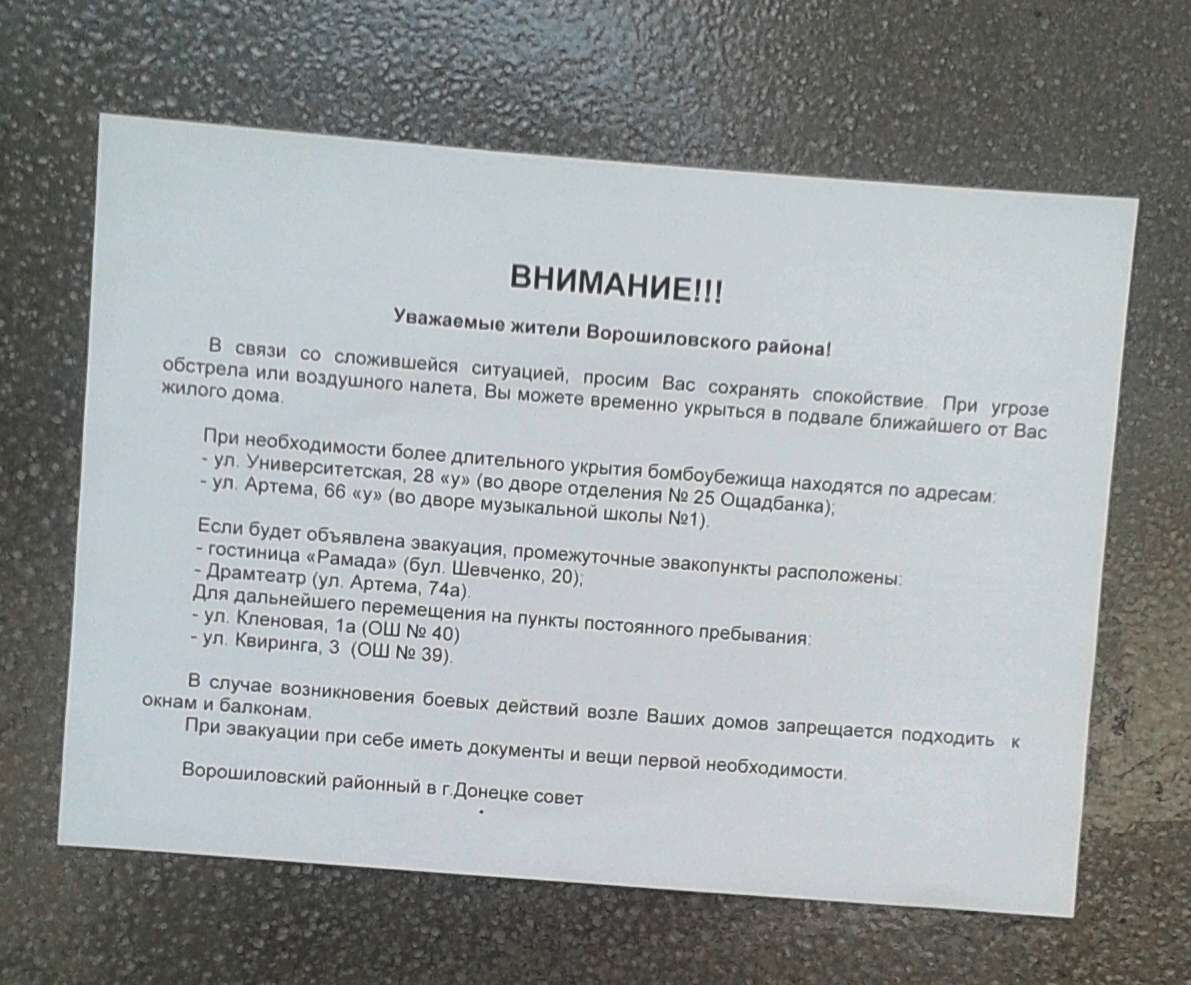
Picture 15. A note on the door of my apartment building with information from local authorities about potential air raids in Donetsk, 28 May 2014. Taken from the family archive.
My most vivid memory from May 2014 is a trip with my father to the airport since our family house was located nearby. We could see signs of battles on the road to the main terminal. I especially remember the destroyed truck that had transported Russian mercenaries a day earlier.
Due to the danger in Donetsk, my parents sent my sister and me to our grandmother's house in Snizhne town. On 12 June, Russian tanks crossed the Ukrainian border and moved toward Snizhne. That day, my grandmother received a call from a friend who worked at an orphanage. She said the orphanage would be evacuated and advised our grandmother to leave as well. Our grandmother calmed her down and reassured her that Russian tanks wouldn’t come through our town. But she was wrong: a convoy of tanks and buses bearing Russian flags was heading toward Donetsk.
My parents left Donetsk to bring my sister and me away from the epicenter of the events. On the evening of 12 June, we went home together. As we left Snizhne, we noticed tank tracks on the pavement and saw people passionately discussing something along the road while looking at the sky. In the town of Torez, we caught up with a convoy of three tanks, several cars, a bus, and two trucks. They moved through the town center, and we decided to take a bypass road through nearby towns and villages. My parents were worried that Ukrainian aircraft would attack the enemy or that there would be a firefight.
There was a large traffic jam at the entrance of Makiivka town. The road was blocked, and armed individuals with unfamiliar insignia let a convoy under Russian flags through a checkpoint. I vividly remember how people shouted to the convoy of enemy vehicles, “Liberators!” and “Our brothers have finally come to liberate us!” Many people cheerfully welcomed them.
Parents decided to move out of Donetsk after all representatives of the Ukrainian government left the city. The militsiyaMilitsiya is a police force in the Soviet Union and in several former Soviet republics following the collapse of the USSR. In Ukraine, as a result of the 2015 reforms, the militsiya was transformed into the police. management talked about “loyalty to Donetsk and motherland” and cooperation with the “new government.” Already in May, little “DPR” flags were on their office tables. In July, one of the chiefs ordered militsiya officers who remained faithful to their oath to leave Donetsk and arrive in the determined towns and villages after 10 days.
In July 2014, our family moved to Berdiansk to stay at my paternal grandmother’s. We brought only what we could take, including documents and our pets — our cat Lila and a Russian Toy Terrier named Busia. We lived in one room of a two-room apartment, but at least we were relatively safe. Later, as a militsiya officer, my father received orders to serve in Kurakhove, a town in the Donetsk region.
On 26 August, my parents were detained at the “DPR” checkpoint. My father was taken out of a car, and a militant drove my mother home. The militants took our car with all our belongings, including my father’s phone. My mother couldn’t reach him. With the help of her friends, she learned that he was imprisoned in the Lenin local militsiya department in Donetsk. He was about to be released after the interrogation because he had passed the so-called filtration stage. However, a contact labeled “Name counterintelligence” was found when his phone was checked.
So, my father ended up in the territory of an insulation products factory in the Budionivskyi district of the city where Izolyatsia art space was located from 2010 to 2014. Since 2014, it has served as a concentration camp where pro-Russian militants illegally held and tortured people. The factory’s basement had small rooms, each holding 30 people. My father was taken to execution twice — he was standing in the yard, and militants shot in his direction with an assault rifle. He was regularly beaten up and tortured; his heel was crushed. Denys KulykovskyiDenys Kulykovskyi is a pro-Russian separatist who, from 2014 to 2018, was an organizer, torturer, and the chief of the Izolyatsia prison under the control of the "DPR". In 2021, the Security Service of Ukraine arrested Denys Kulykovskyi in Kyiv. In 2024, he was sentenced to 11 years in prison., a call sign Palych, is the one who tortured my father.
My father managed to escape captivity. Once, KadyrovitesKadyrovites are members of paramilitary units that serve the president of Chechnya, Ramzan Kadyrov, and engage in attacks on Ukraine alongside Russian troops. and pro-Russian militants got into an armed argument. My father seized that moment to hide in a sewer drain. Having worked as a militsiya officer, he knew well the city's industrial area where the prison was located. He walked through the fields with a broken leg for several days without any documents or means of communication. The most terrifying challenge was crossing the separatist checkpoint. Local fishermen assisted him there. Fortunately, the militants didn’t ask them about my father. He made it to the territory under Ukraine’s control, where he received first aid. I still vividly remember our first meeting after that incident on 26 August, when I saw my father in September. He was skinny, and his body was covered with red, purple, and blue bruises — evidence of torture. He wore a plaster cast on his leg because his heel was severely crushed.
Since 2014, my family hasn’t visited the temporarily occupied territory of Donetsk region because crossing the “DPR” checkpoint could likely result in them ending up “in a basement” or in prison as “national traitors” or “Donbas’s Judas”. The militants maintain a database of “national traitors” that includes our family name. Just three streets away from the Donetsk airport and several kilometers from the town of Avdiivka, our family house has been patiently waiting for 11 years for the day when the voices and laughter of a loving family will again fill its cozy rooms.
Epilogue
The stories of five generations of my family clearly illustrate the devastating repercussions of imperialistic wars. They ruthlessly shatter destinies, cut lives short, and obliterate entire cities and villages, leaving behind pain and emptiness. They separate families, disperse people across the globe, and rob them not only of their homes but also of the sense of belonging to their homeland. Many Ukrainian families have faced this, having endured two world wars, migrated throughout Europe, and gradually lost touch with their motherland. War erases the remnants of the past, denies us the opportunity to honor our ancestors, and silences their voices that exist solely in our memories. Every war leaves a permanent scar on the nation’s history, reminding us how much was lost and can be lost if we fail to break this terrible cycle.
The last native resident of the Cherkasy region in Ukraine in our family is my grandmother, whose ancestors lived in this area for at least three generations, despite the fact that she herself has spent almost her entire life in the Donetsk region. The next generations of our family, including me, were born in the Donetsk region. Nevertheless, I have been separated from my homeland and had to leave to survive. The resting place of the Pohribnyi family, an almost forgotten cemetery near the mine in the temporarily occupied territory of the Donetsk region, serves as a bitter reminder of how wars can scatter family members far from their native land and hinder our chance to honor our ancestors. This cemetery is a silent witness to the loss of connection with the homeland and the generations that lived there.
I want to thank the “NeprOSTi letters” archive and museum project for helping me find Ivan Pohribnyi’s letter.
Text and pictures: Anna Trifonova
Translation: Dariia Titarova