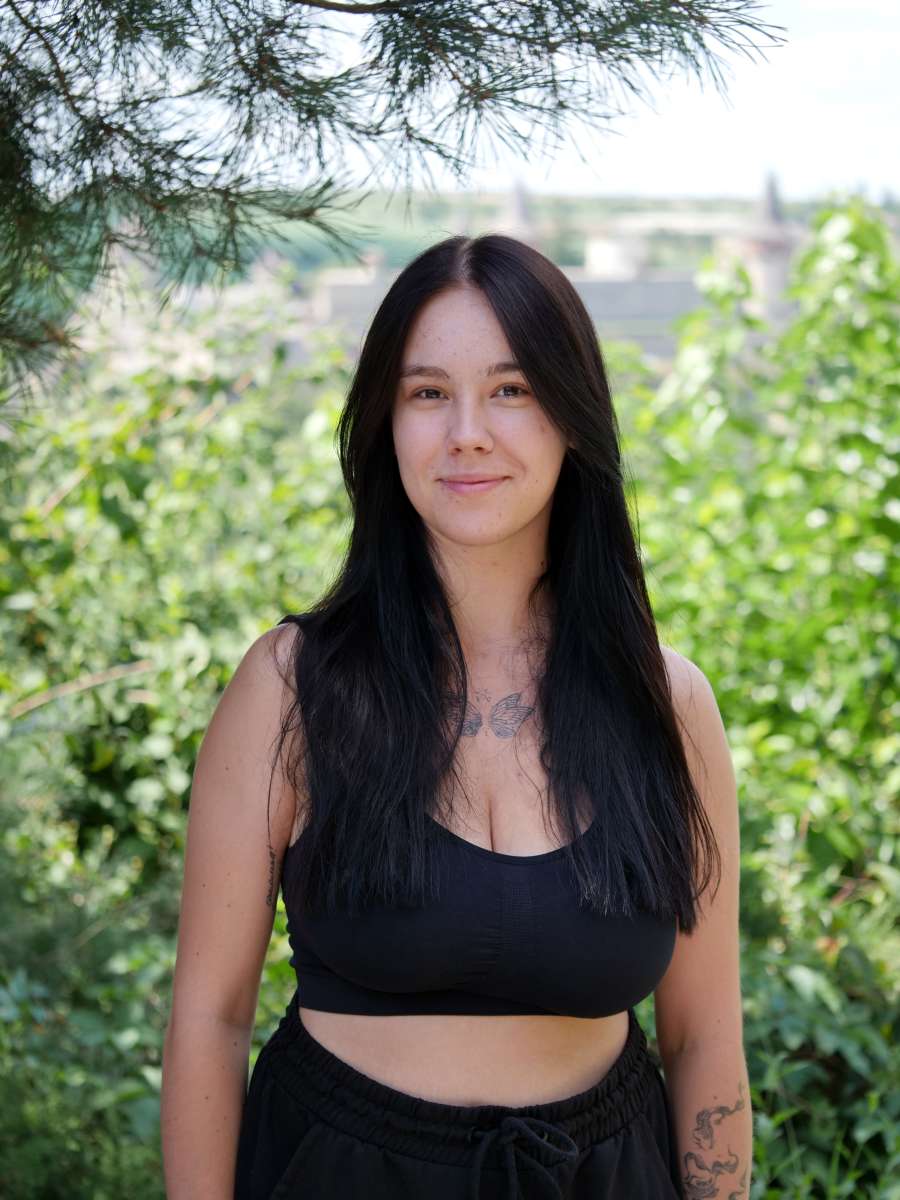
19, journalist
Sumy
This project is dedicated to the most tragic pages of Crimean Tatars' history, namely the mass Soviet deportation in 1944 and current Russian repressions.
These are stories about the events and the consequences borne by the survivors or their descendants. I find it essential to preserve the memory of these tragedies because they are not only a part of Crimean history but also a personal scar on my heart. The stories of two families will show what the fight for the right to be yourself means.
I hope this project will help readers understand the Crimean Tatars' culture, pain, and invincibility. We must learn this lesson for our common future. Don’t forget who our enemy is.
The first story. 1944
My grandfather, who is over 70 years old now, has a Slavic name and a Ukrainian surname. However, his ethnic origin is Qırımlı.
Qırımlı is a self-designation for Crimean Tatars used by the vast majority of them.
The deportation of Crimean Tatars in 1944 has affected the self-identification of our family. This event left the fear of persecution, exile, and death that is passed down from generation to generation.
My great-grandmother Zarema Mirzoieva was born in 1931 in Bakhchysarai. Her family house had 11 people living in it: parents, a grandfather, and children. The family lived modestly but had a stable life before World War II. Her grandfather was a beekeeper, her father crafted violins, and her mother cared for the children and the household.
In 1942, after Germany attacked the Soviet Union, my great-grandmother’s father was drafted into the Red Army and sent to serve in the Stalingrad area (now Volgograd, Russia). In 1943, he was injured and dismissed from service; therefore, he returned home to Bakhchysarai. He never crafted violins again and instead started spending more time with his family. Nevertheless, this calm time didn’t last long.
Methods
On 18 May 1944, my great-grandmother’s grandfather opened the door to the people in NKVDNKVD is a Russian abbreviation for the People's Commissariat for Internal Affairs, the interior ministry and secret police of the Soviet Union from 1934 to 1946. uniforms. One of them immediately hit him in the legs with the butt of an assault rifle and ordered the family to pack quickly. Having no understanding of what happened, the grandfather asked the men a question and was hit again, this time in the head. My great-grandmother’s mother and siblings watched the scene through the window.
As my grandfather says, the great-grandmother remembered how she wanted to call her father, who was in the backyard at that moment. She hoped he could find common ground with soldiers since he had military experience. But she didn’t dare to do that and, as it later turned out, she did the right thing. Even those Crimean Tatars who fought against the Nazism were called traitors. Their fate was unfortunate.
People were quickly loaded into cars, with individuals with disabilities and children sitting on the laps of others. My great-grandmother’s mother looked for her husband to decide what to do next. After they returned home together, they started collecting the most necessary things: nuts and grains wrapped in the headscarf. Great-grandmother Zarema described how she held a younger brother in her hands and watched the unfolding events like a witness without understanding what was happening. The baby’s cry and floundering returned her to reality.
An NKVD soldier pushed her in the neck, taking her out of the house. He made obscene remarks towards her on the way to the car. Great-grandmother said she was lucky to be in the same truck with her mother, brothers, and sisters. But it was the only positive aspect of the situation. People in cars could not control their physical needs, therefore, there was a strong smell, and many felt sick. What happened to the great-grandmotherʼs father is unknown as no one has seen him since then.
Having arrived at the train, people were kicked out of the trucks. The runaways were shot immediately. “I found a positive side: fewer people then entered the train cars, and spending time on the road was easier,” my great-grandmother shared.
The transportation itself left terrible memories. The train cars stunk of cattle and were covered with manure. There was no toilet, thus the conditions in the cars were getting worse. People fainted, and some died. Great-grandmother Zarema’s two-year-old sister was among the deceased.
Crimean Tatars were moved to Kostroma city. A group was left there, and the rest were sent to Siberia and other remote regions of the Soviet Union. My ancestors arrived in Pristen village, Kursk region, an unusual place for deportation at that time. As my great-grandmother said, she had been settled with her mother and elder brother in a barrack, and her younger siblings were taken away.
The family mainly worked in collective farms. Later, when the mother became closer to a barrack guard, she and Zarema started working at the garment factory. Only the elder brother of great-grandmother stayed at the collective farm.
My great-grandmother said that her mother didn’t love her boyfriend, but she definitely loved her daughter. She had to endure constant humiliation and harassment to provide a normal life for Zarema. Thanks to her efforts, my great-grandmother lived more or less calmly and even met her husband-to-be — a Crimean Tatar who adjusted to new life conditions. After several months since they met, in February 1947, the fiancee helped Zarema prepare documents for the official marriage. She had to “add” three years to her age to get legally married.
Her husband recommended that she choose a Slavic name and surname to avoid persecution in the future. He did the same to survive. Since then, Zarema has become Kateryna Ponomarenko. After she married, she took her husband’s surname, Kostenko. Her husband’s friends helped the couple forge the documents. My grandfather, their son, says that the document preparation was a complicated and lengthy procedure because it was hard to circumvent the rules and not get into trouble.
After they married, my great-grandmother and great-grandfather moved to Lebedyn, Sumy region in Ukraine. However, several months later, the husband left the home and never returned. My great-grandmother assumed that he was kidnapped by “Stalin’s people” and punished for the scheme that allowed him to avoid death during the deportation. She found it quite logical, even though she hoped to create a full friendly family with him.
My great-grandfather missed the birth of his son.
Emotions/feelings
My family's true ethnic roots were long concealed due to the fear and pain my ancestors endured. My grandfather, the narrator of this story, discovered his origins only at 27. One day, he visited his mother and came across her diary, which contained memories. He mentions that she had many notes, but after she finished another diary, my great-grandmother burned it along with the trash in the backyard.
The diaries were destroyed out of constant fear: if they were discovered, she would be deported again and, in the worst case, killed. She started to forget her native language because she consciously limited herself, afraid to speak a word in a non-Ukrainian. She only allowed herself to write notes, hiding them under several duvets.
Thanks to his perseverance and patience, my grandfaSofiia Kostenkother uncovered his family history. He was born with a Ukrainian name and surname but anyway viewed his true origin as a forbidden topic. He inherited this from his mother.
I learned about my ethnic origin at age 12. My schoolmate told me, “You don’t look like a Ukrainian. You have narrow eyes and wide, dark eyebrows.” That evening, at dinner, I asked my grandfather why we didn’t look quite like others. He responded, “Actually, we are Crimean Tatars. But don’t tell anyone about it because they will come again.” I didn’t understand what he meant but decided to keep silent.
At 16, I noticed the rise of stories about Crimean Tatars in the media and started intensely studying this topic. When I asked my grandfather about our origin, he often got angry and didn’t want to talk. I think he was afraid. We frequently argued because I couldn’t understand why he kept hiding his roots, even though he lived in independent Ukraine. This mystery around our family story terrified me. But I didn’t know back then how much pain and fear my family experienced just because they were non-Russian.
Eventually, I forced myself to be patient with my grandfather’s feelings. Carefully and gradually, I collected his stories and put together the complete family history. Later, he revealed his memories to me, and in July 2024, I completed our family tree.
Unbelievably, it took eighty years to hear the real voice of our ancestors.
The second story. 2022
I am Ayshe (the name is changed for safety reasons), a Crimean Tatar. My family is Qırımlı, one of the indigenous peoples of Crimea, as well as Karaites and Krymchaks. My home has always been in Crimea. It is not just about a house but about an integral part of my personality and culture, something that Crimea has always been for me.
My family house was more than a place of residence — it was a symbol of family history. My ancestors avoided the mass deportation of Crimean Tatars by the Soviets in 1944 and continued preserving their people's traditions. They stayed in Crimea because the men of our family worked at the railway, being in charge of transportation and logistics. We lived in Kurhanne village, Krasnoperekopsk area, which, as my father (Baba) said, was called Qış Qara (Eng. – Black Winter) before the deportation.
In 2017, my parents moved to one of the European countries. First, my mother (Ana) left with my younger brother. Later, my father followed them. We kept in touch daily because they worried I stayed in Crimea alone. At that time, I studied design extramurally at Fevzi Yakubov Crimean Engineering and Pedagogical University. The studies went excellently: I was one of the best students and collaborated with local companies. I thought many opportunities were ahead of me, so I decided to stay.
My parents insisted on moving out of Crimea. Then they recommended finding a boyfriend to live not alone, which contradicted our traditions. But I believed that our home would stay ours and wouldn’t be taken away, as happened to many Crimean Tatars in 1944.
When the full-scale war lasted for almost a year in October 2022, the Russian government increased control in Crimea. I didn’t bother much, thinking that the current governing methods would be more favorable than before.
Methods
But the situation started changing. First, Russian servicemen and officials visited us under the excuse of inspections. We talked about daily life; it seemed casual, with no pressure. Later, their visits turned into indirect interrogations: they wondered about particular people, where they went, what they saw, and who they helped. In November, the soldiers became aggressive, entering the houses without permission, trampling all over the vegetable gardens, and threatening, although they often tried to make it look like a joke.
Crimean Tatars were massively called to Russian military enlistment offices, and some received anonymous letters with threats, racist insults, and obscene language.
On 23 November, people in masks broke into our house late at night. They turned everything upside down, looking for “forbidden” items (national or religious attributes, agitation materials, weapons, or explosives). They broke furniture and insulted me with humiliating words.
I remember the events of that night very well. Russian soldiers forced me to kneel and gave me a choice: I should have either let them live in my house and been their sex slave or collaborated and provided them with information about Ukrainian military positions.
Since Russians psychologically pressured my neighbors, they found out that the generations of my family used to live in this house and even managed to avoid deportation in 1944. It appeared to have caused a special kind of hatred. They said we “have lived well for too long,” and now it was time for “payback.” The threats sounded cruel: they claimed they would occupy my house and use it as a hub if I disagreed with their conditions. I was given several days for consideration.
On 26 November 2022, Russian soldiers broke into my house again. First, they hit my head with a chair and then started beating at my back and stomach with their legs. One said, "You have time until 5 a.m. to pack your things and get out of here. Otherwise, we will torture you for your entire family who lived here all this time and avoided problems.”
I understood that going to an emergency could be dangerous, so I asked my neighbors for help. The injuries turned out to be minor, although I couldn’t move well due to physical pain and weakness. My neighbor Pavlo (the name has been changed for safety reasons) agreed to help and drive me closer to Simferopol. His elder daughter packed my travel bag.
Emotions/feelings
On 27 November, around half past 12 a.m., I started coughing heavily, maybe as a result of being beaten up. But I didn’t bother. I had to leave my home. I asked Pavlo to wait a bit because it was morally very hard to flee from my own house. I sat in the backyard with my arms around my head. I felt my injury pulsating under the bandage, and because of fatigue, I could not put my thoughts together. Pain, hatred, and exhaustion were intertwined inside me. I felt sick, even though it was not because of physical traumas but rather as a response to rage and despair.
I couldn’t accept that these people did not just neglect me as a resident of Kurhanne village. They humiliated me and tarnished the history, culture, and traditions of my people and their right to live in their own homes. I am convinced I was not the one who experienced similar treatment at that time.
When Pavlo drove me to Simferopol, I could not even cry. Only hatred reigned inside. They ruined my life and took everything dear to me. I felt like I was pulled out of my motherland with my roots and thrown into the unknown.
After I arrived in Simferopol, the events unfolded quickly: contacts were exchanged, and recommendations on safe routes were made. I am enormously thankful to acquaintances and strangers who helped me flee Crimea. I realized that a young woman without documents and with a non-Russian appearance would immediately draw attention at every checkpoint.
I set a clear goal — to survive at any cost. Nothing else mattered.
I was hiding at my mother’s colleague in Novocherkask, Russia, for a long time. I lived in constant fear. I was even afraid of a woman who hosted me. I didn’t go out, didn’t buy a phone, and didn’t enter social media. I didn’t trust anyone who identified themselves as Russian, even if these people sincerely felt sorry or tried to help. A single thought about me going through half a Russia to come out of its borders made me sick.
After four months in Novocherkask, I moved further. My parents, and Baba in particular, organized my trip. They negotiated with people around Russia so that they could give me temporary shelter. Baba paid for my smooth departure from the country, but he hasn’t yet told me how much it cost. I cannot stop thinking about how my decisions forced my family to undergo these horrors. I could have avoided all of it if I had listened to them before. Now, I always consider their opinion before making any decisions.
I lived in Russia for over a year. In January 2024, I finally reached the country where I live now. This is a European country far away from Russia. I work online, rent an apartment, and stay close to my family. It seems like everything should be fine.
However, anxiety follows me even in a safe place. I often anticipate danger where there is none. I always feel alarmed. Paradoxically, when I lived in Russia, I didn’t feel it. I was aware that traitors were everywhere and didn’t hope for safety. And here, in a safe place, I have an impression that something is missing.
I go on therapy, but I don’t feel any substantial improvement. Obviously, I need a lot of time to recover.
Text: Sofiia Kostenko
Translation: Dariia Titarova