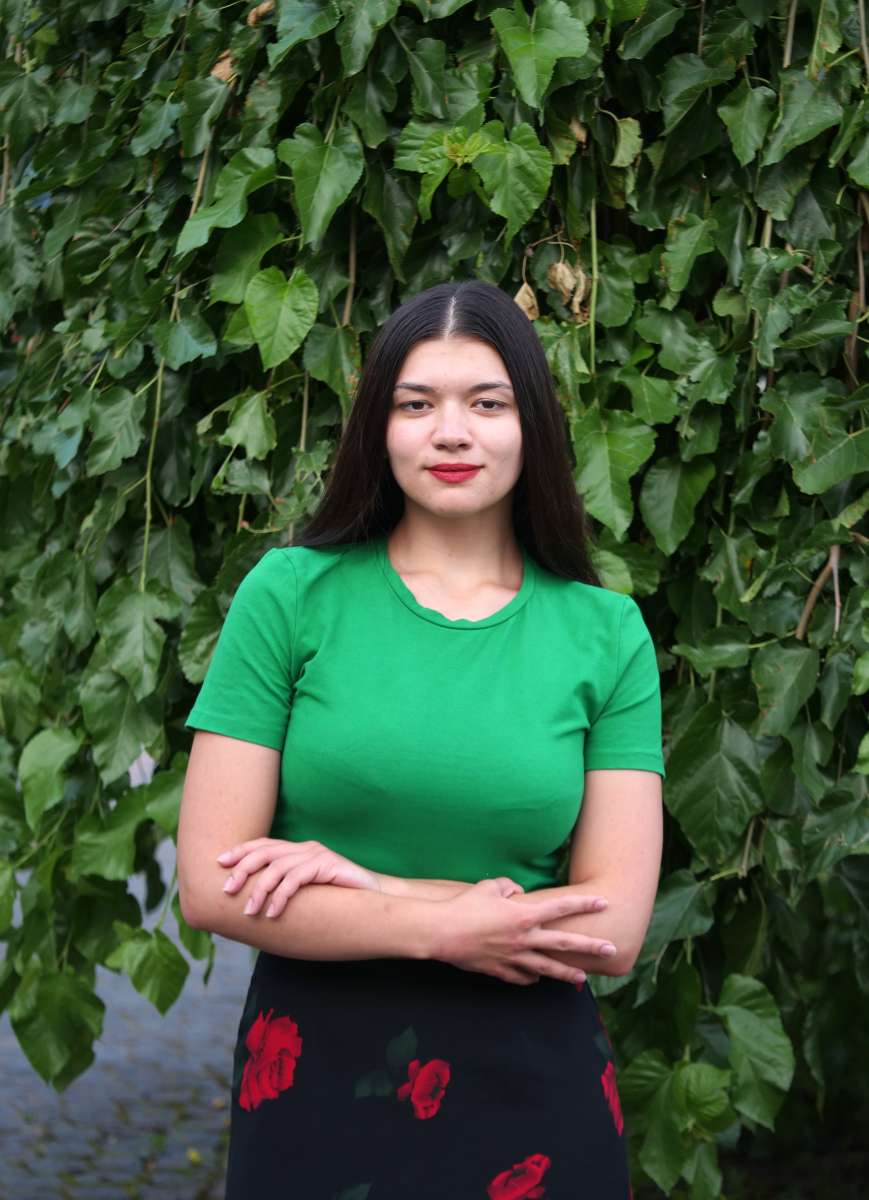
21, philologist
Yaremche (Ivano-Frankivsk Oblast)
I have never been to Crimea. Russia stole this dream of mine when my parents told me, yet a child, stories about their adventures on this mysterious peninsula. One morning in January 2014, my mother decided we would visit Crimea in the summer for two weeks of vacation as she wanted so much. After several months, all TV channels and radio stations were buzzing about the Russian occupation of Crimea.
While Ukraine and the people devoted to this country are fighting in sweat and blood for the right to exist and own those lands that rightfully belong to themThis refers to the borders of the territory of Ukraine in 1991., I dream of restoring my parents’ recollections — so vague and distant from them — and putting them on paper. You ask me why? For the sake of memory. Because Crimea remains Ukrainian land as long as we remember it.
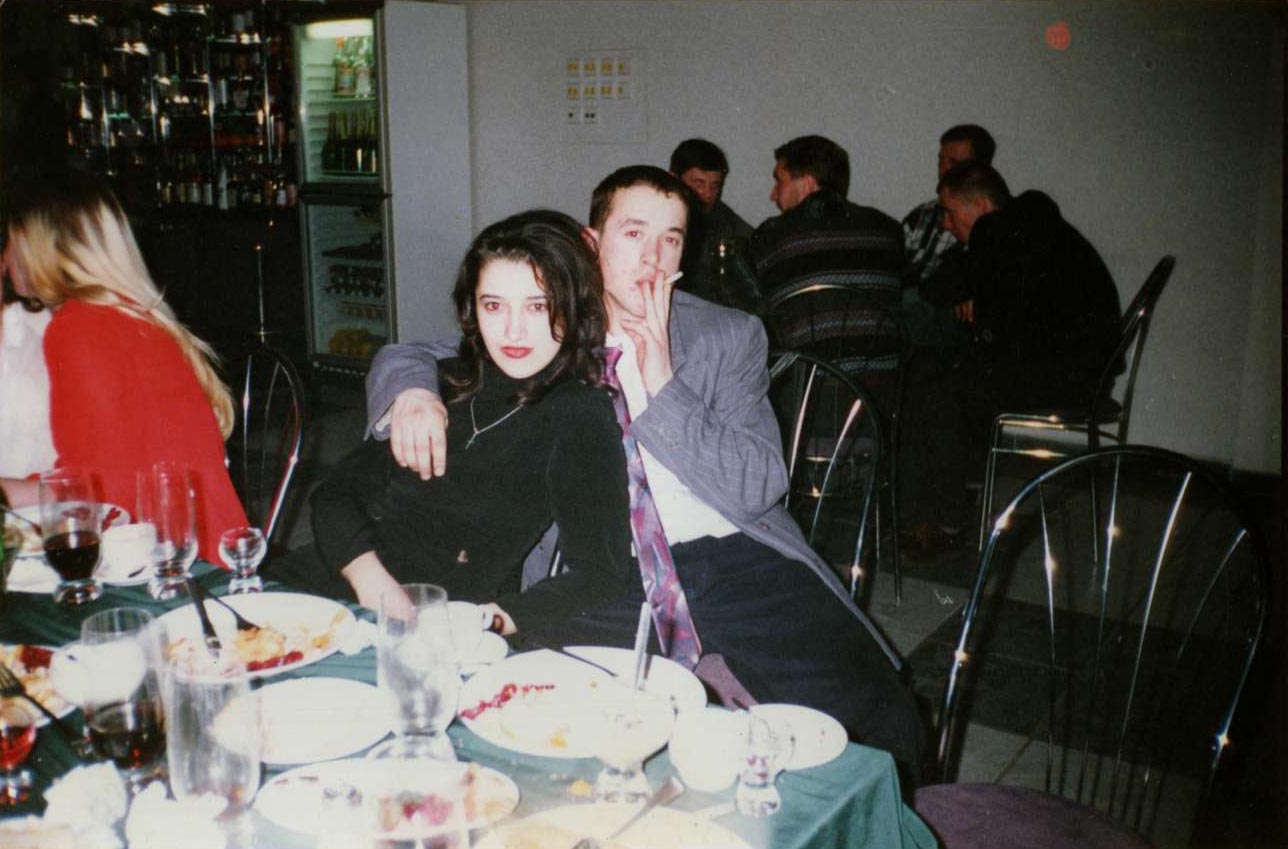
My traumatized mother, whose life was all about the hard work that she tried to instill in her children, and my father, who distanced from this woman in time, made me – a third child in this horribly miserable but extremely rational marriage – grow up much faster. The few things that eased the pain of young Mariana, who turned into a woman at 20 out of grief and despair, were black dresses, cigarettes, and some entertaining nights.
I finally could have that damn independent life (God, how hard it was in that post-Soviet Ukraine of the 90s in constant chaos and lack of money), black leather boots, a bag purchased for the first advanced payment at work, and red lipstick that vanished every time I made a couple of sips of cheap wine (only one in access) and subtle puffs of cheap cigarettes. Thus I looked for a bathroom again to smear that viscous substance across my lips, which still looked damn good on me, and returned to a cheerful table with disposable dishes.
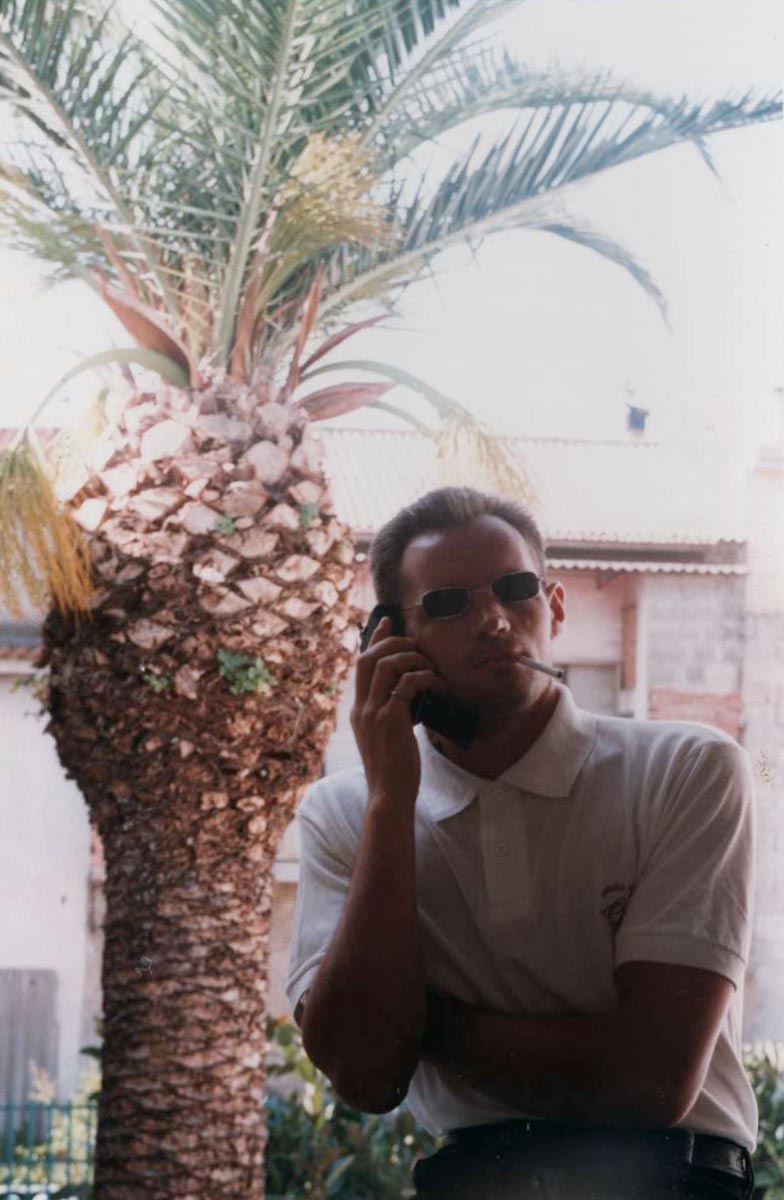
I knew he finally bought a new Kodak camera when after three months of his work in Italy, I received an Italian chocolate bar, some sweets, and a couple of photos of him with a Kodak royal paper print on the back. In the photos, Ivan posed in front of a palm tree and obviously pretended to be some kind of gangster or broker. With a phone in hand, he was clenching a cigarette in his teeth and hiding his eyes behind sunglasses. It was a beautiful picture that masked sweat and hard attempts to earn some cash in Italy. The owner of a countryside villa who paid him disgracefully replied with He’s from somewhere in russia… when his neighbors wondered where he got the labor force that puttied, painted, primed, and conducted 32930 other different tasks for a little money. It was 2001.
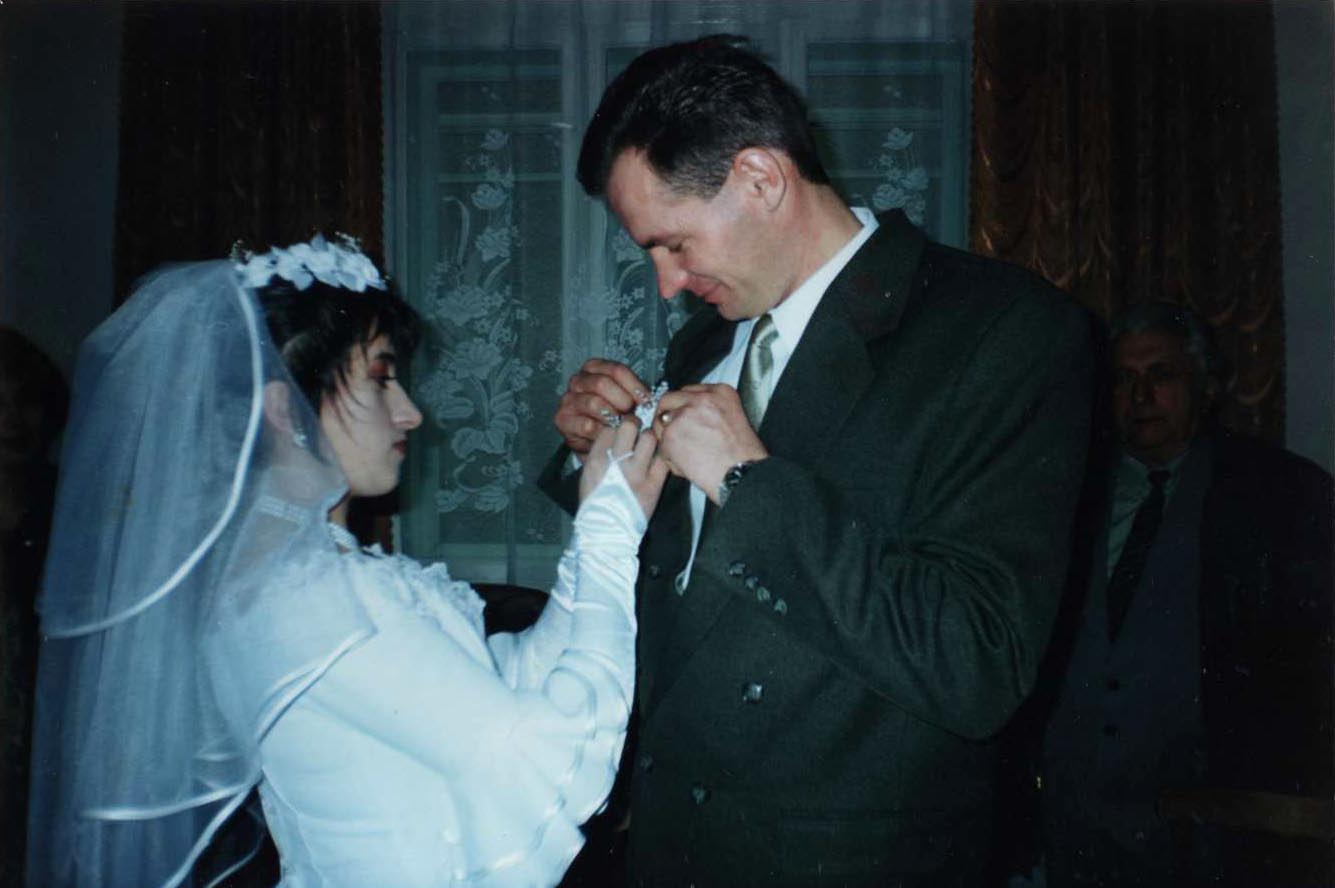
May I not talk about that wedding? At that time, people had no money… The standard Ukrainian wedding of the 2000s was an attempt to resemble European style with a budget where the comma moved three or four nulls to the left. It was practically impossible to organize something decent for that money. Look at a photo. You see a rented tulle dress that looks like a haystack that my daughter stubbornly finds attractive, a suit that Ivan wore for another 20 years after, and a group of pompous people observing the event enviously. But we loved each other and the rest, as people say, doesn’t matter.
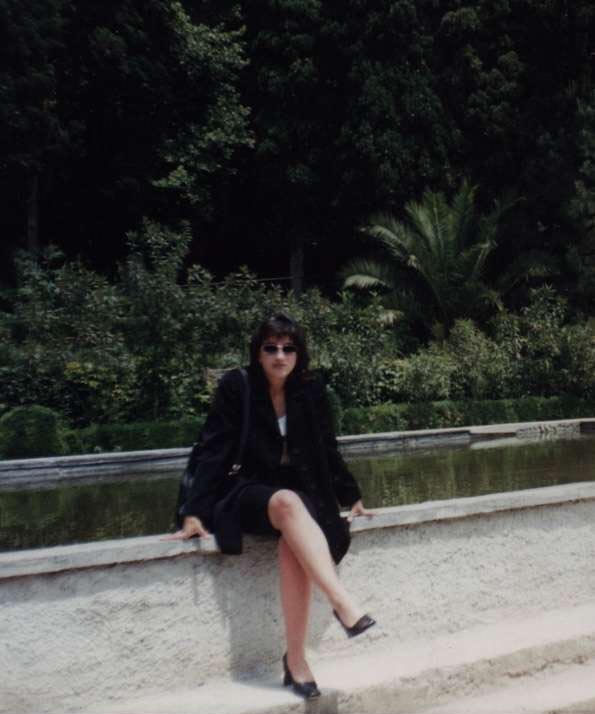
On our first day in CrimeaThe weather, quality of air and water, and level of services in Crimea were much better than in any tourist resort in Ukraine, thus many Ukrainians chose Crimea as a vacation spot., we were caught in the rain. I put my bathing suits deep into the bottom of a suitcase together with the hope of beach time. Ivan cheered me up with his “Maybe, the weather will get better” and took me on a walk. After all, Crimea is not only about the sea.
Our birdhouse — this is what Ivan called the place where we happened to spend our honeymoon, therefore, I called him a poet — friendly popped out from the green area around. I think that there was no better name for this place. It looked like a small cabin with vines twining around it and some leaves on the ground. We climbed up the narrow stairs attached to a front door that added to the atmosphere of the wild land. At that time, you could book a place in Crimea by phone that was like renting a pig in a poke. Happy about our cabin having all doors and windows, we rushed to explore the area.
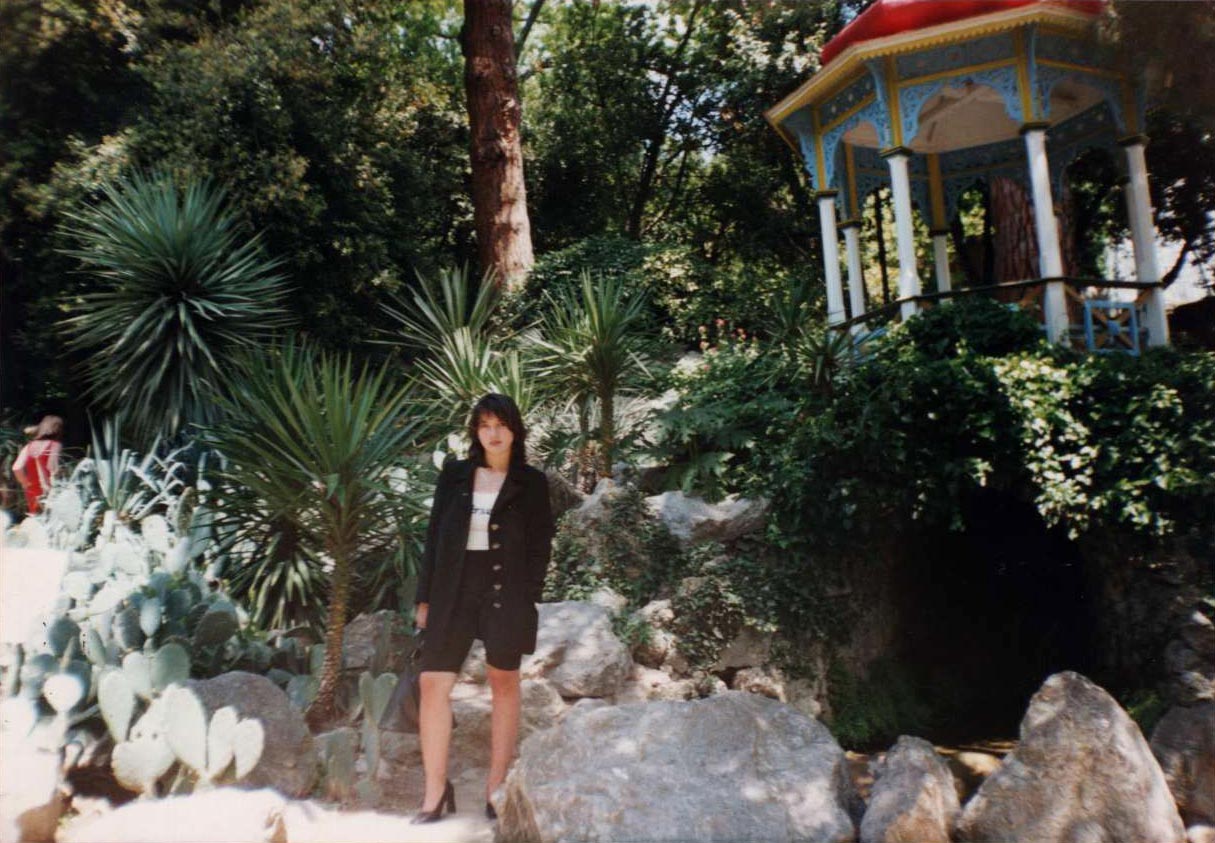
We went to Nikita Garden on the southern coast of Crimea, between Nikita village and the Black Sea. This place felt like a paradise to us: full of light, clean, and well-maintained. Later, we learned that it was not just a garden but one of the oldest research institutions in Eastern Europe preserving over 30,000 kinds of plants (yes, this is that Ukraine that as our Western neighbors claimed “definitely will fall” without the USSR). And we blossomed and prospered like that gardenA character of the story by mistake doesn't notice a trace of colonization in this place. In fact, Nikita Garden is a botanical garden founded in 1812 by a Russian botanist of Swedish origin Christian Steven. But since the 1950s, namely when Crimea officially became a part of the Ukrainian Soviet Socialist Republic, Ukrainian botanists, and soil experts took care of the Garden. When the characters of this story attended Crimea, the Garden was under the control of Ukraine. The characters admire how well-kept the Garden was..
Ivan squinted his eyes to take pictures with the Kodak camera, and I tapped on cobblestones with my terribly uncomfortable heeled shoes searching for a beautiful background. I got a photo near the lake, on a main alley, and by the palm trees. I was dressed in bloody uncomfortable cycling shorts that I wouldn’t wear for any money in this sinful world again, a shirt and jacket. And my bag. Yes, that beauty that was purchased for the first advanced payment. The sunglasses slipped down my nose but I was the icon of the 2000s wearing them, therefore, Ivan took pictures of me again and again and always repeated: “Mariana Vasylivna, you’re a bombshell!”
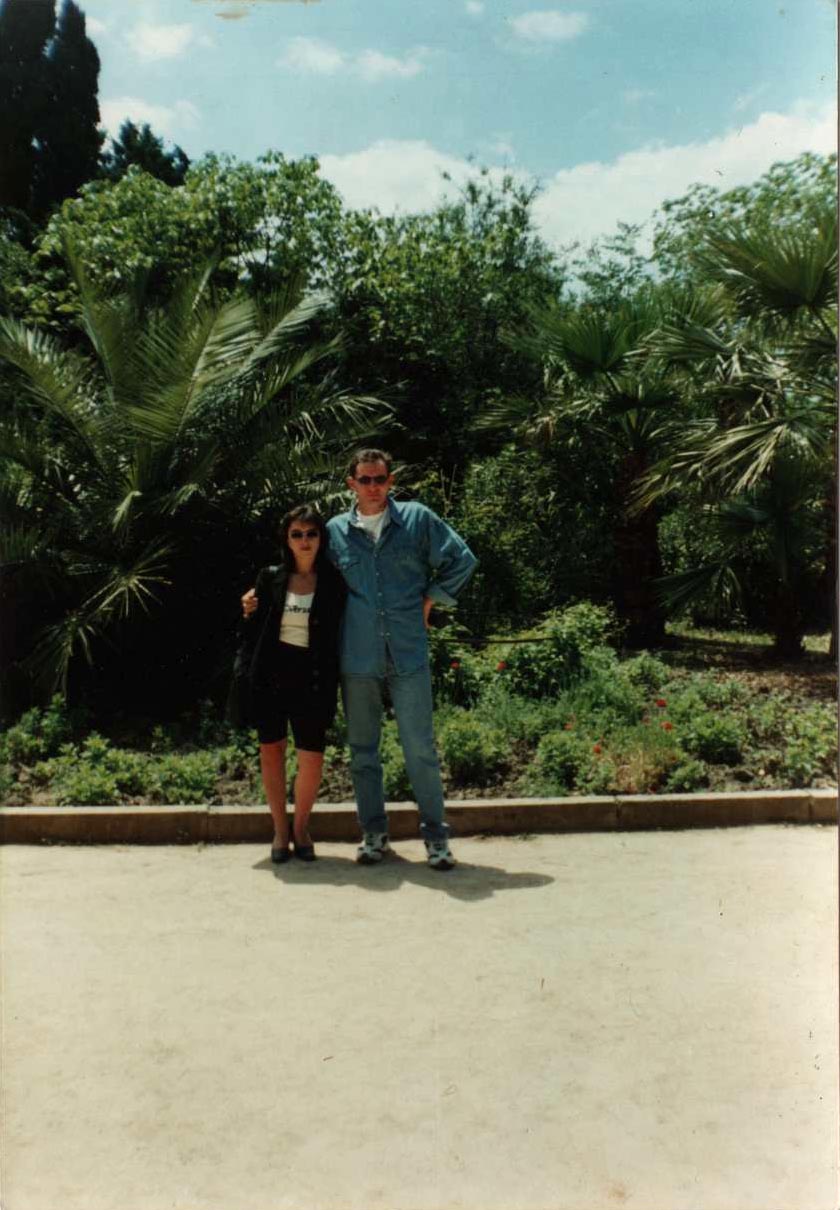
We walked along magnificent, wide garden paths and could not believe it was Ukraine. If you listened to the radio or TV at that time, everything was described as ruined and rotting, we saw how Crimea was resurrected after a long Soviet gloom.
We enjoyed Crimean wine, smells, each other, the garden, sea, and wind, lived this life in sunglasses, and smiled at the Kodak camera. Our shadows crawled in the dust, suffering from the heat. We were two travelers exploring Crimea and its people.
“The sun!”
Sunrays tickled my face as if giving me a sign it was time to wake up and somewhere in the background, Ivan shuffled things looking for beach towels.
“Get up! Let’s go swimming!”
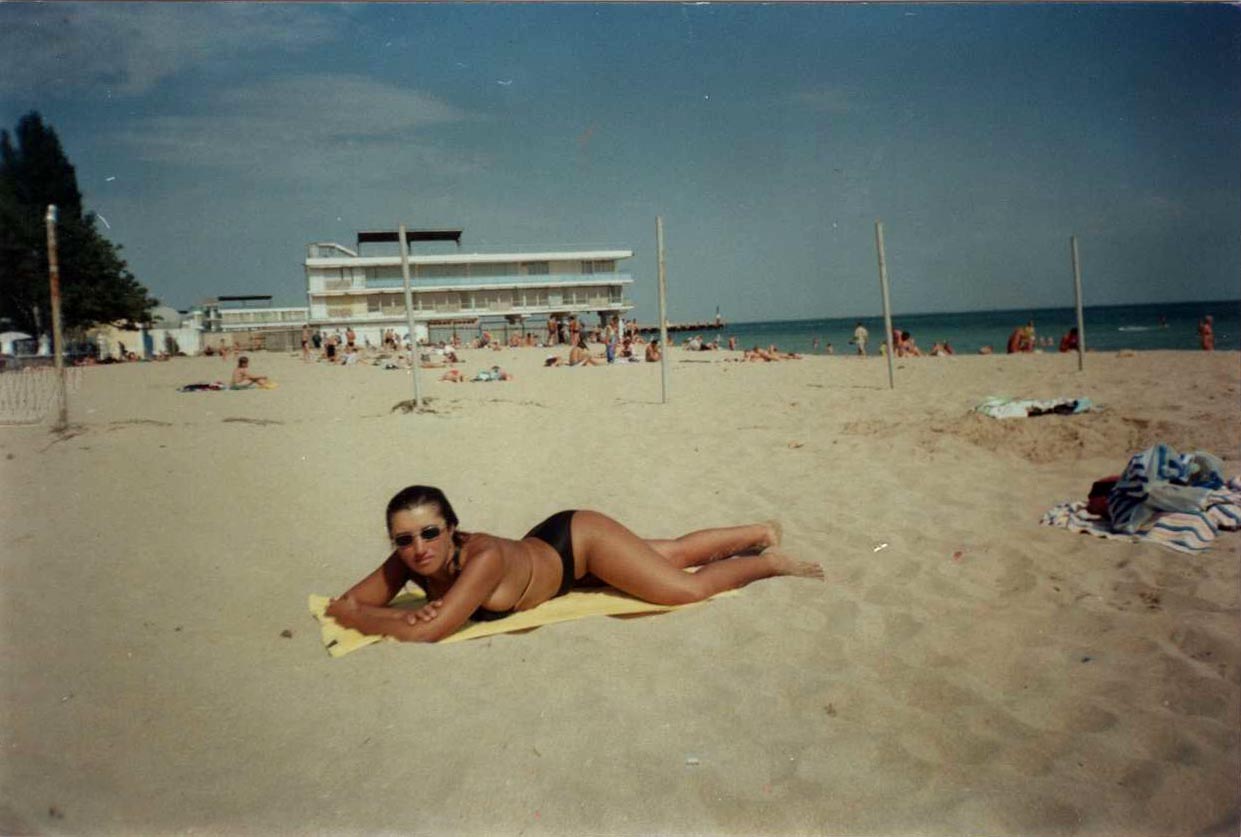
The sea met us with a silent humming and hot sand. The rain that had spoiled the vacation for many tourists didn’t let the heat enter the area quickly, and a coldish wind refused to leave the coast. We were lying on the sand, monitoring people offering baklava, and taking pictures of each other on our Kodak.
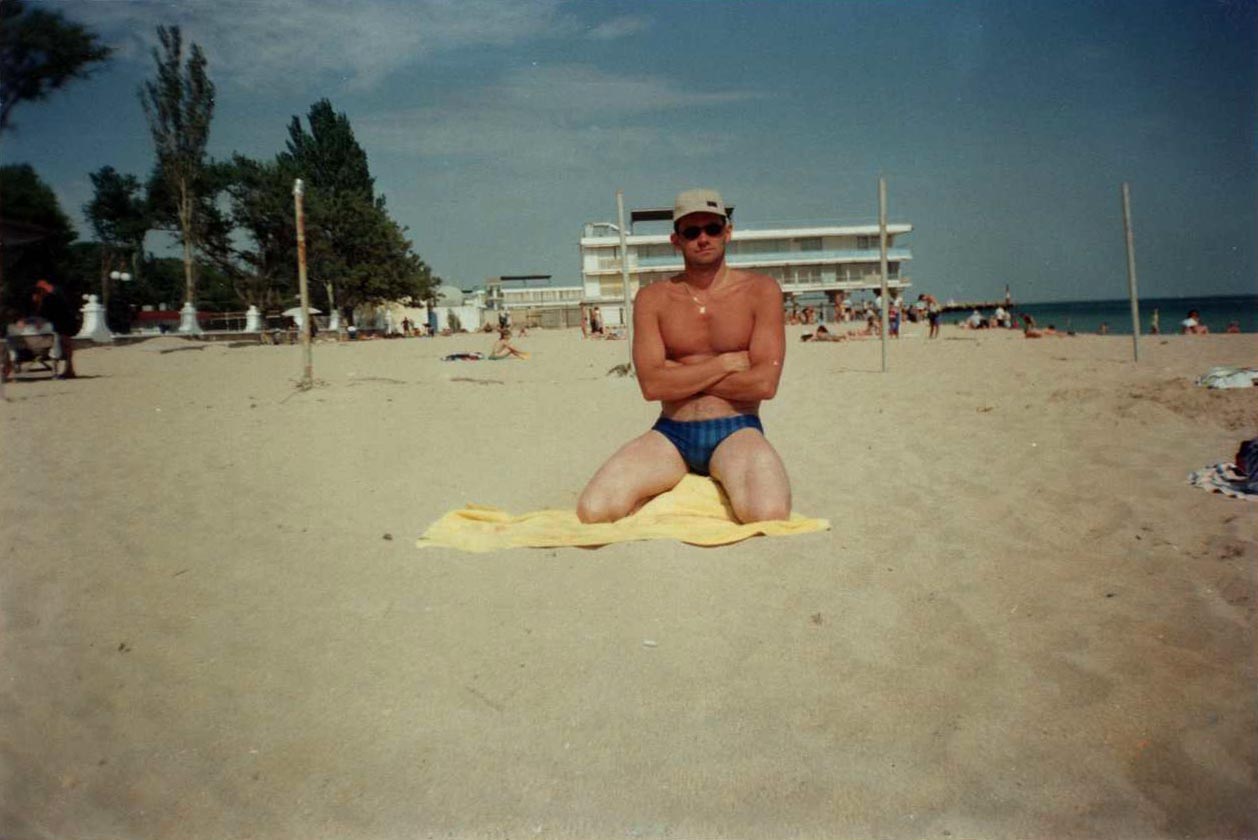
It was getting hotter in the afternoon but we had now or never. A 20-hour trip by train was a challenging adventure, therefore, we should have made that honeymoon more than worth all the unimaginable tortures like no air conditioner in the train and passengers eating boiled eggs that smelled awfully all night long. I wish I could drown in that sand and know no torment, no grief, no potential troubles that follow me like a cloud and make blood run cold. I wish I could crash on the coast like that wave and merge with the sea. And then, with the next tide, I would turn into a wave again but with a new life and thoughts!
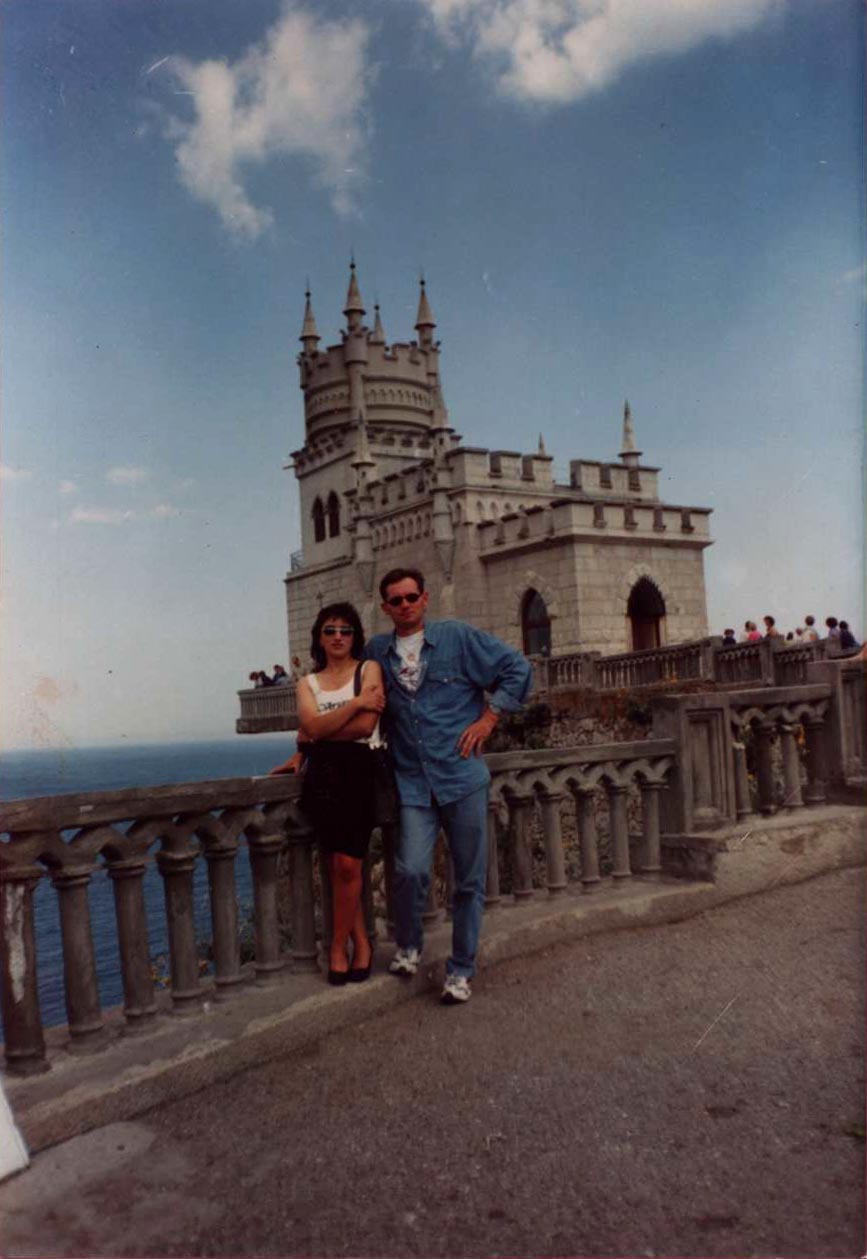
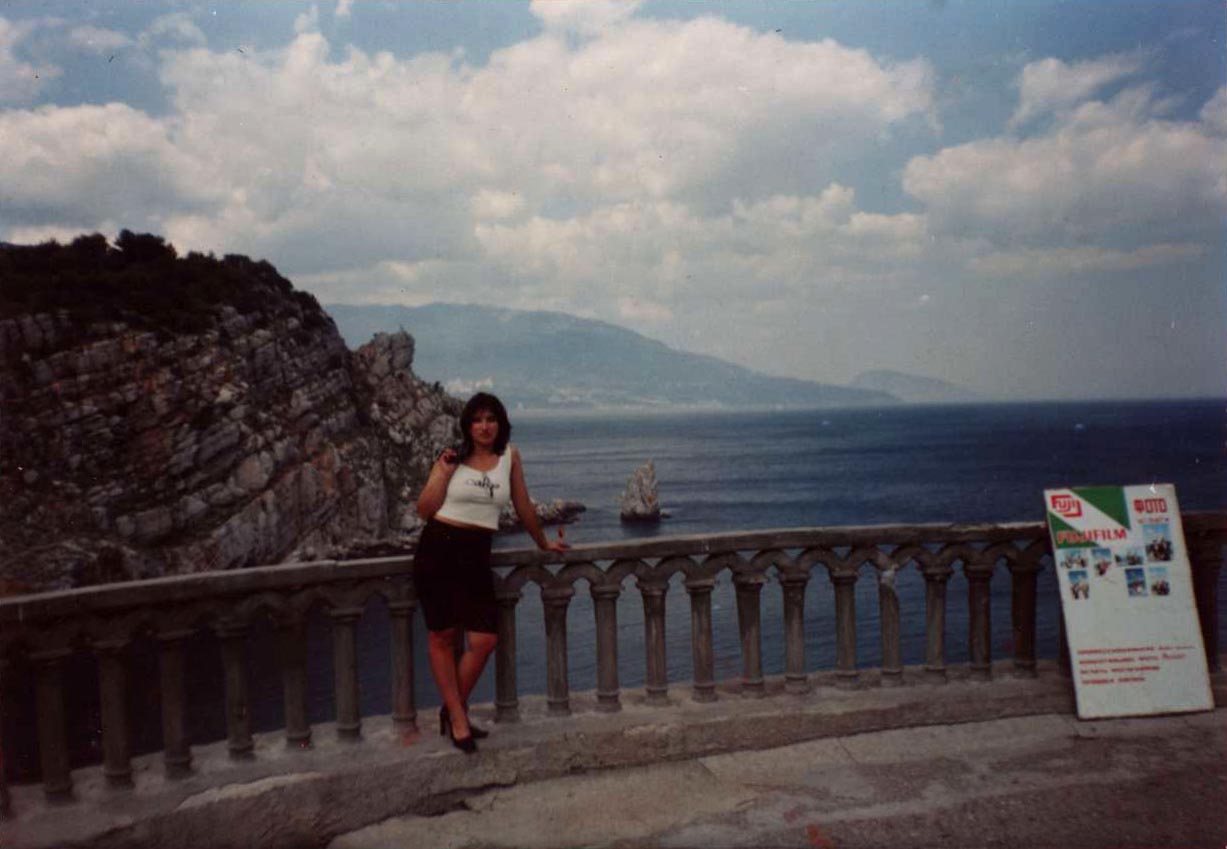
The following day, it was raining again — another chance for us to explore the peninsula. We went to the Swallow’s Nest. I was tottering on my heels along the road again and looked around. This building was large and didn’t look like Crimea. Located in Gaspra village, where at the foot of the settlement you could see Gaspra-Isar — the ruins of an old fortification — and the Ay Petri mountain (tell me this is the name of “Russian origin”, sure) in the distance, this castle was such a gentle (in a tsar’s taste) trace of the colonization in the middle of the foreign landThe Swallow's Nest is a palace resembling Middle Ages architecture. It was designed in 1912 by Russian architect Leonid Shervud for Pavel von Steingel, a Russian oilman of German origin. Like Vorontsov Palace, the Swallow's Nest bears traces of colonization since influential representatives of the Russian Empire designed these buildings to mark Crimea as their property.. We asked a stranger to take a picture of us there and wondered where we could eat in the neighborhood. We found out there was a market on the outskirts (but it took us thirty minutes to get there) where we could buy anything.
At the market, the true owners of this land welcomed us from the very entrance. We could find there everything and even more. The Crimean Tatars were all about hospitality: they treated us with sweets, asked where we came from, and politely showed us the way. Clean and tidy stalls attracted us with fragrant smells and swarthy faces offering us all gifts of this land. Just taste it! Later, word was that Crimean Tatars were a significant part of the Orange RevolutionThe Orange Revolution is a protest action of 2004-2005 in Ukraine caused by the massive rigging of the 2004 presidential election in favor of candidate Viktor Yanukovych., Revolution of DignityThe Revolution of Dignity is a wave of protests in Ukraine, which began on 21 November 2013 in Maidan Nezalezhnosti (Independence Square) in Kyiv. The protests were sparked by President Viktor Yanukovych's decision not to sign the European Union–Ukraine Association Agreement, instead choosing closer ties to Russia and the Eurasian Economic Union., and UkraineThere was a myth among citizens of mainland Ukraine and in the media that only Crimean Tatars and Russians who arrived in Crimea in the 1944-1980s resided there. Not everyone was aware that Ukrainians also lived there.. Only this market gave us the true spirit of Crimea that didn’t thrive because Russia deported Crimean Tatars in 1944 as I found out later. That spirit reigned in the outskirts and markets because it could prosper only there. The spirit that preserved traditions and customs, that worked hard like a beaver, and knew where the good and the evil came from.
I listened to their stories about Bakhchysarai and Khan MosqueBakhchysarai is a city in Crimea, formerly known as the capital of the Crimean Khanate, a Crimean Tatar state that existed from 1441 to 1783. Khan Mosque is one of the biggest mosques in Crimea situated in Bakhchysarai. and everything seemed so far and alien. If they were a part of us, why had I never heard of this Crimea? About the Crimea with unusual mosques that adopted Turkish customs, ancient Byzantine ornaments, and the flavor of Crimean Khanate time, about “the Dark Age”The Dark Age is the name for the time when Russia occupied Crimea in 1783 as a result of its victory over the Ottoman Empire., Noman ÇelebicihanNoman Çelebicihan is a Crimean Tatar politician, the first mufti (head of Muslims) of Crimea, Lithuania, Poland, and Belarus, the first organizer of the Qurultay (Parliament) of the Crimean Tatar people, and the first President of the independent Crimean People's Republic in 1917. In 1918, he was killed by Bolsheviks., the MejlisThe Mejlis is the representative body of the Crimean Tatars, similar to Parliament.… So much history was unknown. Why did I learn only about Vorontsov PalaceVorontsov Palace is the ceremonial residence of the Russian noble family Vorontsov. It was built in the 19th century by the English architect Edward Blore for Mikhail Vorontsov, a Russian count, kniaz (prince), and governor-general of the lands. These lands are currently the southern regions of modern Ukraine. and the Swallow's Nest at school? What is real Crimea? Why is it considered a feature of Russian greatness, even though the names of cities didn’t sound Russian at all? Simferopol was first known as Aqmescit. Why did no one tell me that?
The most painful topic for the Crimean Tatars was deportation. They could excitedly talk about anything, actively gesturing and smiling with their tanned lips. But once the word “deportation” thundered, one could see a heartbreak in their eyes. There were so many horrible stories that it was hard to believe. Some seemed to be fiction because the heart didn’t want to accept that people could be treated so — packed in cattle cars like animals and deported to a foreign land.
The stories of the peninsula that seemed so far touched us, shook us, and made our blood run cold! They reminded us of the deportation of our families as if I looked at the same picture: common punishment, common pain, and common sorrow for both nations. Oh, I wish we had something else in common. I knew neither their language, traditions, nor customs, but we shared the grief…
We listened to Medine’s stories in awe. She was a local Crimean Tatar who owned a small cafe with her husband near the beach. She told us all those horrifying stories while offering us treats. Well, how could it be without that?
We didn't want to talk to each other on our way back to the birdhouse. Each of us was deep in our own thoughts. I tried to remember my grandfather who was taken by the Nazis as a forced laborer to Germany in 1941. Ivan remembered how the Soviets deported his grandmother to Siberia in 1945. Since those times no one heard of them, as our parents said. Is it our single similarity with this peninsula and these people? If not, then what else?
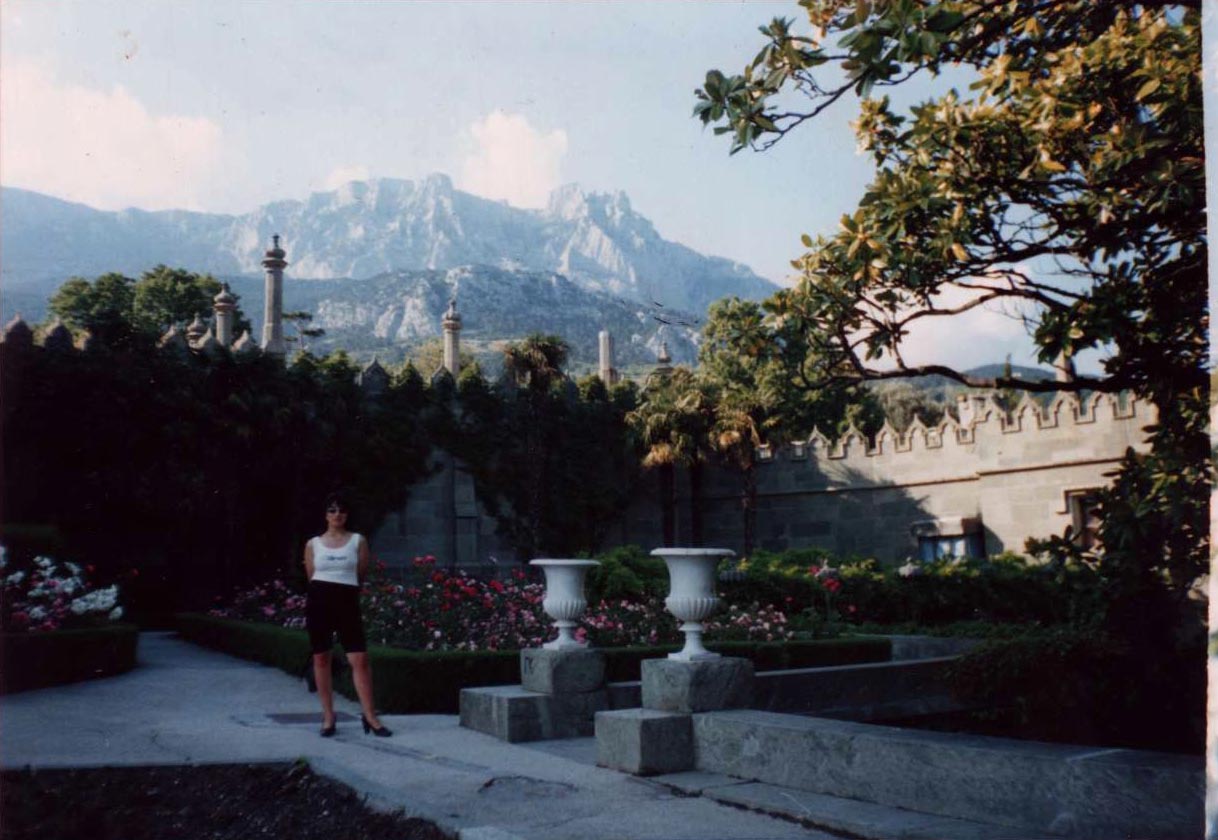
The following day, we lost hope of letting ourselves in the Black Sea and swaying on the waves with our legs and arms stretched. Therefore, we went on another tour, this time to Vorontsov Palace. The group of impatient tourists and a local guide — a skinny, tall man with a little mustache and a golden tooth that glared right in my eyes every time his owner smiled with a corner of his mouth — waited for us at the entrance.
“Could you please tell us how long the tour lasts?”
Having heard us talking in Ukrainian, ladies in Panama hats stared at us as if we were from a different planet.
“Around an hour,” answered a guide in Russian, surprised by our Ukrainian too.
“Are you from Lviv?” one of the women in a wide-brim hat threw a question at us.
“No, from Ivano-Frankivsk,” I replied.
Vorontsov Palace. Another landmark of Russia’s colonial policy, where three generations of Vorontsov counts amused themselves. Here, in Alupka town, they decided to build a house that would glorify their “greatness”, while many of the Crimean Tatars’ homes were destroyed on this land.
Like an old prophet, Ay Petri mountain towered over the palace, the one that remembered who owned this land and gave it this name. Three generations of Vorontsov counts fooled around in their palace by the Ay Petri mountain, presumably, without a slight understanding of why it was called so. They feasted their eyes on the mountain that covered them from the burning Crimean sun. God knows why it didn’t fall on them as a terrifying curse for everything they had done to the people of Crimea. While our guide couldn’t stop talking about Vorontsov Palace as a symbol of “Russian greatness”, I observed the mountain and the same question buzzed in my mind: “What is the real Crimea? Crimea with Vorontsov Palace or with the Khan’s PalaceThe Khan's Palace was built in the 16th century for Crimean Khans (leaders of Crimean Khanate) and reflected the traditional Crimean Tatar style.? With Russian greatness or the rich heritage of the Crimean Khanate?”
After the tour, some ladies from Saint Petersburg and Moscow started asking the guide, who himself had moved from Tumen city in Russia to Crimea in the 1980s, what life was like in Crimea after “it was unfortunately given away to this Ukraine.”
“It’s hard,” I caught him saying, “Now these wild Tatars swarmed here and pressed their demands. They demand to be provided with housing. It’s a disaster.”
“They demand their homes back which they were deprived of,” I snapped coldly.
“What are you saying? They are traitors. They followed the Nazis. Crimea never belonged to them. Look at this palace. It is the evidence that Crimea has always been a symbol of Russian greatness!…” a tour guide waved his hands in agony, screaming and pointing at the palace.
“You deported the real spirit of Crimea to impose the “Russian greatness” on it,” I didn’t express this thought. Me and Ivan looked at each other and left the group.
That day, I remembered my school days in the 1990s, the absence of books, and the history teacher who searched for information for us in Ivano-Frankivsk cityThe main character spent her childhood in a small village far from the city centre, so in the 1990s all teachers in the region had to travel a long distance to the city centre in order to receive some teaching materials as there were no books in school libraries, only Soviet ones with a lot of propaganda and outdated information.. It is difficult to imagine a school without books nowadays, but it was our reality back then. Is this the reason why I didn’t know a thing about Crimea, its indigenous people, its history, and most importantly — its relation to Ukraine?
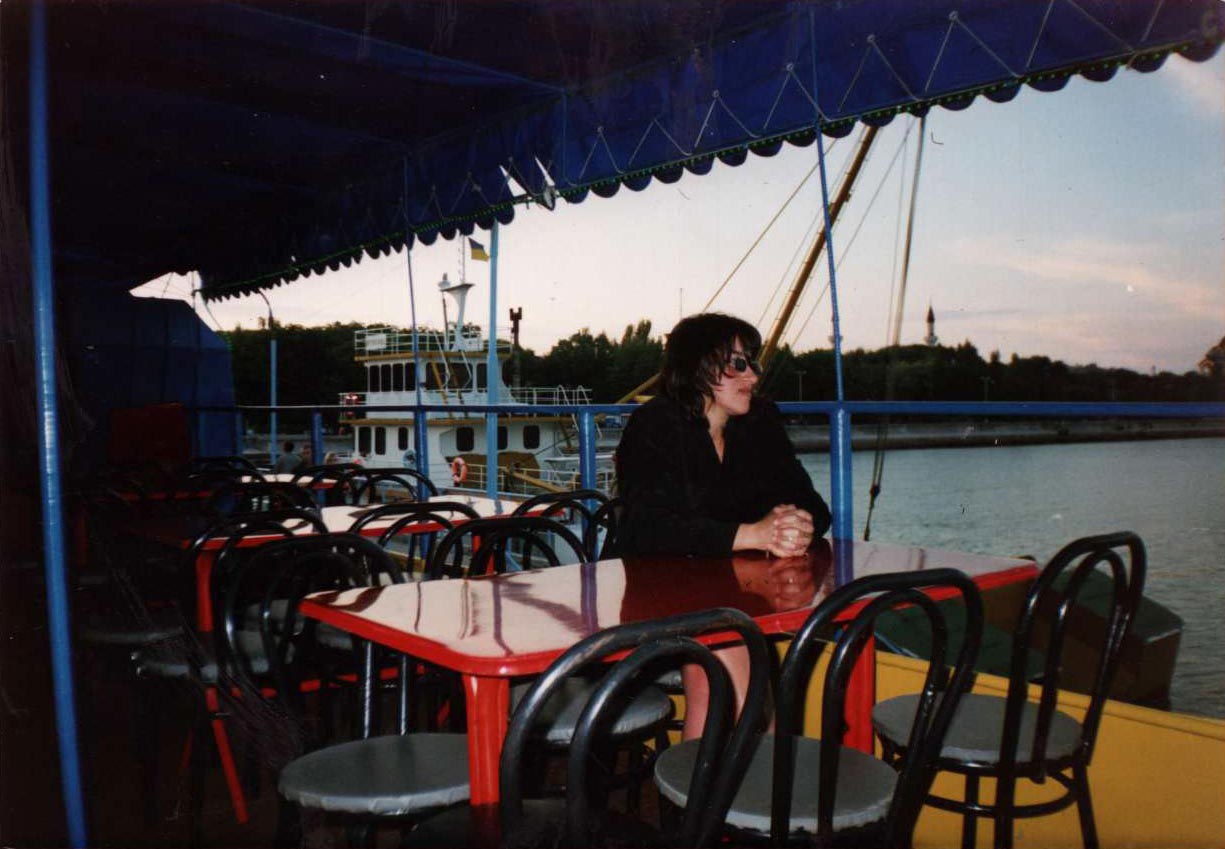
We visited Medine again in the evening, ordered some fultuFultu is a traditional Crimean Tatar dessert made of layered dough with apples (or pumpkin) and walnuts. with ice cream, and silently observed the sea. There was a minaret of the local mosque in the background. A ship with a blue-and-yellow flag sailed along the coast. It was the only thing that connected Crimea with the Ukrainian mainland in my mind at that moment but I knew it wasn’t true. In fact, this peninsula hides so many bonds with Ukraine inside that it is hard to embrace. There is so much to learn about how this peninsula lives and what air it breathes. You just need to start your field research and see the wonderful world of one of the indigenous peoples in Ukraine — Crimean Tatars, true lords of Crimea.
Text, pictures: Larysa Kozak
Translation: Dariia Titarova