
22, culturologist, archivist
Drohobych (Lviv region)Lviv

22, culturologist, cultural manager
Boryslav (Lviv region)Lviv
The Soviet Union left a large amount of tangible heritage that needs analyzing and reconsidering in different formats. In this project, we focused on interpreting newspapers of the late Soviet period by searching patterns or stories worth highlighting; comparing narratives of military topics in the Soviet press with contemporary Ukrainian and Russian narratives of the war in Ukraine. The project resulted in 5 collages.
Pionerskaya Pravda (Truth for Pioneers)
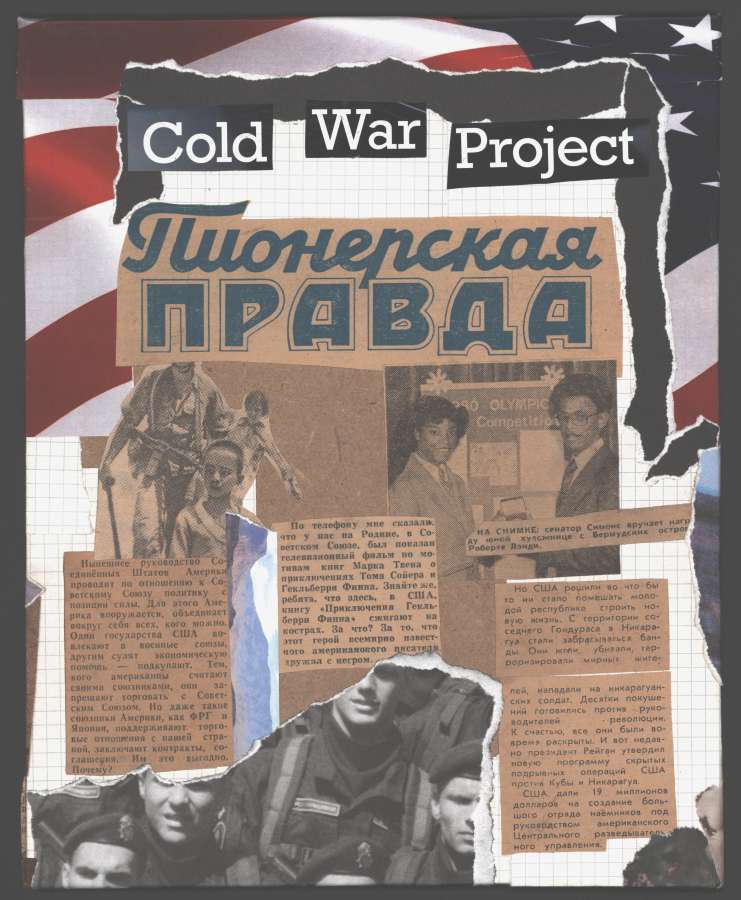
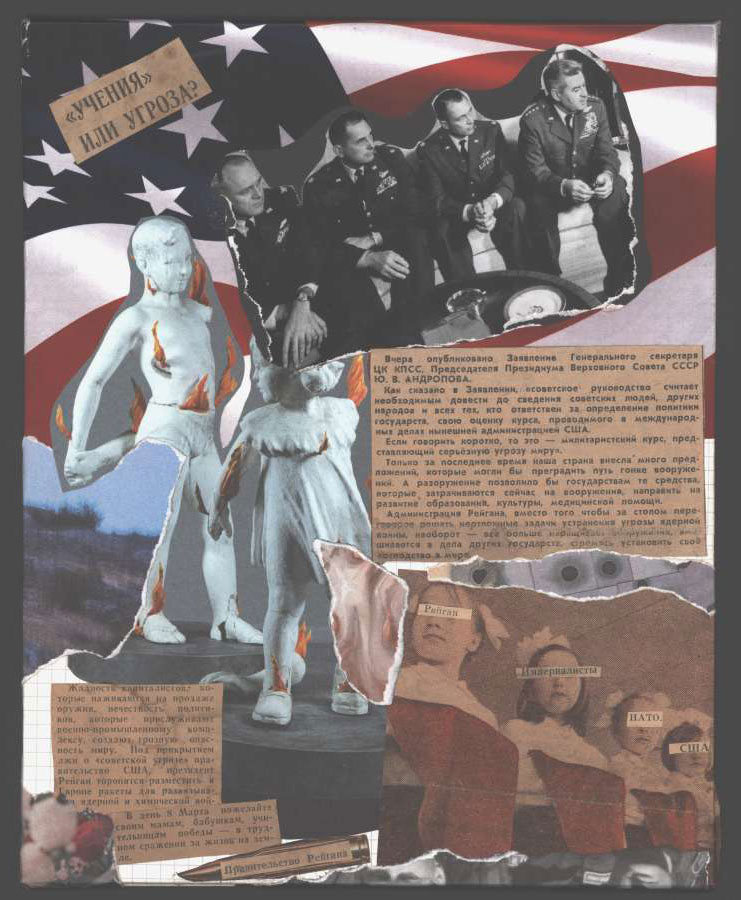
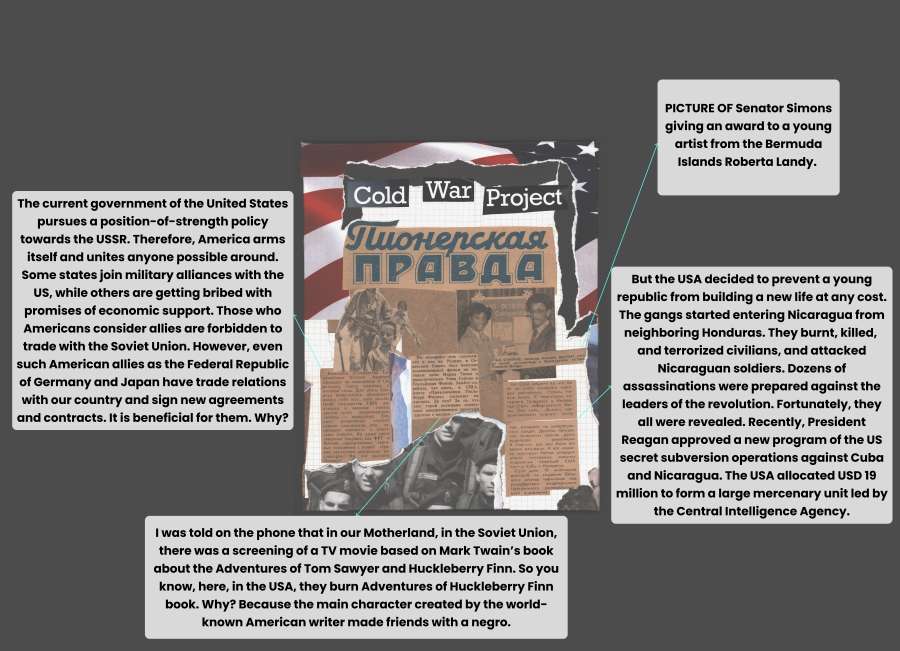
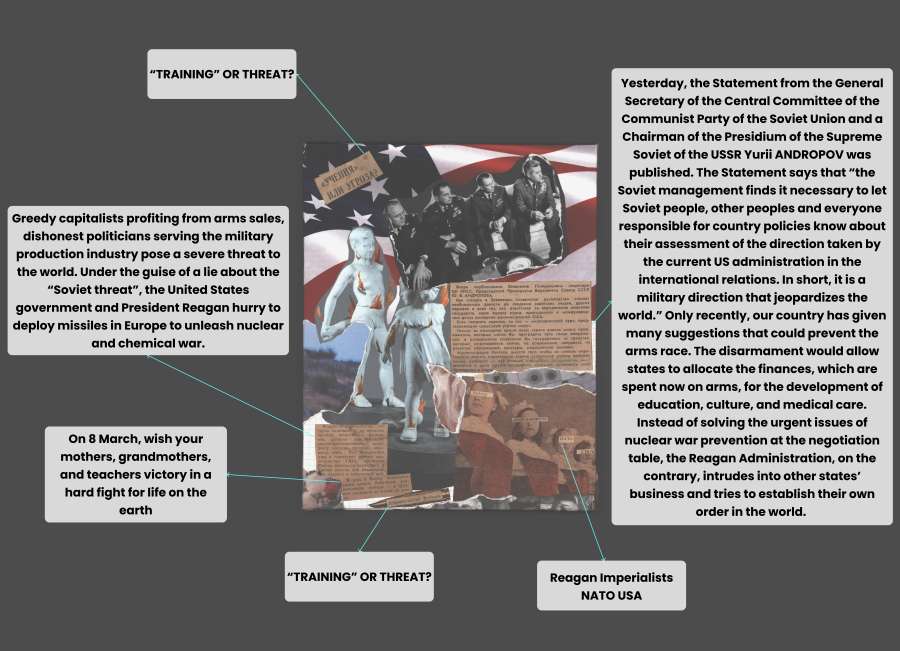
Mykyta Bilyi: “The collage is made of Pionerskaya Pravda newspaper clippings of 1979-1983. The newspaper was targeted at children of the Soviet Union. If not everyone, then the absolute majority of young teenagers joined the Communist Children’s Pioneer organization which, above all, provided ideological education to Soviet children. Here one can find a collection of article excerpts from the first pages of the newspaper for pioneers with Soviet propaganda about the USA and member states of NATO. The chosen newspapers were printed during Leonid Brezhnev’s rule (referred to as the Era of Stagnation) when the political relations between the US and USSR deteriorated as the Soviet army entered Afghanistan.
Propaganda materials were placed rather strangely (though military propaganda in a children’s newspaper itself is strange). For instance, on the back of the collage, in the left corner at the bottom, there is an article about “greedy capitalists profiting from arms sales” and it ends with a call to congratulate women on 8 March. Moreover, on the front side of the collage, there is an article about burning books in the US which featured a character who made friends with a black-skinned person, even though there is a photo just next to this piece where a black-skinned US senator hands an award to a black-skinned female artist.
In fact, the collage contains materials, clippings, and stories about the United States that often appeared in pioneer newspapers of that time: stories about poverty, aggression, inequality in the US, and their foreign policy. Articles about indigence, drug addiction, and other negative aspects of life in the USA were supposedly an attempt of the Soviet government to divert (or rather win back) Soviet youth from the influence of American culture that got popular in the country.”
Goodbye Afghanistan
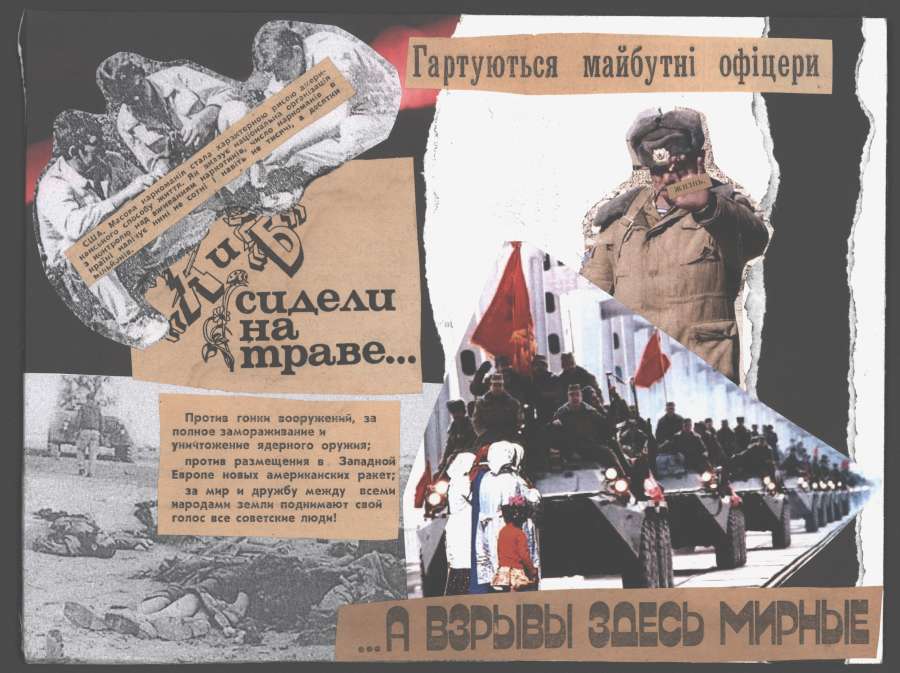
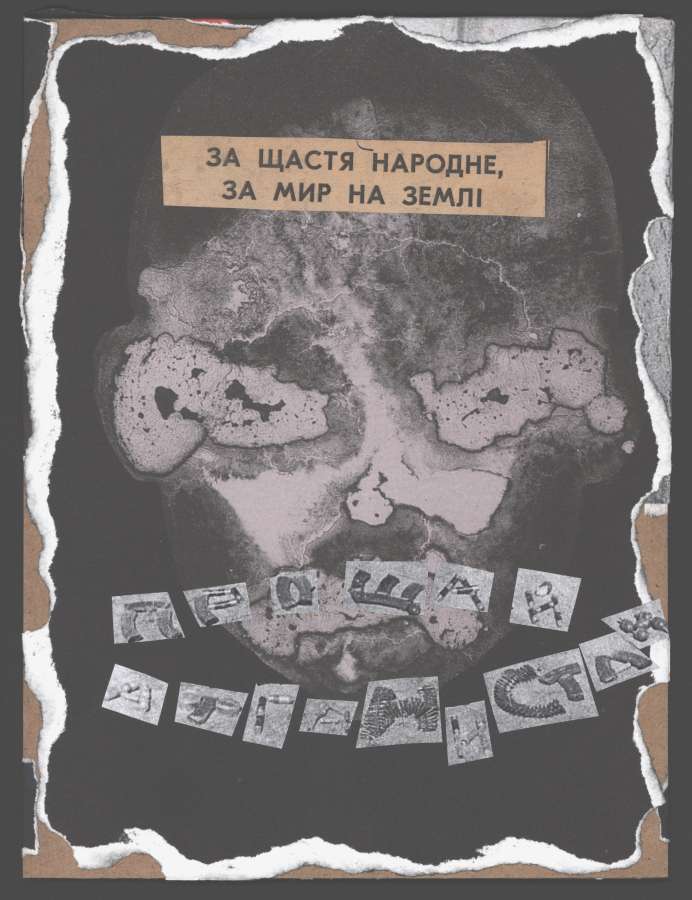
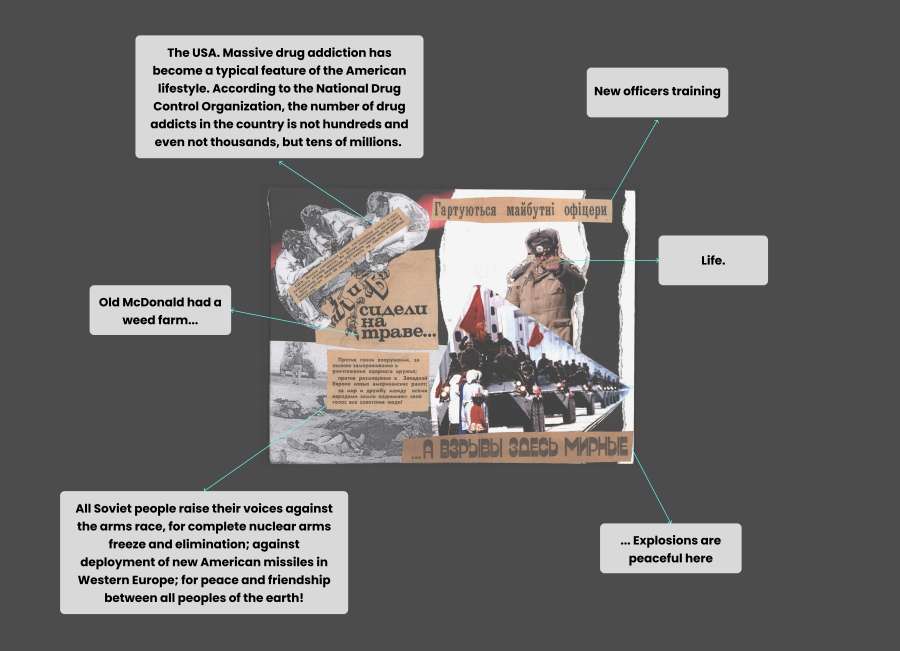
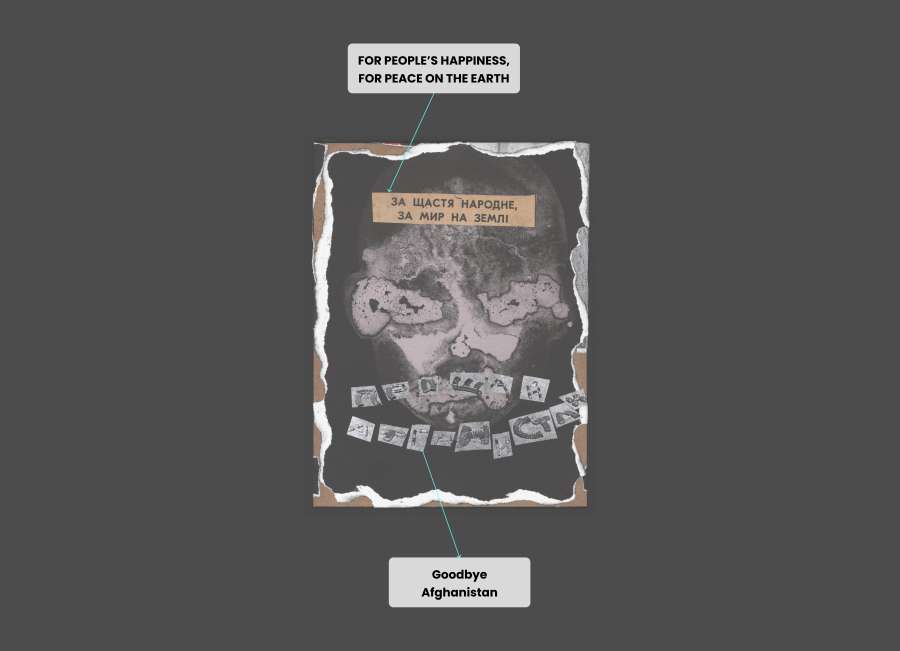
Mykyta Bilyi: “When I searched for material for this collage, I stumbled upon photos of a Ukrainian Soviet soldier who served in Afghanistan. The collage mostly consists of photos taken during the war in Afghanistan (1979-1989) and newspaper clippings from 1979-1983. Obviously, the Soviet newspapers of that time don’t mention the war in Afghanistan (at least, those papers I worked on). However, they contain propaganda articles about drug addiction in the USA, the life of military academy students, and calls for peace in the whole world. In the collage, these articles are placed next to photos of Soviet soldiers smoking hashish in Afghanistan, Afghan civilians killed by the Soviet army, and a Soviet soldier trying to hide his face from the camera.
In the back of the collage, there is a photo of the phrase “Goodbye Afghanistan” formed of parts of machine guns left by the Soviet soldiers during their withdrawal.”
Under the sails of creativity
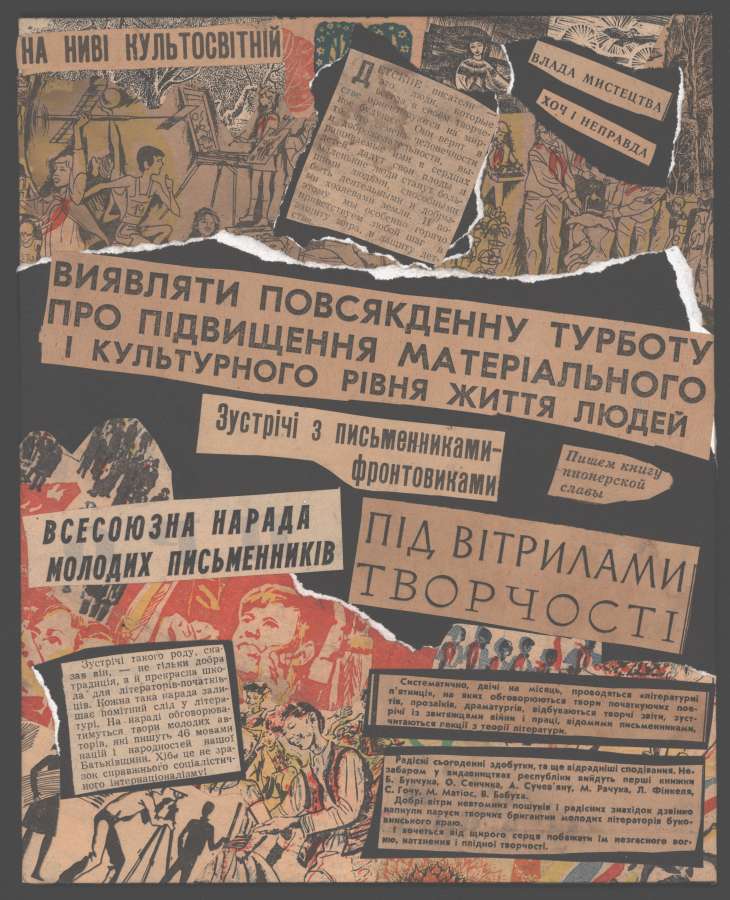
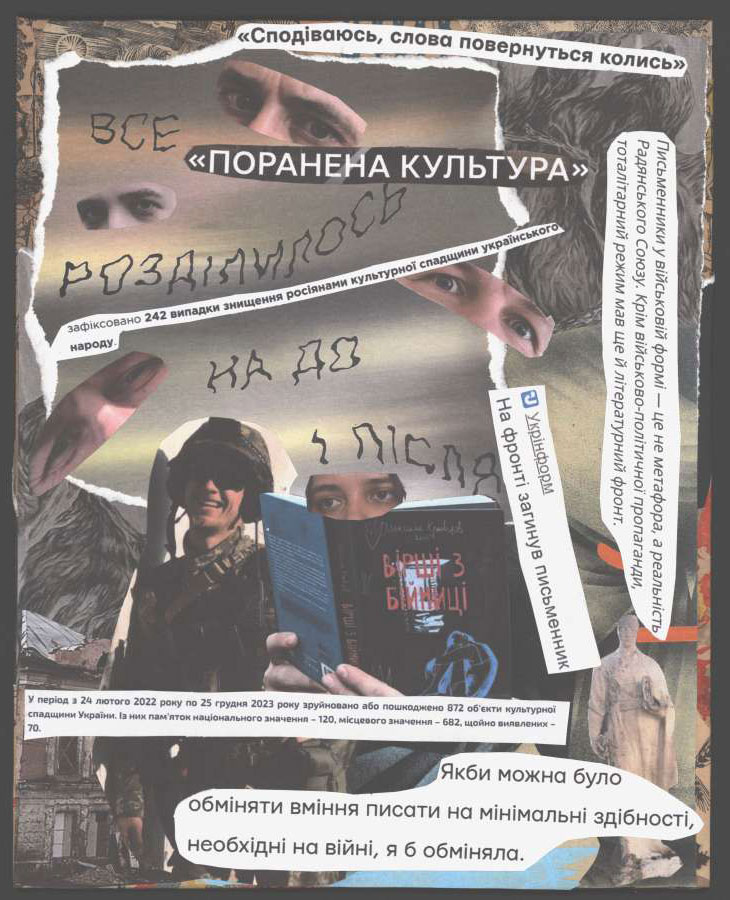
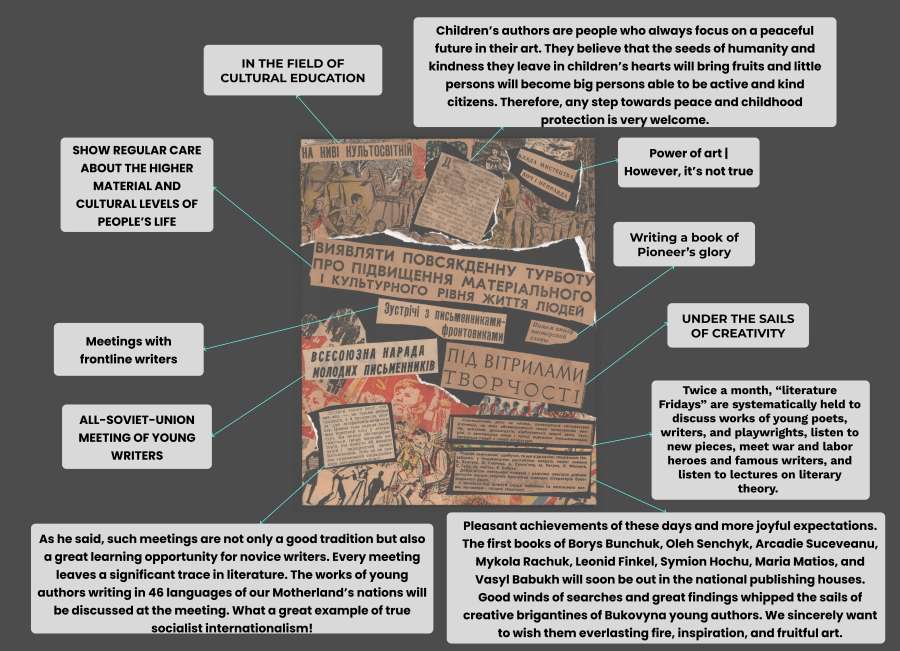
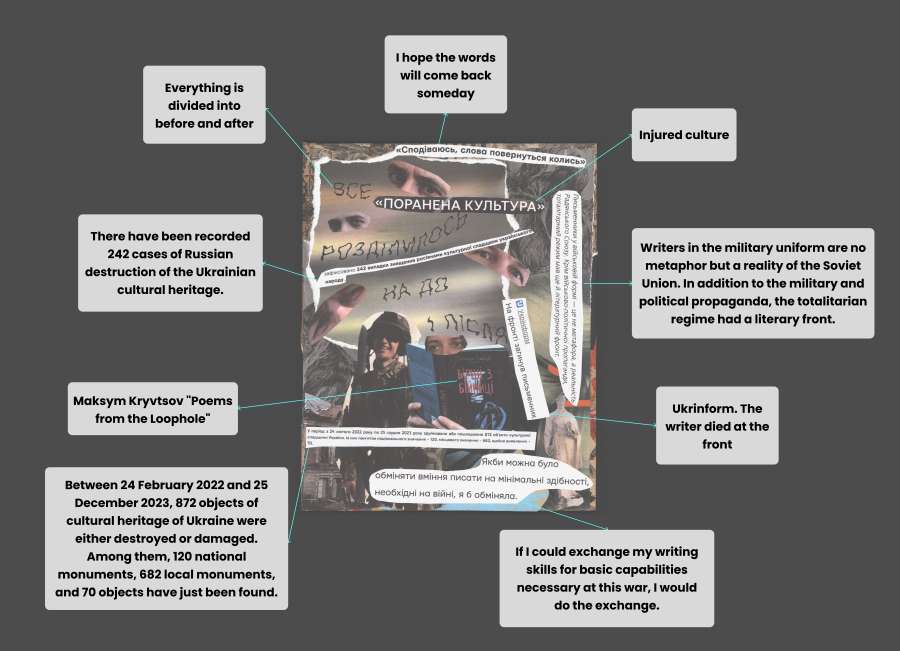
Marichka Soltysik: “The front page of this collage metaphorically tells us that “in addition to the military and political propaganda, the Soviet totalitarian regime had a literary and art fronts” (from the article by Olesia Kotubei-Herutska for Suspilne media). Every other newspaper strongly focuses on literature and art, thus this topic should not be omitted.
The poetry pieces had such names as The Communist, Glory to Pioneers! etc. Many poems glorified internationalism in the Soviet Union (but usually those works were written in Russian). No surprise, awards were given only to authors writing about peace and happiness in the Soviet Union.
The page made of newspaper clippings demonstrates how skillfully the Soviet Union turned art into a tool of propaganda and how important this tool still is in Russia nowadays.
The back side of this collage contains works of contemporary artists who record and express their emotions related to war with art objects. Here, one can see the eyes of authors who exchanged their usual activity for a military uniform and weapon in a hand. Rather sacrificed than exchanged. There are also snippets of our writers’ thoughts on their new occupation and statistics on destroyed objects of cultural heritage.
The comparison between the Soviet paradigm and contemporary outlook demonstrates how different we are, and how different the role of art is now. We do not intend to deliberately instrumentalize art, but we sense and reflect on our emotions and feelings and tell what happens now through art.
This collage is another piece of evidence of how essential art and culture were for the Soviet Union and remain so for Russia today. It is unlikely that any of the missiles targeting museums or tangible cultural heritage sites are accidental.
They know the value of culture. And so should we.”
Deprived of childhood
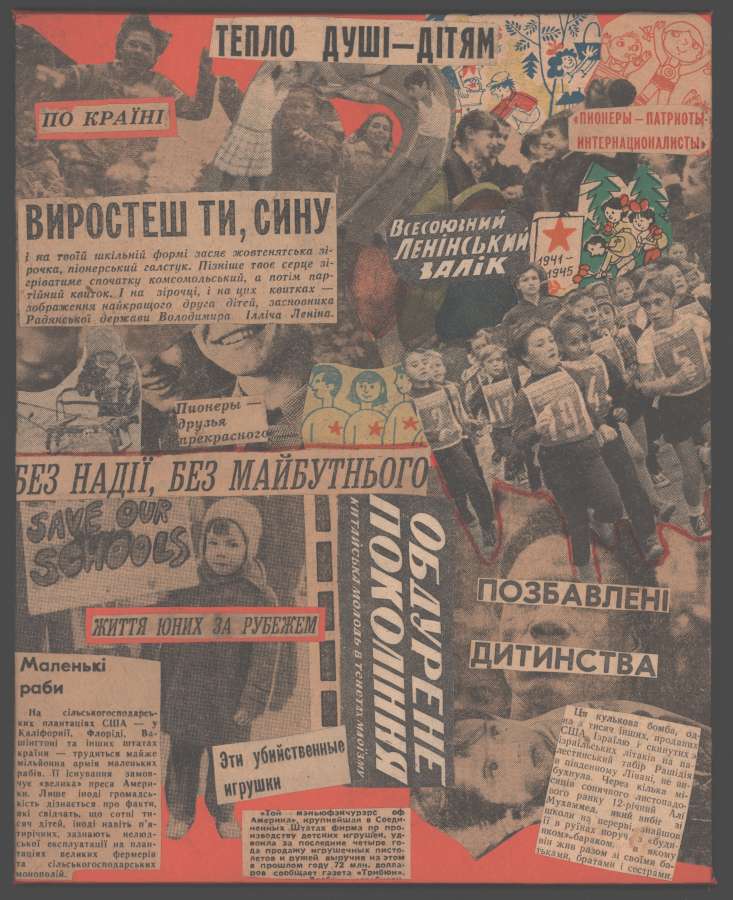
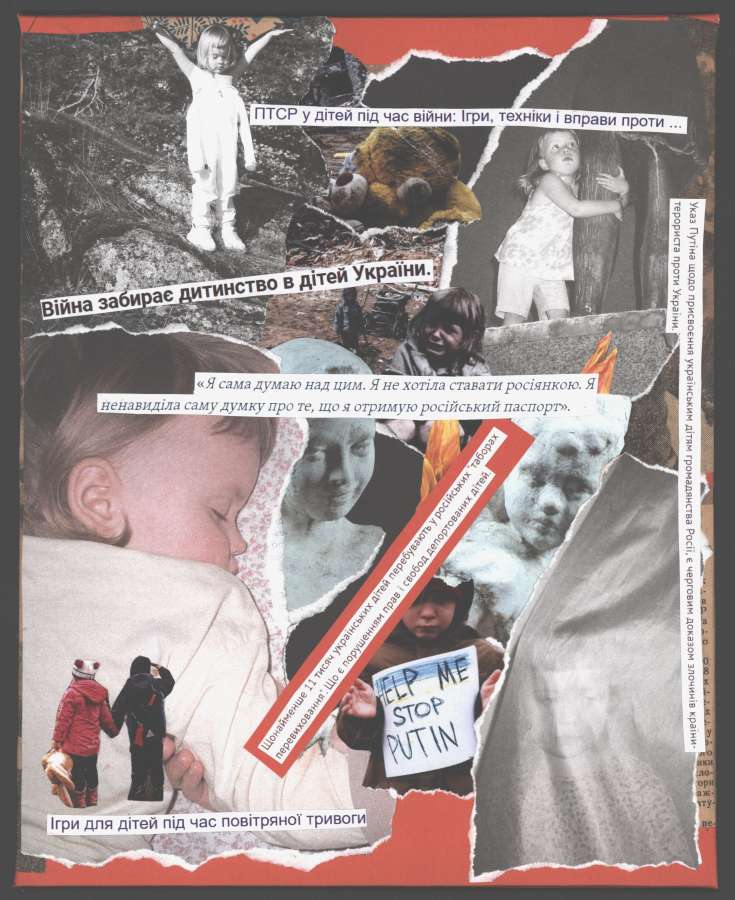
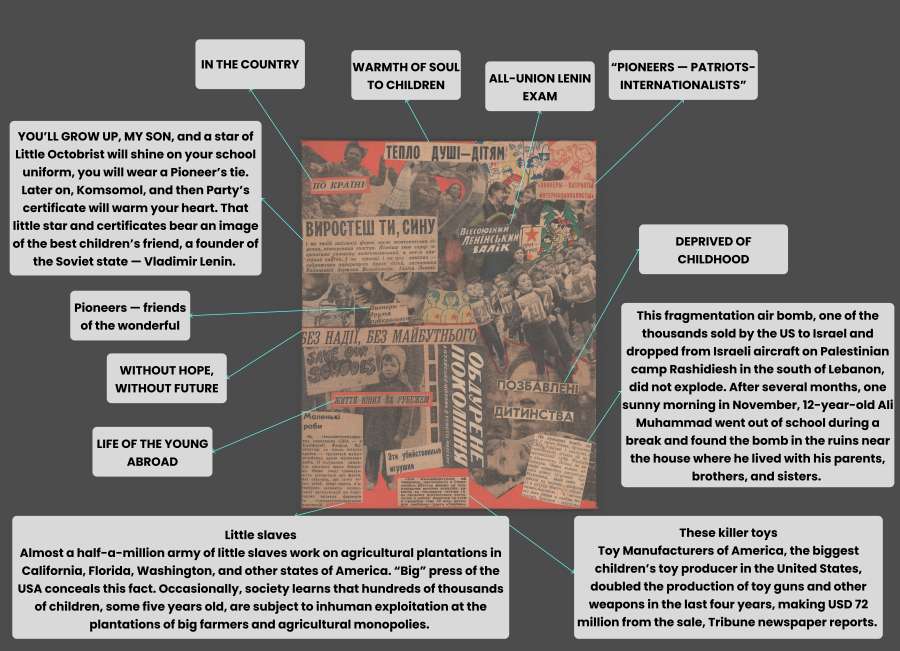
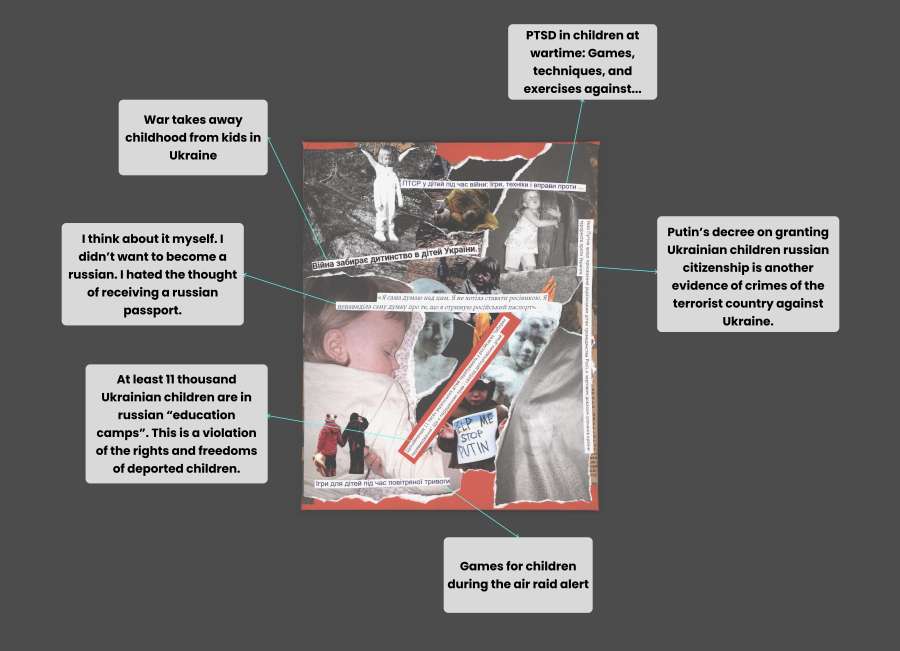
Marichka Soltysik: “This is emotionally the hardest collage, and it took much time to assemble it in one picture.
Childhood is probably the most popular topic in Soviet newspapers. And it’s not only about newspapers for children, rather on the contrary.
The front side of this collage is made of newspaper clippings and divided into two parts: the first is “childhood within the country”, another is “childhood abroad”. The newspapers, apparently, describe the Soviet Union as a children’s paradise, as a space of great opportunities for kids (from a star of Little Octobrist to the Party’s certificate with an image of “the best children’s friend Lenin”). Childhood abroad was more interesting to observe. The articles about “little American slaves”, 5-year-old children who are allegedly forced to work in the field, are absurdly funny. There was plenty of such news. Obviously, childhood in the Soviet newspapers is a very powerful component of manipulation. To be honest, nothing has changed since those times.
In the back of the collage, there is a current war context – what children have to face in wartime, what Russia does to our children when illegally deporting them.
Our Ukrainian media space manipulates the topic of childhood too. Thousands of photos of kids standing near the ruins, dead bodies or injured people, etc (some photos are not real, but artificially constructed pictures). This manipulation is targeted at the foreign audience and aims to prove that Russia is absolutely evil. Partly, it is targeted at the Ukrainian audience to fuel up hatred towards the enemy.
The Soviet Union didn’t care about happy childhood but worked on raising the right “red person” from the first years of their life. This is what Russia tries to do with our children who were deported. We have to remember about it.”
Who seeks military superiority?
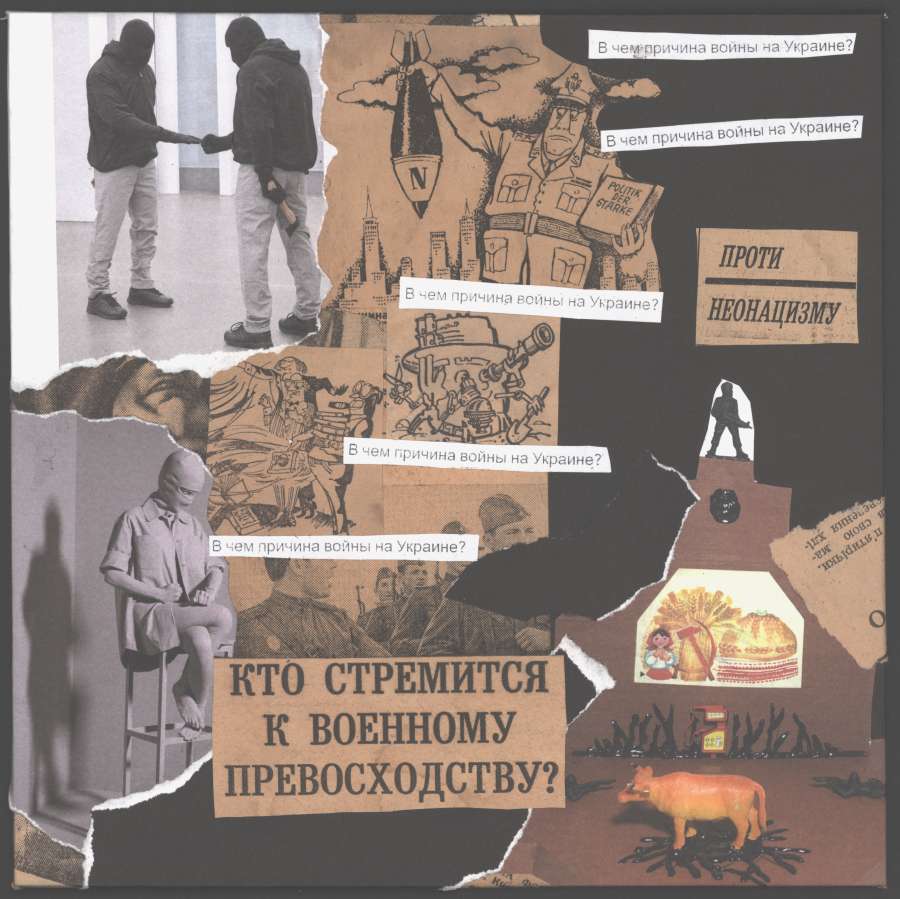
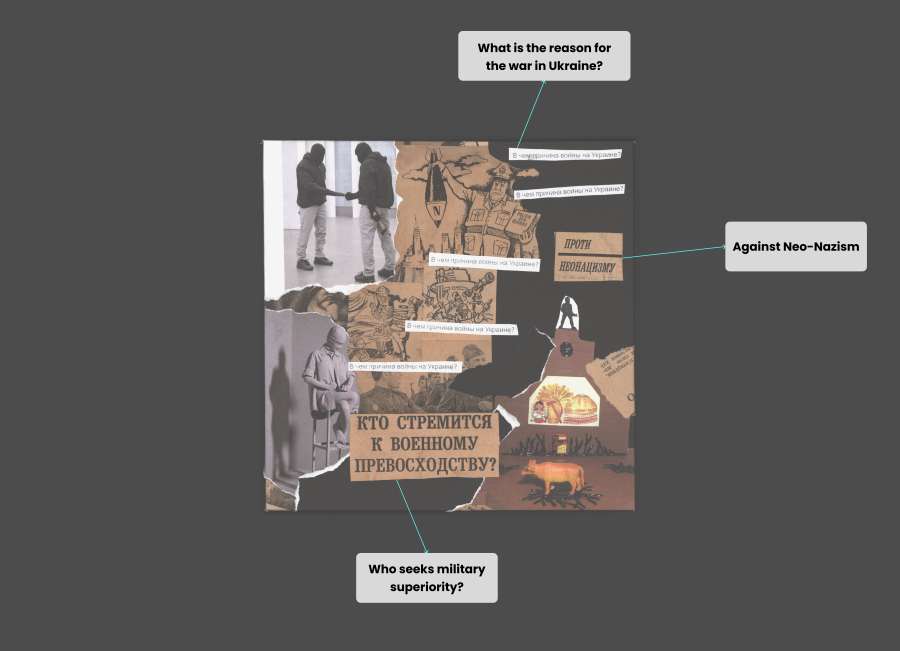
Marichka Soltysik: “Everything is clear here.
They haven’t been changing for centuries.
They are always involved in wars.
They are always in conflict.
Their narratives never change.
They don’t even try to make up new explanations or excuses.
They still fight “Neo-Nazism”.”
Collages, text: Mykyta Bilyi, Marichka Soltysik
Translation: Dariia Titarova