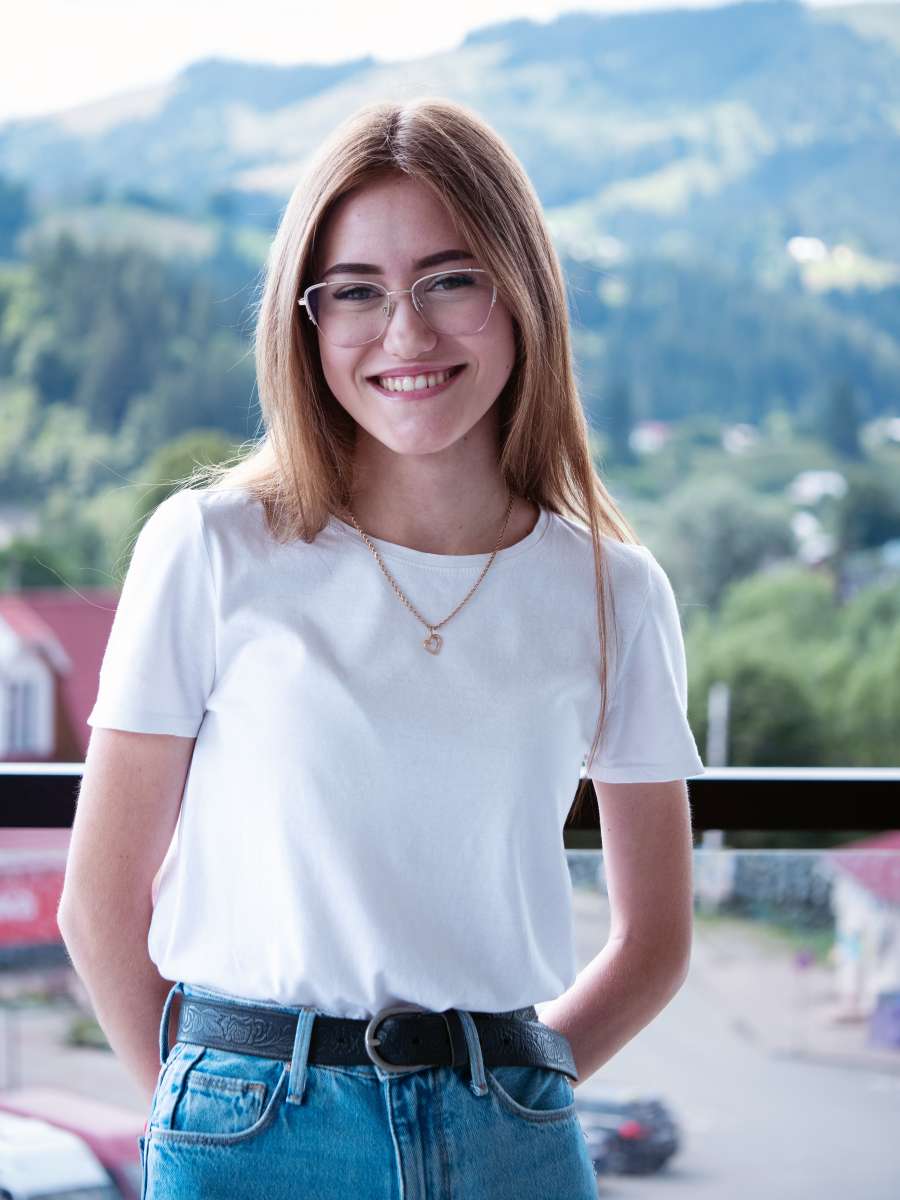
19, applied history student
LvivPavlohrad
Non-childish memories of the war: Denys's story
Denys from Pavlograd of Dnipropetrovsk oblast (region) is 18 years old. When the full-scale Russian invasion of Ukraine began, he, still a minor, was sent by his parents to his godfather in Moldova. Six months later, Denys moved to Poland, where he entered the local university. About fleeing from the homeland, adaptation, and a sense of guilt, read in the following text.
About February 24th2022, the beginning of the full-scale Russian invasion of Ukraine
I had almost no feelings, to be honest. I woke up as usual in the morning; I checked my phone and saw a message from our class supervisor that the war had started and our classes were canceled. Then, of course, I started reading about it. On the first day, I did not realize what was going on.
About the decision to flee from the country
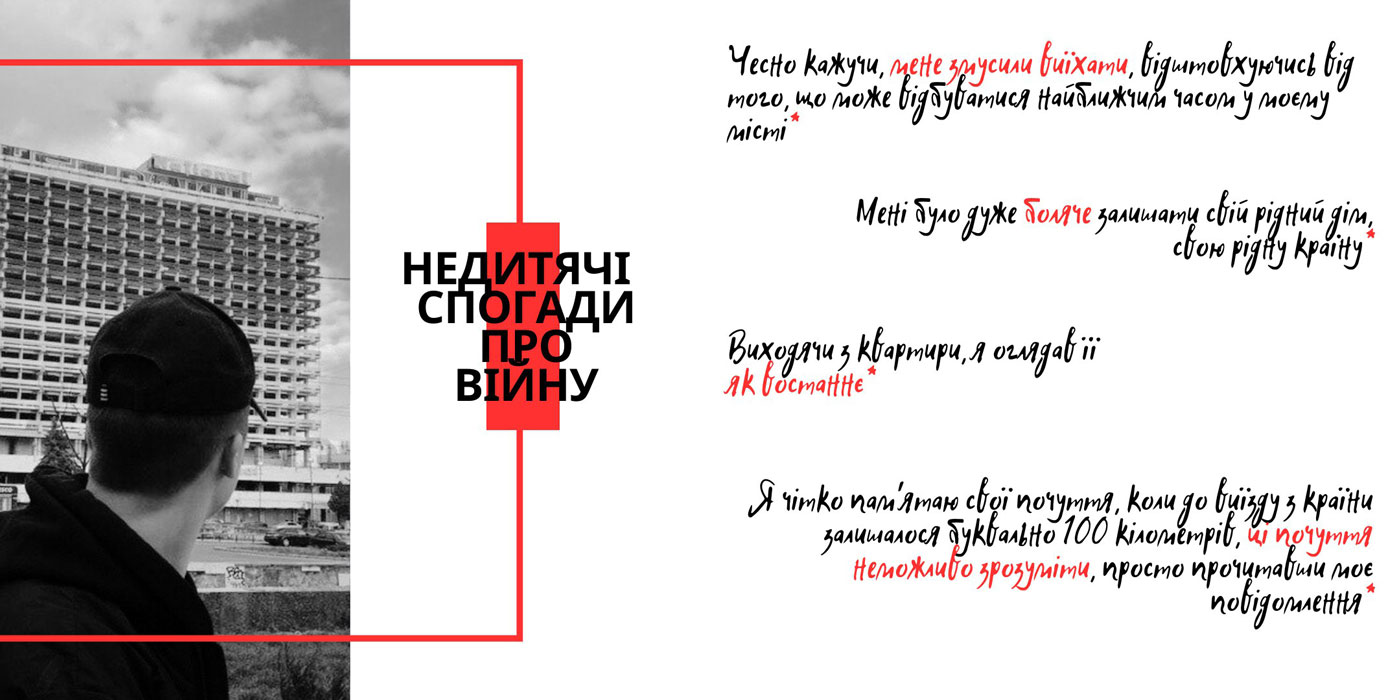
To be honest, I was forced to leave, taking into consideration all the things that might have happened shortly in my city. My father pushed me to make such a decision. I perfectly remember this conversation that evening: I tried to convince him that I did not want to go, but, unfortunately, everything was in vain. It was very painful for me to leave my native home, my native country.
Leaving my apartment, I looked at it for the one last time, hoping that I was only leaving for a few months. I also looked at my native neighborhood and the places I passed by as if it was my last time there. I clearly remember my feelings when there were around 100 kilometers left to the country border. These feelings cannot be understood by the reader of my message [without experiencing them].
About life in the Republic of Moldova
I was traveling from my hometown Pavlograd to Chisinau in Moldova, where my godfather lives and sheltered me. I was traveling with a small group of people completely unknown to me, they were my dad's friends. At the border, I was asked where my parents were because at that time I was still a minor and these people had no power of attorney provided by my parents. But after the explanation of our situation, I was let through the border.
I adapted quite quickly to a new country. The people, the area, and the buildings were practically no different from my hometown. If I didn't know where I was, I probably wouldn't have realized that I wasn't in Ukraine.
About my independent life
There were almost no difficulties. Fortunately for me, there were Russian-speaking people there. Financial problems were solved by one organization, which provided financial assistance for Ukrainians of over 150 US dollars monthly. This money, of course, was very helpful for me. The only challenge that this country threw down to me was a new period of my life, roughly speaking — a period of independence, but of course not without help. Unfortunately, I communicated a bit less with both relatives and friends, but it did not affect our relationships.
About the sense of guilt
There is this sense of guilt, indeed. It is certainly uneasy for me as I am in another country. I always wanted and I still want to be in my homeland and live through this all together [with my people].
About moving to Poland
Before leaving (Ukraine), we decided that I would study in Poland because despite leaving my native country, I still had to study somewhere. It may sound a bit weird, but again, entering the Universiti in Poland was not my idea and was not my decision at all, but I can't say that I was against it. I entered the Andrzej Frycz Modrzewski Krakow University. Going to Poland was more painful than leaving Ukraine because I had a clear understanding that I was going to study and, accordingly, live in Poland.
About adaptation
At first, I was hosted by a distant relative, and a little later I settled in a dormitory. I adapted quite quickly, even though there was already a different mentality. A different language, although it is similar to Ukrainian; different buildings, though the city center is very similar to our Lviv, etc. By that time, of course, I had already learned Polish at a sufficient level for communication and study. Fortunately for me, during this entire period, I had no problems, everything that happened was just trifles.
The story is part of the “Memory That Will Unite Us” project.
Text, image: Anastasia Pliuta
Translation: Halyna Vyliika