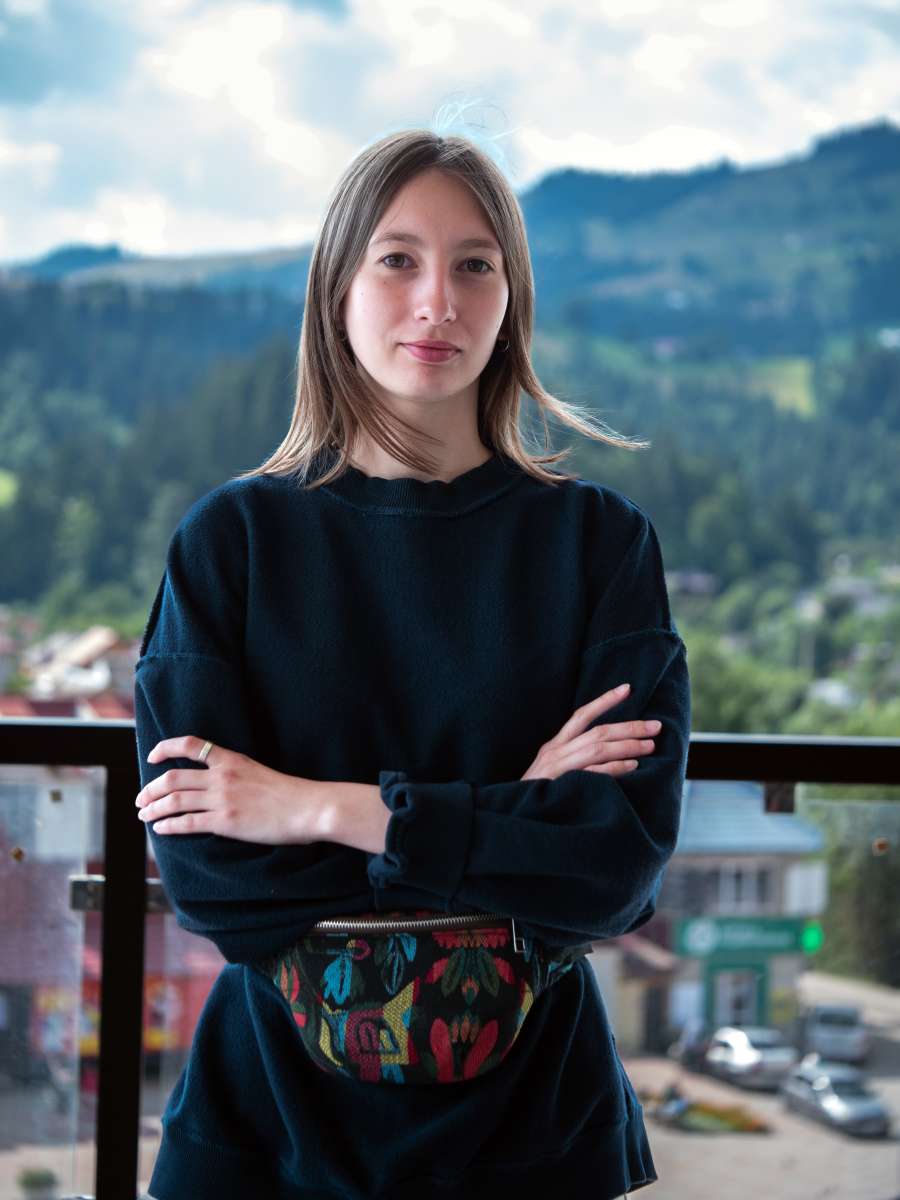
24, historian
Kyiv
My great-grandmother passed away on the 27th anniversary of Ukraine's independence. I don’t know if Independence Day was granny Stefa's favorite holiday. But there is one, especially prominent story about her among the few I know when granny kicked the man off the trolleybus for slandering Viacheslav Chornovil. He was a candidate for the first President of Ukraine from the dissident circle.
Stefania most likely wanted Chornovil to be president. Apparently, she knew how to stand up for her beliefs. And it seems she was waiting for independence.
Probably, it was one of those days when granny traveled by trolleybus till the end of the route, even though she only had to go one stop. She liked talking to people, and public transport travels served her well for this. My mother sometimes happened to be a little witness to her grandmother’s experiences of trolleybus socialization.
I barely knew granny Stefa. I am not sure if I have at least one picture with her. Yet, my mother noticed our resemblance in one of my last photos.
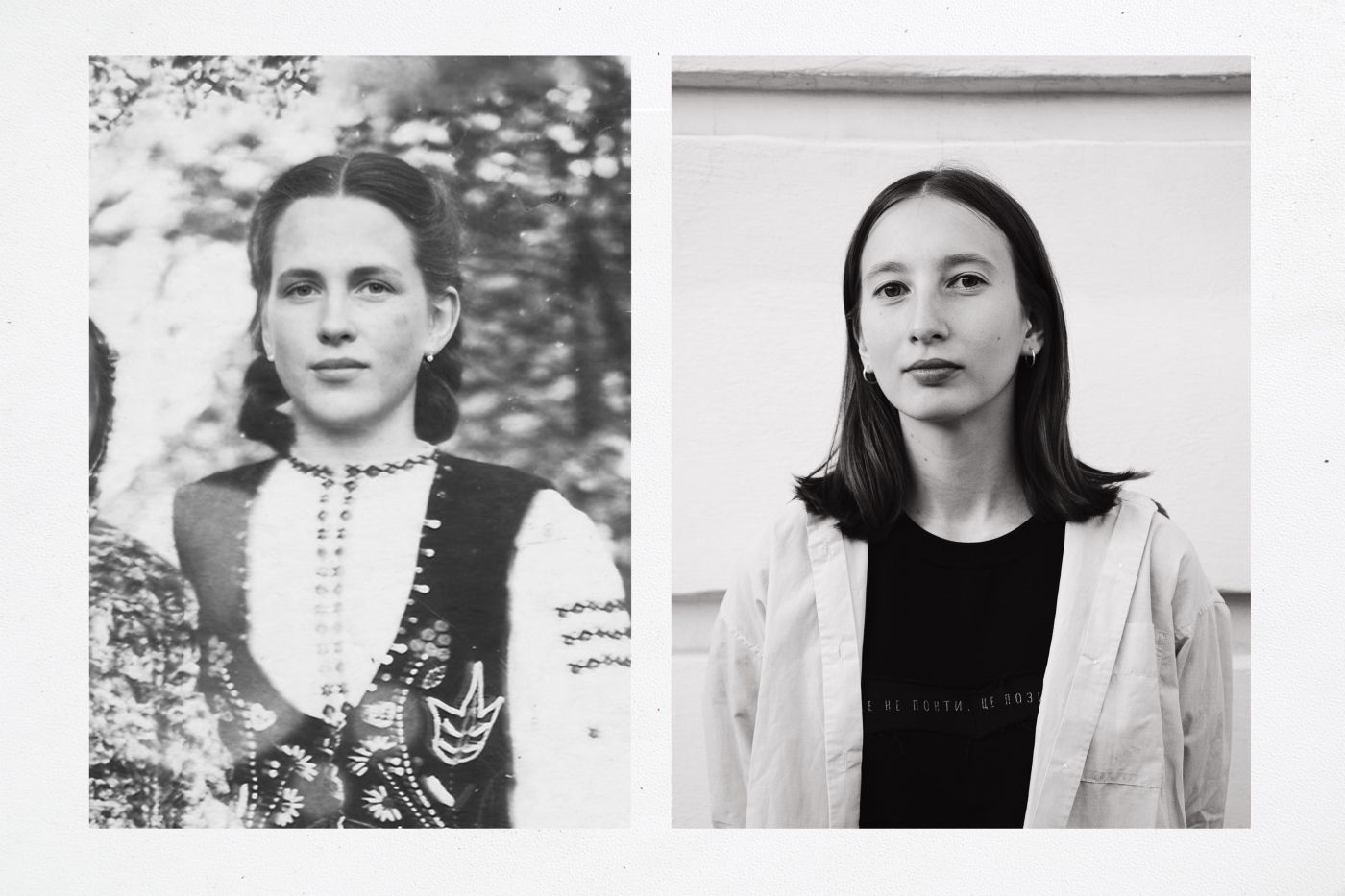
Picture 1. Stefania Salamin (née Kindzera), late 1940s – early 1950s
Picture 2. Me, Stefania Salamin’s great-granddaughter, 2023
In most of the photos, granny Stefa is with her first husband – Mykola Salamin. For some reason, the family hardly talked about him, the man who died at the age of 39. The image of great-grandfather Mykola – a handsome, occasionally smiling man with slicked-back hair – appeared only in photographs and only recently reached me through the family memory.
What Mykola left behind is his name in The Rehabilitated by History book, a military identity document confirming his service in one of the GulagGulag camps are Soviet forced labour camps. camps, photos of him wearing a bobka – a Soviet sports shirt of a typical cut, and the dimples on the chins of all his children. The absence of voice still surrounds his life story. In this text, I will try to listen to silence.
Salamonivka: childhood among biblical parables and sister’s traditional garments
Interwar Poland, Eastern Borderlands, winter 1928. At Salamonivka hamlet, Orishkivtsi village (now – Lviv region of Ukraine), a boy was born to Ilko and Apolonia Salamin just before the Epiphany. He was the middle child among five whom I am aware of.
Mykola was born in a house that the Salamon family shared with a tailor Oleksii Oshust. Thanks to Oshust, the village had its own church. At the age of 37, he bought a wooden church with the money he had earned in the US and put it in Orishkivtsi village. The church was moved from the neighboring village where residents decided to build a new stone temple.
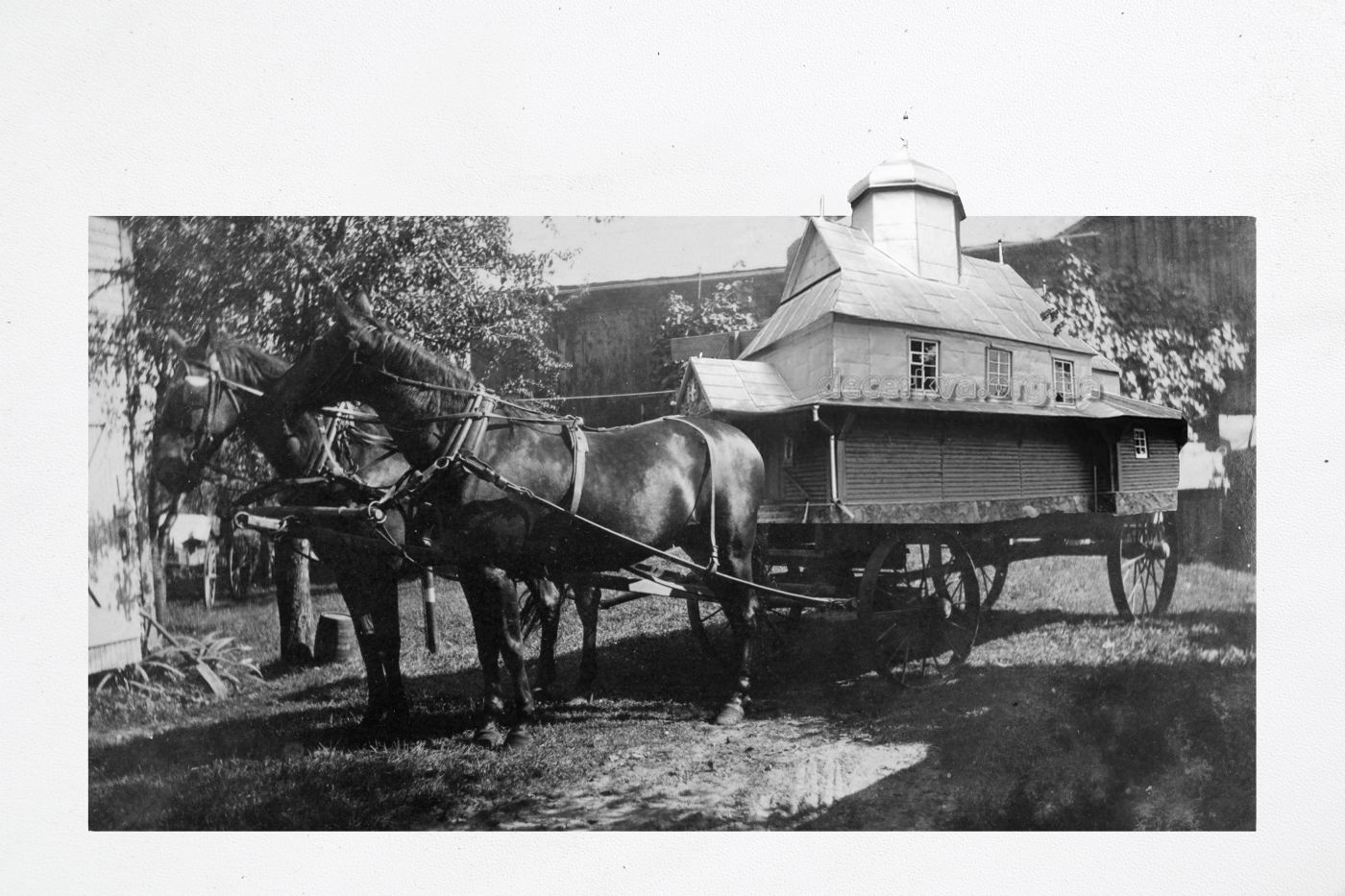
Picture 3. Collage “Church transportation”. Church of the Holy Eucharist in Orishkivtsi, a photo dates back to 2009.
Mykola’s father Ilko traveled overseas to earn money too. I found his name in the list of passengers of the Noordam transatlantic ocean liner, which arrived in the New York port from the city of Rotterdam, Netherlands, shortly before the new year 1909. Ilko came for the first time to the US having 8 dollars in his pocket and ready to work with his hands dreaming of a better life for his children. His wife Apolonia was waiting for him at home.
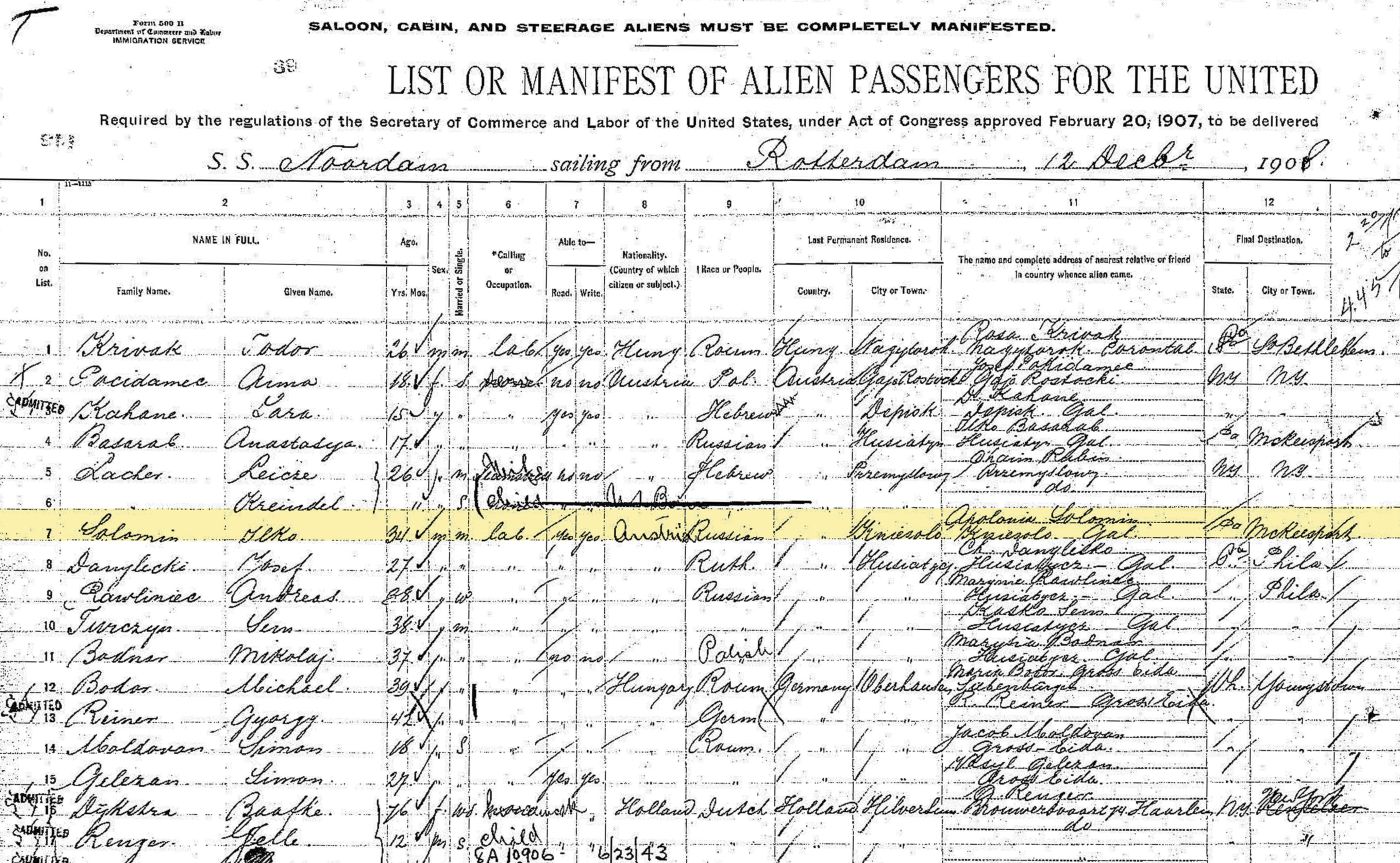
Picture 4. List of alien passengers of the route Rotterdam-New York who were registered in the port of New York on the 23rd December 1908.
The second time, in 1914, he arrived at the American shores from France on the La Provence ship. He was on the other continent when World War I started, therefore, Ilko’s wife, most likely, suffered the Russian occupation of the Halychyna region in September 1914 — June 1915 on her own. According to family stories, Ilko used the earned money to buy land in Orishkivtsi. He was the first to build a house in a hamlet which became known as Salamonivka. That is where my great-grandfather was born.
At the weekends, Mykola and his sisters could listen to dziadzio’s (Eng. uncle; local children called so Oleksii Oshust) reading books from his library to little Salamon kids, mostly on religious topics. In addition to the basics of Christian ethics, Mykola perhaps unwittingly learned the lessons of Ukrainian identification. His elder sister Yevdokia was an activist of the local reading room of the “Prosvita” (Eng. enlightenment) educational society which opened in 1936 in the village and functioned till the first Soviet occupation of Western Ukraine in 1939–1941. Yevdokia participated in the organization of summer celebrations where the entire village gathered, literary evenings, and concerts. She sang in the choir, knowing “Ukraine has not died yet” by heart. The song became a national anthem of the independent Ukraine while she was still alive.
Goodbye, my dear village
The Salamin family had already been away when instead of the “Prosvita” reading room a village club was opened in Orishkivtsi to promote ideas of Marxism-Leninism and loyalty to the ideals of the Communist party among residents. In February 1940, extrajudicial bodies of the NKVDNKVD is the abbreviation that stands for the Soviet secret police agency, a forerunner of the KGB. deported them and other local families to Siberia. Only three months had passed since Western Ukraine was included in Soviet Ukraine by a resolution of the Parliament of the Ukrainian SSR on November 15, 1939. The Salamin family had too little time to embrace communist ideas. The new government resolved to sovietize them in another way.
A 12-year-old Mykola, his sisters Hanna, Yevdokia, and Stefania, brother Volodymyr, and elderly parents got into the first wave of the mass deportation of “the untrustworthy” contingent from newly acquired territories of Western Ukraine. According to a secret directive of the head of NKVD in Ukrainian SSR Sierov, the Polish military and civil residents (osadnyky), who received a piece of land here in the interwar period as a result of the state policy on strengthening the “Polish element” at the border territories, and foresters with their families were subject to the eviction from the western regions. Due to a special accepting attitude of these people to the Polish State, they were considered, as Hannah Arendt put it in The Origins of Totalitarianism, “objective enemies” of the Soviet government. It means that the totalitarian regime needed only an assumption of someone's potential hostility, instead of conviction for specific crimes, in order to apply repressive measures.
In practice, the deportees were not only limited to Polish or Ukrainian families of foresters but also included well-off villagers whom the Soviets called kulaksKulak — a rich or supposedly rich peasant, targeted during Soviet collectivization. (Ukr. kurkuli) and those who cooperated with the nationalist underground movement, actually or supposedly. This is the explanation of the eviction of the Salamin family to the far regions of the Soviet Union:
“SALAMIN Mykola Illich, 1928, Orishkivtsi village, Ukrainian, student. On 10.02.1940 evicted to the Kosikha district of Altai kraiKrai — administrative subject of Russian SSR because of his family’s collaboration with OUN (the Organisation of Ukrainian Nationalists). Released in May 1946. Rehabilitated by the Law of Ukraine as of 17.04.1991. Archive of the Main Department of the Ministry of Internal Affairs of Ukraine in Lviv region, R-24145.”
This extract is taken from the fifth volume of The Rehabilitated by History. Lviv Region the pages of which are filled with the names of residents of Zhydachiv town and the Zhydachiv area who were repressed by the Soviet authorities since the first Soviet occupation of Western Ukraine until the 1980s. There are eight thousand hundred and twelve names in this book. This series has 100 volumes. If we multiply these two numbers, we will have more than eight hundred thousand fates similar to my great-grandfather's.
The family bid their home farewell singing “Goodbye, my dear village / Goodbye, Ukraine”. A folk song about a soldier’s farewell to his beloved woman and native land gained a new context – deportation. Salamon’s property, which they acquired with money they had earned with hard work overseas, was confiscated and placed at the disposal of the local authorities. Mykhailo, the eldest son of Ilko and Apolonia Salamin, who had already lived separately from his parents at that time, stayed in the village. According to family tales, several elder children managed to escape to Nazi-occupied Polish territories.
Orishkivtsi-Dzhambul-Orishkivtsi
The way to a special settlement in Kontoshyno village, Altai krai, took about a month. The deportees were sent there in overcrowded freight cars. They became the category of Soviet citizens who were not worth decent treatment either on the way to a new place of residence or in a special settlement where, thousands of kilometers away from home, they turned into a source of slave labour for the development of the Soviet Union.
It is barely known how the Salamin family lived in new conditions of deportation. Ivan Zemiak’s family from Cheremkhiv village, located in the Zhydachiv area as well, was deported to Altai krai for logging at the same time and on the same charges. A local historian Oleksii Danylyshyn added Ivan’s memories of exile to The Bells of Memory – a book about the repressed residents of the Zhydachiv area in the 1940s-1950s. This is what Ivan Zemiak remembers about the daily life in a special settlement (seemingly, a young Mykola with his parents and sisters lived in relatively the same conditions):
“We were settled in large barracks. At the entrance and exit of the barracks, there were rooms for NKVD guardians. We got on plank beds, and the next day were sent to work. Siberian frosts, snow up to one meter high, hungry and half-dressed people – this is how our life began. It was arduous work, and the requirements for the performance rates were enormous. If they were not fulfilled, the meager bread ration was cut in half. A working person received 400 g, non-working – 200 g of bread daily.”
It is known from some testimonies of Mykola’s elder sister Yevdokia that first the elder sisters and the mother worked at the sawmill of Kontoshyno forest industrial enterprise. They worked as much as men with trees that were ¾ of the average human height by themselves. After two years of forced labour in the forest industry, the family was sent to Dzhambul city, Kazakh SSR, to build a plant. During wartime, several hundreds of enterprises were evacuated to Kazakhstan from the areas where the battles took place. Presumably, the Salamin family had to work at one of such enterprises. They came to Dzhambul without their father who passed away in July 1941. Having buried his father, Mykola continued unwillingly exploring the lands of his new “socialist motherland” which talked to him in foreign languages.
Mykola Salamin and his family were released in May 1946. They had nowhere to return: their house which they had shared with the neighbor was turned into the office of the collective farm. Therefore, they moved to the eldest son and brother who stayed in the village in winter 1940 when most of the family was deported. Boots and jackets given out to them in Siberia were the only property they took home. They had to start a new life, but not from scratch because of the “traitors-of-Soviet-Union” label that followed them home.
Mykola Salamin returned home an 18-year-old guy. He witnessed collectivization in his village at the time of postwar reconstruction. There is no information about with whom he sympathized in those turbulent times – Soviet administration or anti-Soviet partisans and their attempts to prevent villagers from entering collective farms. While the Salamin family was away, several insurgent hideouts were found, and the participants – hanged in public. Clashes between NKVD officers and members of the underground movement continued in Zhydachiv area.
After return: follow the gallifet
The oldest photos of our family archive date back to the times after my great-grandfather Mykola met his wife-to-be Stefania, née Kindzera. In one of the pictures, Mykola wears a bobka. This sports shirt with a metal zipper appears in thousands of family photos from the Soviet 50s.
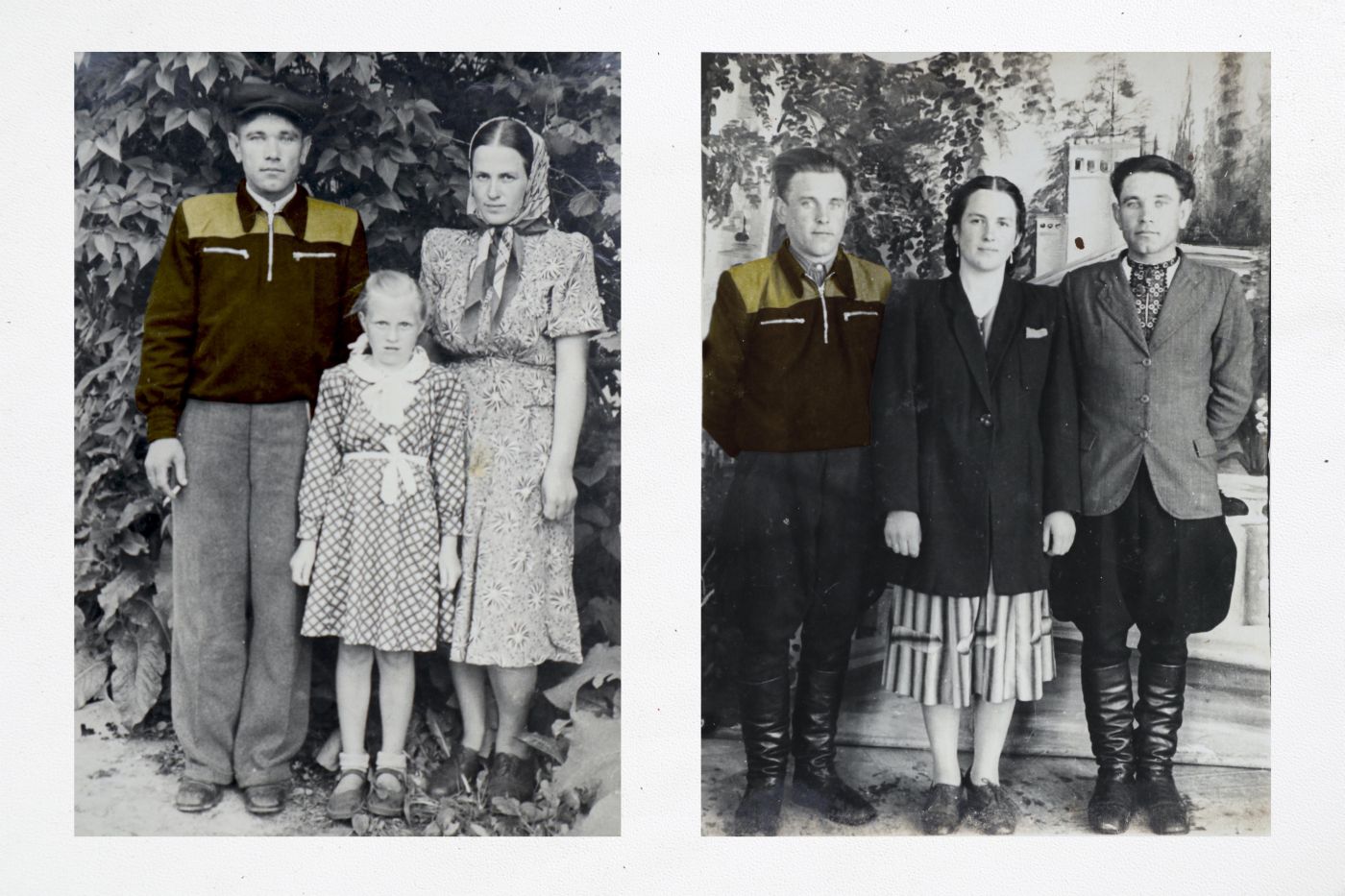
Picture 5. From left to right: Mykola Salamin, an unknown person, and Stefania Kindzera, the mid-1950s.
Picture 6. From left to right: Mykhailo Salamin, a married couple of Stefania and Mykola Salamon, the mid-1950s.
In the other picture taken in the photo studio, his brother Mykhailo is standing in the very same bobka. In the middle – granny Stefa wearing a men’s jacket which is in fashion now. Great-grandfather Mykola, who changed his sports shirt to a jacket with an embroidered shirt, stands to her right. A wedding ring shines on great-grandmother’s hand which means that they are married. Both brothers wear jackboots and gallifet trousers that hint at their service in the Soviet army.
Indeed, in the early 1950s, the young Mykola had to embark on another long journey deep into the "socialist motherland." However, this time he was not in the role of repressed. In August 1950, he was declared liable for military service and in October, he took the oath of allegiance to the paramilitary guard of the Gulag of the Ministry of Internal Affairs 231, swearing "to be loyal to [his] People, [his] Soviet Motherland, and the Soviet Government until [his] last breath" (translation from Russian). 22-year-old Mykola announced that he belonged to a large body of USSR citizens. Meanwhile, some of his fellow villagers who were engaged with the insurgent army swore to regain the Ukrainian State or die in a fight for it.
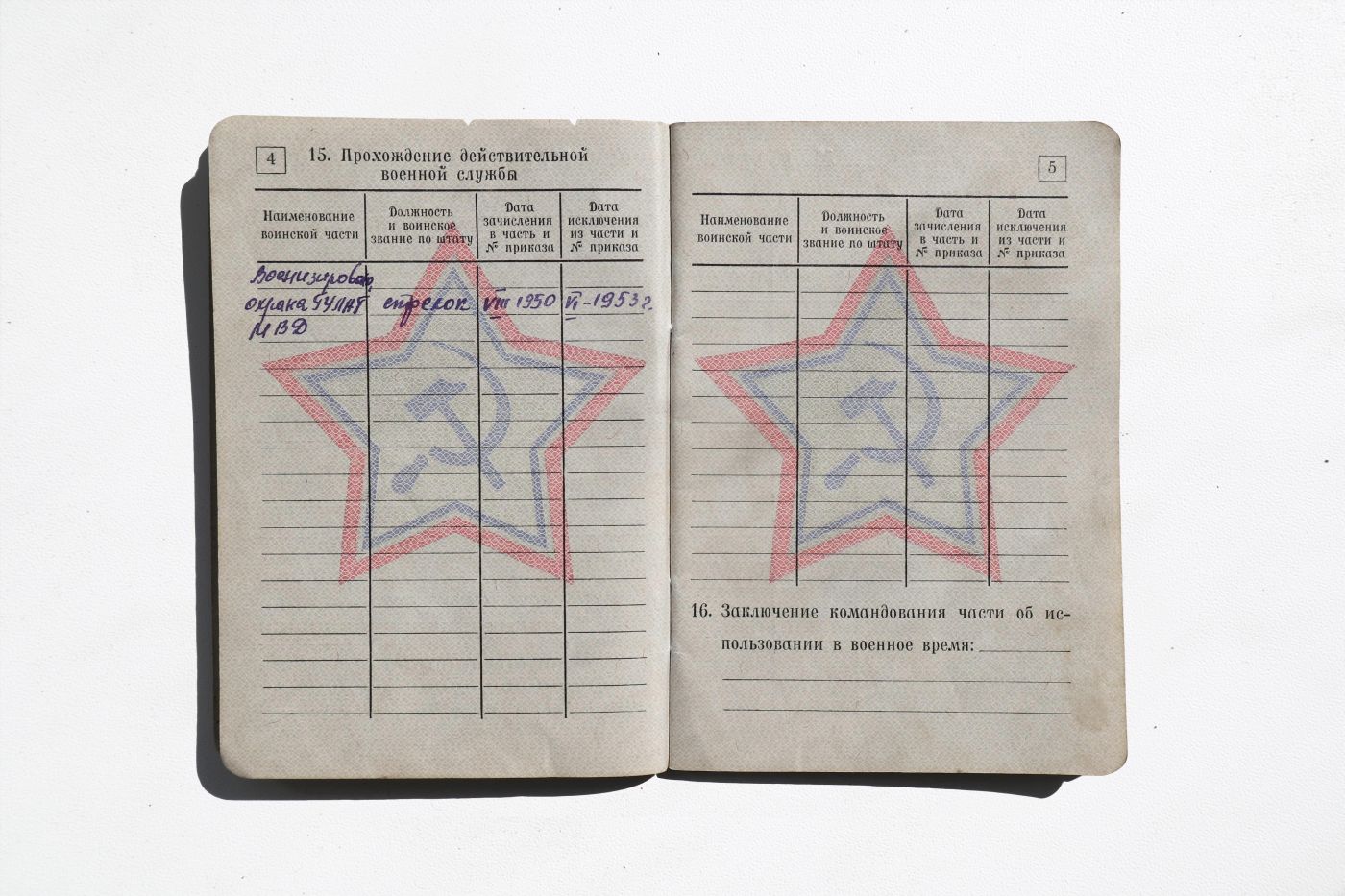
Picture 7. Military identity document of Mykola
Behind the name “Gulag of the Ministry of Internal Affairs 231” hides a particular place of Soviet terror – Vyatka Correctional Labour Camp, one of the “forest” camps of Gulag. When Mykola was carrying out his military service there, the camp numbered about 30 thousand inmates. Most were political prisoners convicted of “counterrevolutionary crimes.” Among them could be Mykola’s fellow countrymen. Having been repressed himself not so long ago, he stood now on the other side of the barricades and became a part of Soviet repressive power.
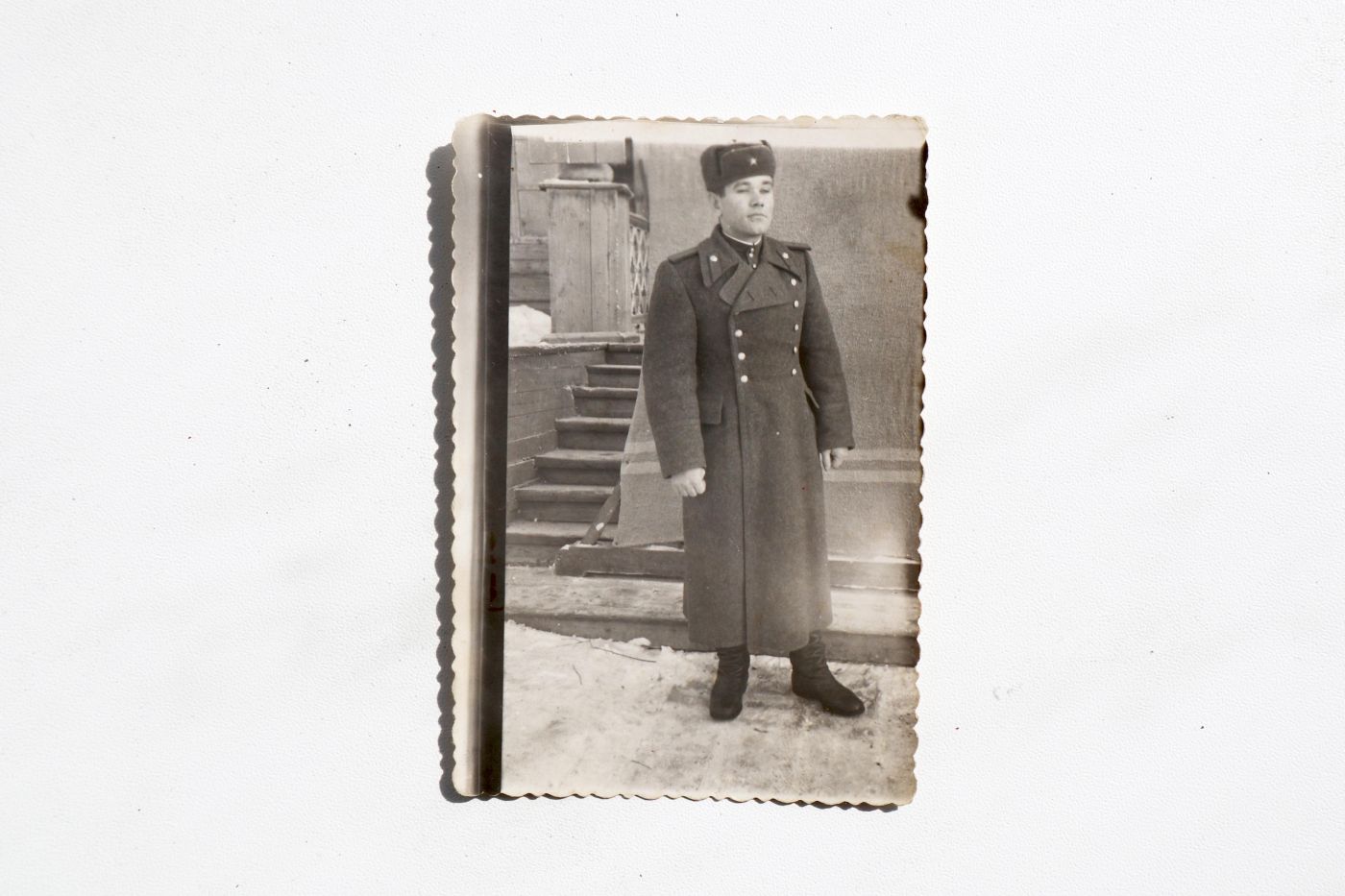
Picture 8. Mykola at the military service, the early 1950s
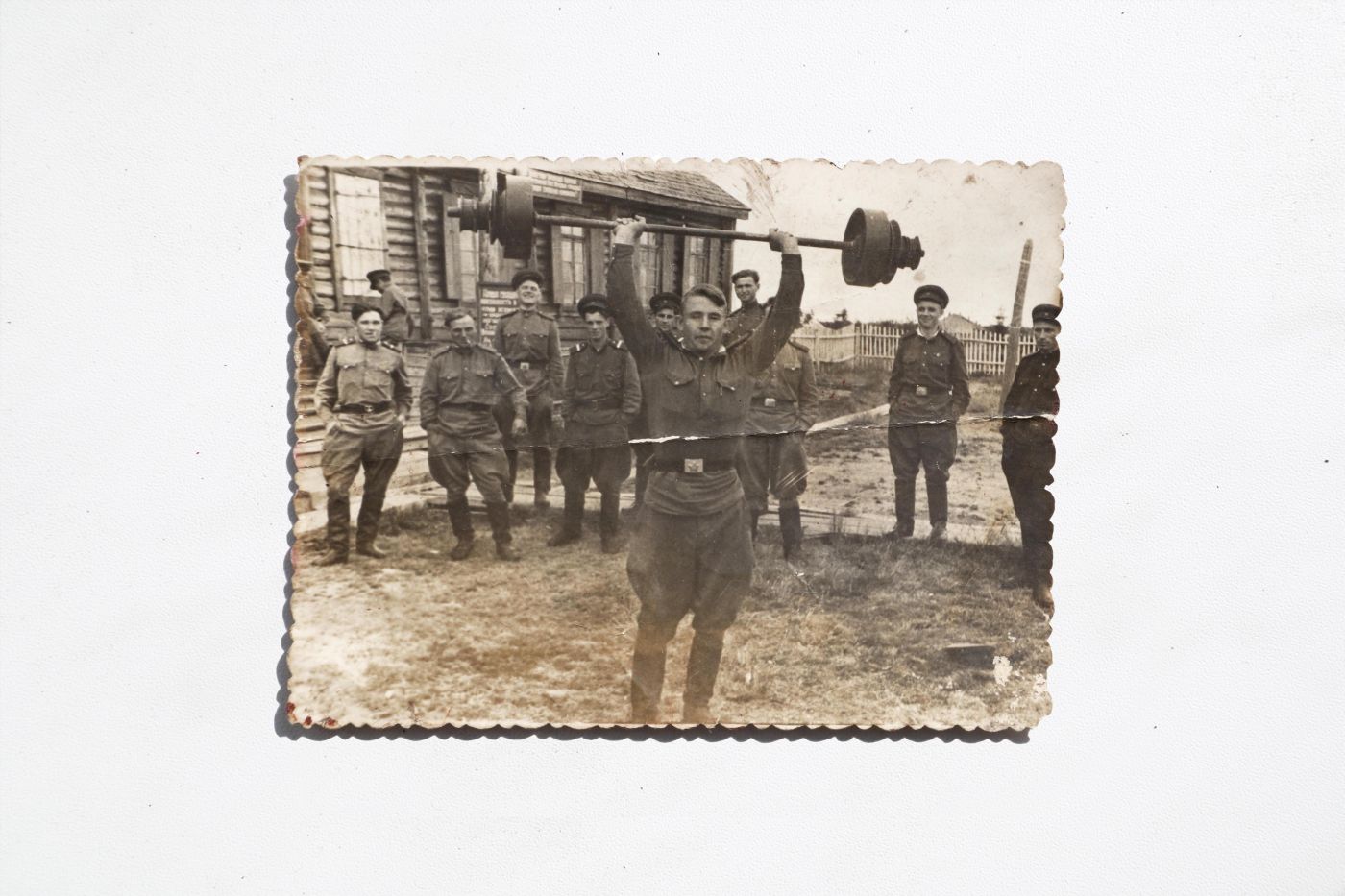
Picture 9. Paramilitary guards of Vyatka Correctional Labour Camp, the early 1950s
Mykola was in the Ural region when Stalin died. Several months later a man was demobilized. After Mykola returned from military service, he married Stefania Kindzera – a girl from Luh, a settlement by Orishkivtsi village, whom he met at a dance. He quickly built a house in Orishkivtsi to separate from parents, worked as a driver, and, as his daughter recollects, earned enough money. One of her best childhood memories is a bucket of candies that her father once brought home.
Mykola and Stefa’s children were children of the Thaw in some sense. The eldest Misko was born in 1956 when Nikita Khrushchev criticized the cult of Stalin emphasizing the need to fix his predecessor’s mistakes and return to pure Leninism. It got warmer in the civil life of the Soviet Union; the Gulag prisoners came back from camps. In 1958, when the détente in relations between the USSR and the countries of the democratic West began, the middle child Hanna, my grandmother, came to this world. Misko and Hanna minded the youngest Oksana who was born at the beginning of the Era of StagnationEra of Stagnation is a period of the Soviet Union that began during the rule of Leonid Brezhnev (1964–1982)..
Spring 1967
Mykola passed away suddenly in the spring of 1967. The eldest 11-year-old son found him hanged in a barn. My grandmother says that when her father died she cried and screamed so hard that she lost her voice.
It has not been common to talk about a great-grandfather’s death in a family for a long time. “I don’t know what happened. No one told me and will ever tell. Because there are no witnesses left,” grandmother shares her thoughts. At the same time, my mother found out about her grandfather’s death accidentally from her grandfather’s sister when she as a child came to her to take some milk.
Once, this woman – I think it was afternoon because [I remember] there was sun, bench – gave me this warm milk. I gave her an empty jar and she poured milk there and asked me “How are you and mother? Where do you live? Where do you go? How is grandmother?” What could I, a child, tell this old woman? “Do you know about your grandfather?” [she asked]. How can I know anything about my grandfather if I have never seen him? My mother was a child when he died. I say: “No, I don’t know.” And she replies: “He hanged himself. Probably, no one will tell you that, but I know it. That’s it, go home.” She took me aback. I was an 8-10-year-old child. Came home and didn’t know whom to tell this. I have never talked about it with anyone.
It is not clear why my great-grandfather took his life. It is said that he had horrible headaches which he could not bear. As my grandmother says, during the autopsy of her father’s body, a brain tumor was found that formed after a severe beating and it could provoke aggressive outbursts. The injuries indeed can lead to the development of brain tumor. Among the clinical symptoms of the disease are progressive headaches and sudden mental disorders which were mentioned by relatives.
Mykola’s physical and moral suffering was caused by a particular person who is a member of a small local community. He was not a KGB intruder who could be easily associated with a “stranger”, but rather one of their own, a neighbor and fellow villager. After all these years it is difficult to define whether this man was an ardent supporter of the Soviet system or a committed nationalist. By 1967, the Ukrainian Insurgent Army had already lost the liberation struggle. The villagers adapted to a new and more consistent routine: there was one source of power. The real reason for the domestic conflict which resulted in such serious consequences for my great-grandfather was unclear too. And was there a reason at all?
My aunt retells this story the following way: once Mykola’s car was stuck on the road to the hamlet where his wife's parents lived. I remember very well the mud in which that road to Luh turns after rain. It has never been paved in post-Soviet times. Mykola supposedly took planks from the neighboring yard to put them under wheels and pull the truck which he drove when worked at the collective farm. This became an excuse for the neighbor to inflict severe injuries on my great-grandfather with a chain that was usually used to tie up a cow in the field.
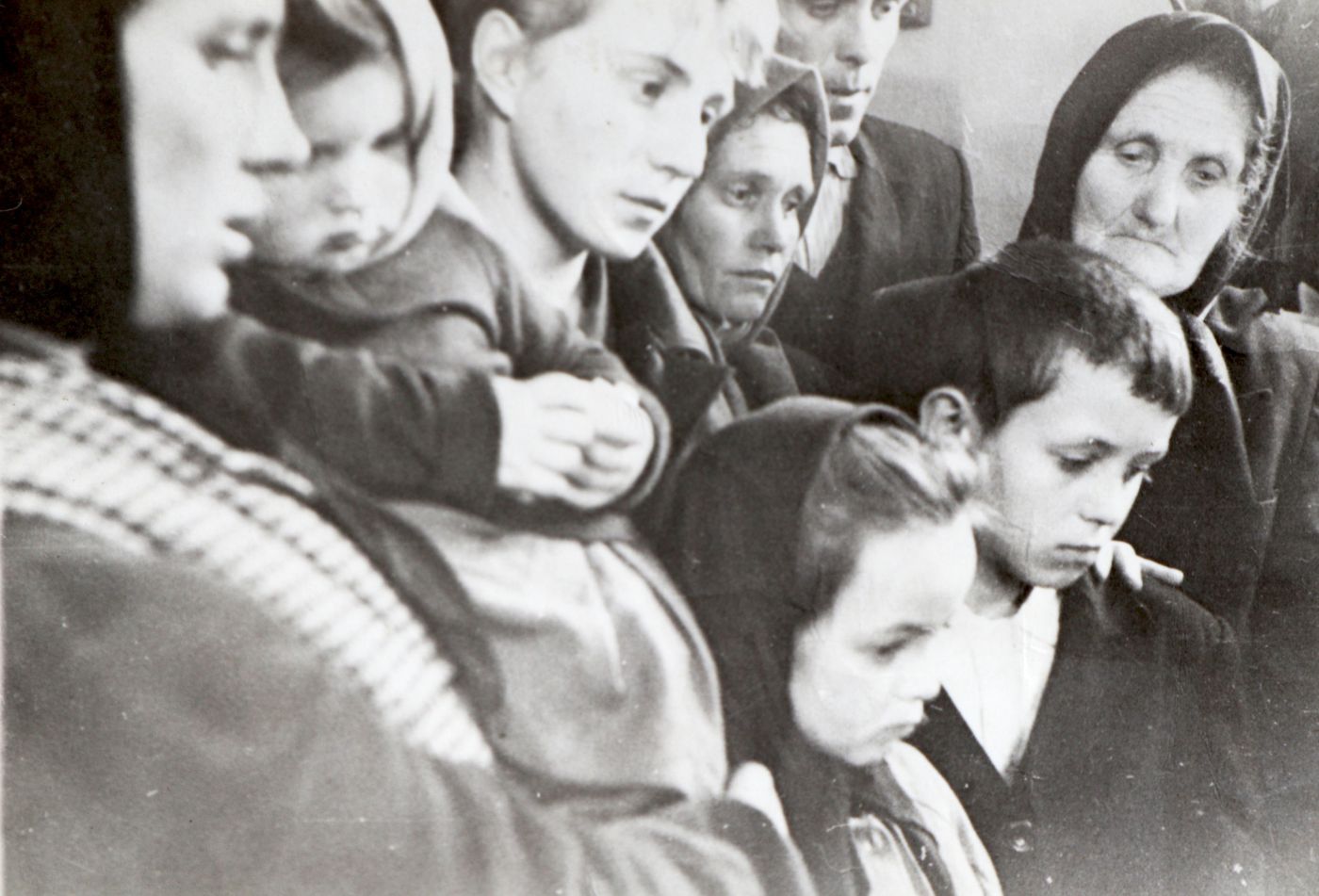
Picture 10. Farewell to Mykola, 1967
After her husband’s death, Stefania had to move to a city together with the children: she could not stay at home, in the village, due to a deep trauma related to the house where the family lived and the social circle to which she didn’t belong anymore as a wife of a suicide. A conservative local community in the village, though “enlightened” by the latest resolutions of the Communist party, could not understand such an action as suicide. As my mother, Mykola’s granddaughter, says, there are bystanders in the triangle of domestic violence too:
It is very hard to live in the village. People are cruel there when they start retelling the story of how it all happened. Where have you all been, fellow villagers, when he was beaten up? Where have you been? Did no one see the scene? Did everyone walk with their eyes closed? He probably screamed. Even that Drebit man who made it to him, where was his wife? Didn’t she see? It happened somewhere in front of their yard. Neighbors? Didn’t they see? It is so common. And when a person commits suicide, then he turns out to be bad.
When Mykola’s family moved to a city, they could hide from public condemnation. However, it also meant a life from scratch, therefore, children grew up in a boarding school while their mother, a young widow, tried to arrange a more or less decent life for herself and her children. The story of unrealized neighborly solidarity became a story of the lack of love in which the following generation was brought up.
Mykola had the courage to leave his life. I don’t think that I, as well as my grandmother, will be able to understand the reasons for his decision. This short life was filled with violence of different kinds. The spiral of state violence first twisted around my great-grandfather and his relatives, and then put him on the other side of Vyatka camp barbed wire to watch the enemies of the Soviet Union. Nevertheless, any of those traumatizing experiences were not a decisive factor in this life, a domestic incident was. But maybe it was an integral part of the social transformations of that time.
After Ukraine gained independence, Mykola and his family were rehabilitated in 1993 “with the return of confiscated property or its value.” But he will never find out about it. Nor will he learn about whom his wife voted for at the first presidential election in independent Ukraine.
Text and pictures: Svitlana Dovhan
Literary editing: Anastasiia Pravda
Translation: Dariia Titarova